The Medal of Respect: Minister Badr Abdelatty… Crisis Diplomacy in an Era That Does Not Tolerate Improvisation

The Medal of Respect: Minister
Badr Abdelatty… Crisis Diplomacy in an Era That Does Not Tolerate Improvisation
In an era when news travels at
lightning speed while its impact quickly fades, true achievement remains what
deserves our attention. Just as society needs criticism and accountability, it
equally needs a culture of recognition. Appreciating those who faithfully
fulfill their duties is neither a luxury nor a courtesy; rather, it is part of
a system of values that makes excellence in work a common practice rather than
a rare exception.
It is from this perspective that
this weekly column was created. It does not celebrate positions or titles;
instead, it highlights those who have genuinely fulfilled their
responsibilities in service to their country and its people, based on the
conviction that a person's worth is measured not by the title they hold, but by
the legacy they leave behind.
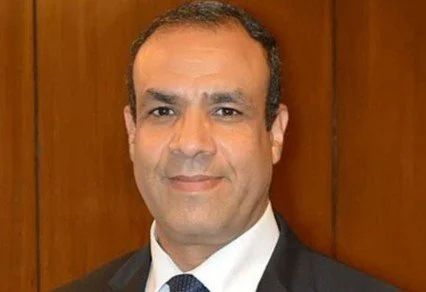
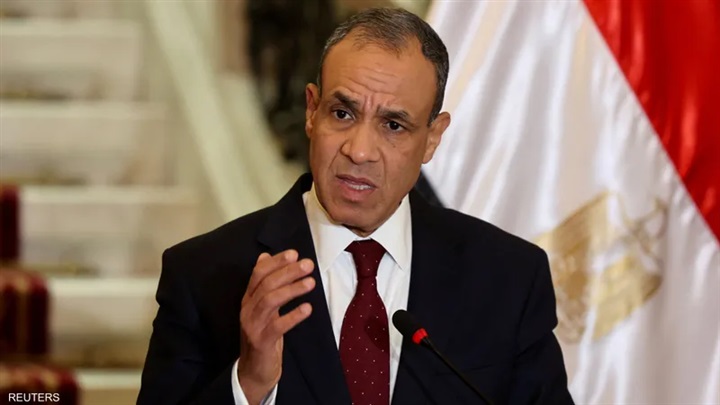
In this edition, the focus is on
Dr. Badr Abdelatty, Minister of Foreign Affairs, Emigration, and Egyptian
Expatriates Affairs, who assumed responsibility for one of the ministries most
closely linked to Egypt's national security during one of the most difficult
periods the region has experienced in decades.
Diplomacy Is Not Public
Relations—It Is National Security
It is no exaggeration to say that
any foreign minister assuming office during this period would have faced
extraordinary challenges. However, the convergence of multiple crises at the
same time made the task more complex than ever before, to the point that the
Ministry of Foreign Affairs seemed like a twenty-four-hour operations room
managing simultaneous crises stretching from Egypt's eastern border to its
southern frontier, from the Red Sea to the African continent, and from Arab
capitals to the world's major powers.
Success in diplomacy is not
measured by the number of conferences held or statements issued, but by the
crises that are prevented, the tensions that are contained, and the
understandings that are achieved—many of which never become visible to public
opinion.
Much of diplomacy's success is
accomplished away from television cameras, inside negotiating rooms and during
closed-door communications, where the most sensitive issues are managed calmly
and discreetly, far from public noise.
Gaza: The Most Difficult File at
the Most Difficult Time
When he assumed office, the war
in the Gaza Strip was at its height, and Egypt's borders were confronting one
of the most sensitive issues in their modern history: attempts to impose a new
reality involving the displacement of Palestinians and the redrawing of
security arrangements along the border.
Egypt categorically rejected
these attempts, based on its longstanding principles regarding national
security, international law, and the Palestinian cause.
At the same time, Egypt was
leading complex diplomatic and humanitarian efforts that combined facilitating
the entry of humanitarian aid, working to consolidate a ceasefire, and
maintaining continuous communication with various regional and international
parties in an effort to contain one of the most dangerous crises the region has
witnessed.
Yet Gaza was only one file among
many.
A Restless Neighborhood
Along Egypt's southern border,
the war in Sudan cast its shadow over regional security, creating challenges
related to stability, border security, refugee movements, and the future of one
of Egypt's most important neighboring countries.
To the west, the Libyan file
remained present with all its political and security complexities.
Meanwhile, the Grand Ethiopian
Renaissance Dam remained one of the most significant strategic issues related
to Egypt's water security, requiring continuous political, legal, and
diplomatic engagement.
Then came developments in the Red
Sea, which directly affected global trade routes and the revenues of the Suez
Canal, adding a new economic dimension to foreign policy responsibilities at a
time when safeguarding maritime corridors had become an integral part of
protecting the national economy.
All of these issues were
unfolding simultaneously—not one after another—placing the Ministry of Foreign
Affairs under a genuine test of its ability to manage an extensive network of
international relationships without compromising Egypt's balance or the independence
of its decision-making.
Balance of Power: A Necessity,
Not a Choice
Perhaps the defining
characteristic of Egyptian diplomacy during this period has been its policy of
balance.
The world is no longer what it
once was, and maintaining balanced relations with various international powers
has become a strategic necessity rather than a political luxury.
Relations with the United States
remain important. Partnership with the European Union constitutes a fundamental
pillar. At the same time, relations with China and Russia continue to expand,
the importance of blocs such as BRICS continues to grow, and there is an
increasing need to deepen ties with the African continent and the Arab world.
In a world undergoing a
restructuring of global power balances, aligning completely with one side
carries costs that often outweigh its benefits.
Economic Diplomacy: A Partner in
Development
Embassies are no longer merely
political missions; they have become instruments for attracting investment,
opening markets to Egyptian exports, strengthening development cooperation, and
securing international financing for major national projects.
This transformation in the
concept of diplomacy makes it a direct partner in supporting the national
economy rather than merely serving as the state's political representative
abroad.
For this reason, the
international cooperation portfolio has acquired additional importance as the
link between foreign policy and economic development objectives.
The minister has also given clear
attention to the affairs of Egyptians abroad—not only through consular
services, but also by strengthening communication with Egyptian communities
overseas, benefiting from their expertise, and preserving their connection to
their homeland.
Proactive Action in an Age of
Crises
One of Dr. Badr Abdelatty's
notable achievements is that he assumed office during a period that leaves no
room for reactive policies. Instead, it demands proactive action, rapid
communication, and the ability to manage multiple crises simultaneously while
preserving the fundamental principles of Egyptian foreign policy: protecting
national security, supporting regional stability, respecting international law,
and avoiding policies that further complicate already difficult circumstances.
This does not mean that the
crises have ended or that the region has become more stable.
Rather, the real distinction lies
in the ability of an institution the size of the Ministry of Foreign Affairs to
continue operating effectively in an exceptionally complex environment while
preserving Egypt's regional and international standing and maintaining its
active presence in the various issues affecting both its own interests and
those of the wider region.
Managing foreign policy under
normal circumstances is already a difficult task. Managing it amid such a
multitude of simultaneous crises is an extraordinary responsibility that
demands experience, composure, sound judgment, and a profound understanding of
international relations in a rapidly changing world.
For this reason, the selection of
Dr. Badr Abdelatty for this weekly column is not a celebration of a position,
but an expression of appreciation for someone who has faithfully fulfilled his
responsibility.