Egypt’s Cross-Generational Lifeline: Al-Gabal Al-Asfar Plant Transforms 2.5 Million Cubic Meters of Wastewater into a Strategic Resource Fueling Development Ambitions
Friday 07/August/2026 - 04:39 PM
Yasser Al-Ghobairy
In the heart of Qalyubia Governorate, while Greater Cairo pulses with its fast-paced life, there lies a quiet “water city” that never rests.
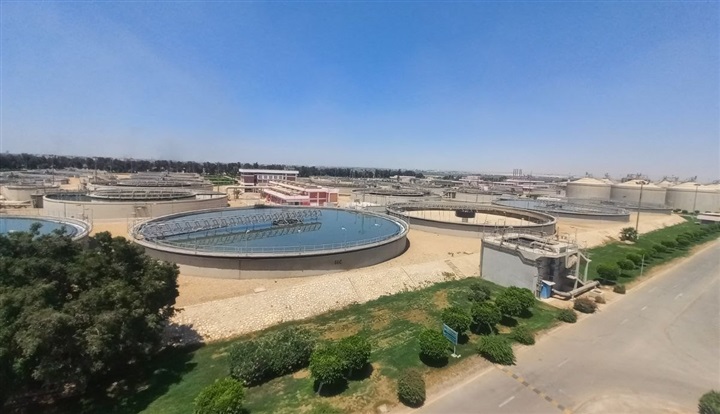
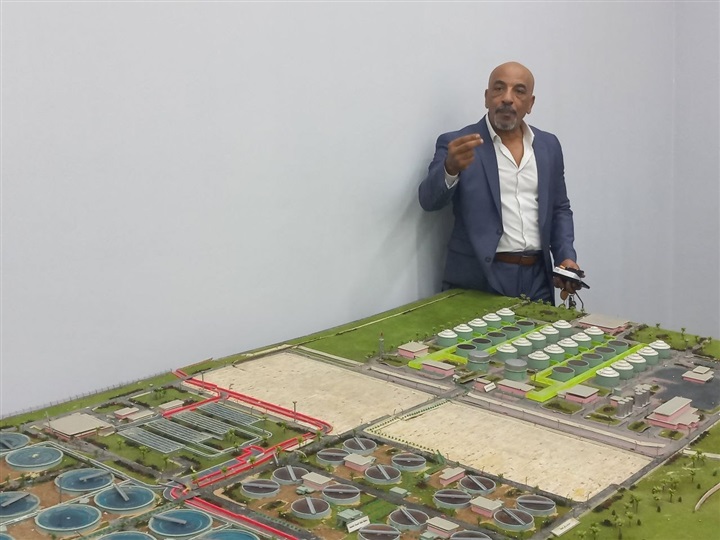
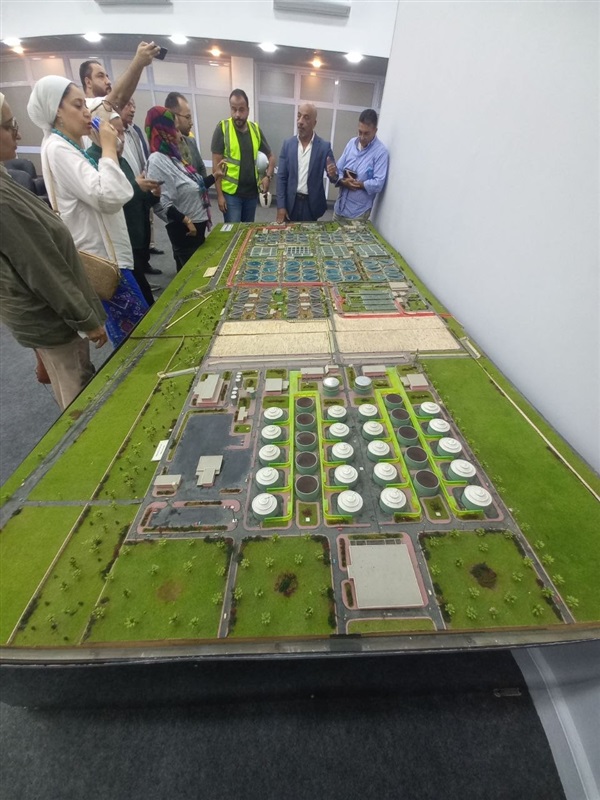
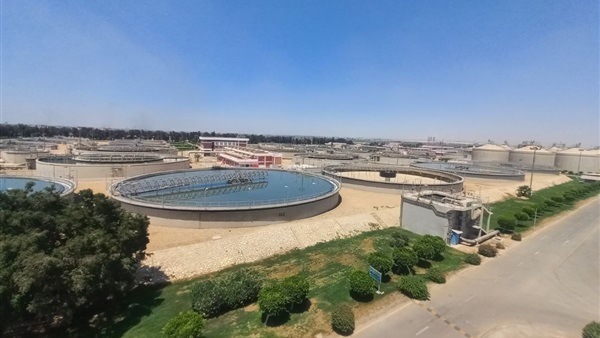
Working silently and shouldering a major societal responsibility, it stretches across vast areas as one of the world’s largest infrastructure strongholds. This is the giant Al-Gabal Al-Asfar Wastewater Treatment Plant, also known as the “Al-Gabal Al-Asfar Water Treatment Plant.”
At Al-Gabal Al-Asfar Plant, the makers of hope lead a daily epic to transform 2.5 million cubic meters of wastewater from an “environmental burden” threatening public health into a strategic resource that fuels development ambitions and places Egypt at the forefront of nations in this vital field.
As implementation of Phase III moves forward, this facility is preparing for a historic transformation that will place it at the pinnacle of the world’s largest treatment plants, surpassing the biggest international projects and heralding the dawn of a new era of sustainability spanning generations.
Strategic Importance: The Giant Protecting 12.5 Million People
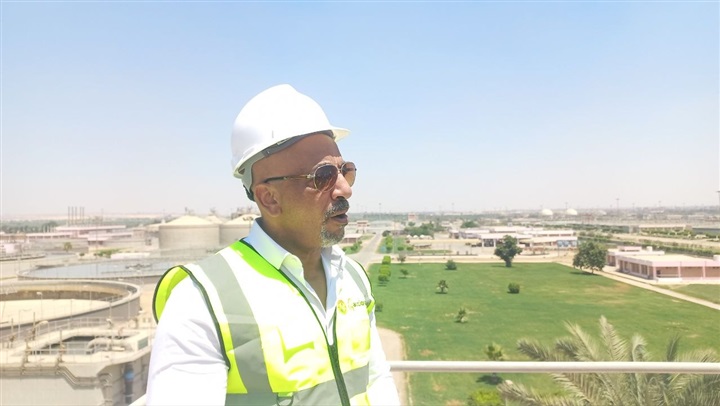
Engineer Hisham Mostafa Zaki, Project Director, said: “We cannot reduce Al-Gabal Al-Asfar Plant to merely a service facility; it is the primary environmental safeguard currently serving 12.5 million people in the areas of eastern Cairo. With the launch of the Phase III expansion project, the plant’s capacity will increase by an additional one million cubic meters, reaching 3.5 million cubic meters per day.”
Why Is This Expansion an Existential Necessity?
Zaki added in statements to Al-Bawaba News: “According to estimates by the French Development Agency (AFD), the plant is expected to serve approximately 17.5 million people by 2040. The plant is currently the largest in Africa and the Middle East and the second largest worldwide. Once the expansion is completed, it will rank first globally. The plant’s operational cycle is based on reducing pollutants in waterways, protecting ecosystems from degradation, and applying a ‘zero-waste’ philosophy through energy recovery and sludge recycling.”
The Epic of the “Workforce”: A Relentless Race Against Time
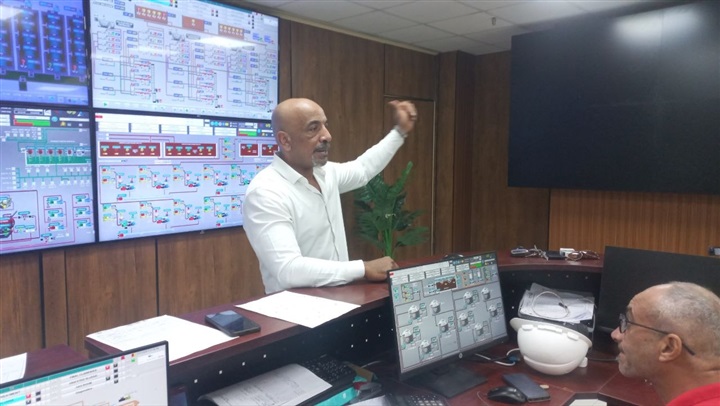
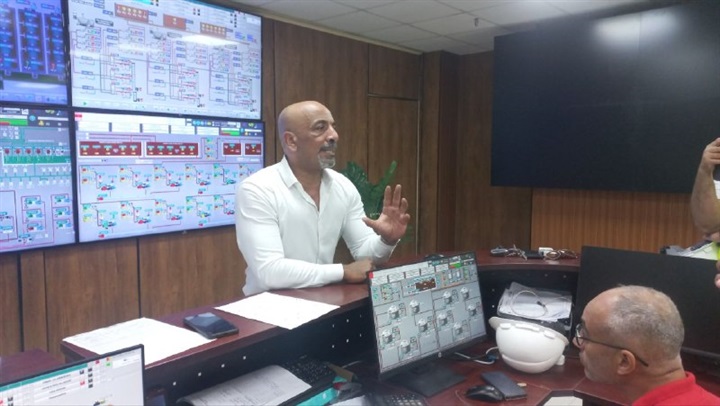
Behind the scenes of this monumental facility, 700 engineers and technicians wage an uninterrupted battle for environmental resilience around the clock. Some work on the ground, while others operate behind the screens of the Supervisory Control and Data Acquisition (SCADA) system and Programmable Logic Controller (PLC) systems. Operations are managed with surgical precision. Chris, the Project Director on the Spanish side, describes the team’s harmony as resembling the “Spanish national football team” in terms of teamwork and professionalism.
Dr. Hassan Mahmoud, Deputy Project Director, reveals the daily drama of operations associated with community behavior. On the morning of Eid al-Adha, the nature of the incoming water changes, turning red as a result of slaughter waste, which causes the rate of gas production to rise suddenly. Fridays, meanwhile, turn into a festival of “foam and soap” because of household washing activities. Despite these seasonal variations, the engineers remain constantly on duty to ensure that the chemical or biological balance within the treatment basins is not disrupted.
The Circular Economy: How Does the Plant Surpass Its Numerical Targets?
The plant embodies a global model for reducing the carbon footprint. According to technical documents, it aims to meet 70% to 75% of its electricity needs independently by generating energy from “sludge” and methane gas.
In a move demonstrating its environmental commitment, Engineer Hisham Mostafa Zaki, Project Director, revealed that Acciona had previously been prepared to shut down the generators completely and bear the cost of purchasing electricity from the national grid rather than operating them with polluting “diesel” fuel, before the system was subsequently developed to operate entirely on the “gas” generated through the treatment process.
Regarding water quality, he said: “The plant has achieved a technical triumph. While the government set the treatment-quality standard for Biochemical Oxygen Demand (BOD) at below 20, the plant succeeded in outperforming this benchmark, achieving record levels ranging between 9 and 10. This represents a quality approaching tertiary treatment, at a very low cost not exceeding 30 piasters per cubic meter of treated water.”
The Experimental Farm: Cultivating Sinai Starts Here
The Project Director added: “Within the plant’s grounds, an experimental farm extends as living proof of the success of the treatment process, where palm trees, olive trees, jojoba, and jatropha flourish. Here, the Ministry of Health and the Ministry of Environment impose strict oversight. The cultivation of crops whose roots come into direct contact with the soil, such as potatoes and carrots, is completely prohibited, while fruits and leaves are periodically analyzed to ensure their safety. More importantly, Al-Gabal Al-Asfar Plant is the main source feeding the route of the giant Bahr El-Baqar project, ‘which treats 5 million cubic meters.’ Water from Al-Gabal Al-Asfar flows to form the backbone of this waterway, which crosses into Sinai to reclaim and cultivate thousands of feddans, making the plant a cornerstone of Egyptian food security.”
International Partnership: A Sustainable Financing Structure
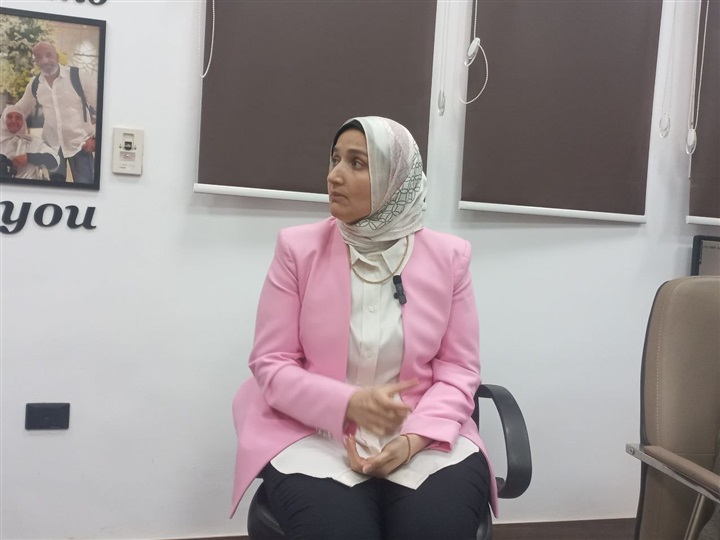
For her part, Dr. Mona Hassan Mahmoud, Deputy Director of Al-Gabal Al-Asfar Plant, said: “The Phase III project represents a ‘tangible example of Egyptian-European cooperation,’ with a total budget of €510 million, distributed as follows: the Egyptian government contributes €338.5 million in local funding, representing the largest share; the African Development Bank (AfDB) provides €110 million in the form of a development loan; the French Development Agency (AFD) provides €50 million as a development loan; the European Union provides a €10 million grant through the French Development Agency; and France provides a €1.5 million French grant for technical assistance.”
“Life-Cycle Cost” Challenges: Protecting Public Funds
Engineer Hisham Mostafa Zaki, Project Director, said: “The plant faces an ongoing challenge in the form of ‘random solid waste,’ as wood, plastics, and grease make their way into the pumps, threatening the equipment with wear and deterioration. To address this, the Phase III tender adopted a groundbreaking criterion known as ‘Life Cycle Cost’ (LCC). This system prevents the ‘temptation of the lowest price’ when making purchases, as bids are evaluated on the basis of electricity consumption, maintenance costs, and the cost of spare parts over the coming 10 years. The objective is to ensure the sustainability of the equipment rather than merely purchasing it at the lowest price. This explains why the plant has continued to operate with high efficiency for 25 years, thanks to continuous proactive maintenance.”
Al-Gabal Al-Asfar: A Global School of Sustainability
Al-Gabal Al-Asfar Plant is not merely a wastewater project; rather, it is a “global school” that attracts experts from Spain, France, and Germany to study its unique experience. With the completion of Phase III and the addition of the new one million cubic meters of capacity, the plant will surpass the capacity of the “Mexico” plant, which stands at 3.2 million cubic meters, officially becoming the largest in the world. It is living testimony to the determination of the Egyptian state to shape a green future—one in which not a single drop of water goes to waste and environmental challenges are transformed into sustainable economic opportunities for future generations.