Trump Approval Rating Falls to 30% Ahead of 2026 Midterm Elections
Friday 30/October/2026 - 09:04 AM
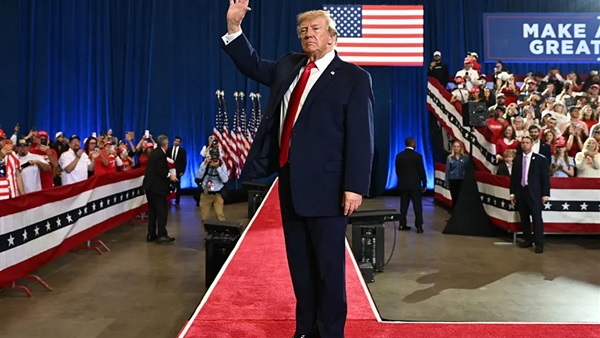
President Donald Trump's approval rating has fallen to 30%, marking the lowest level of his second term and raising questions about the Republican Party's prospects in the November 2026 midterm elections.
According to Pew Research Center polling cited by TIME, the figure is comparable to the approval rating of President Harry Truman ahead of the 1946 midterms.
Economic Concerns Drive Trump's Declining Approval Rating
The Trump approval rating reflects widespread public dissatisfaction with several administration policies, particularly the economy, rising living costs, and the conflict in Iran.
An October Associated Press-NORC poll found that only 26% of U.S. adults approved of Trump's handling of the economy, while just 17% supported his approach to the cost of living. Approval of his handling of the Iran conflict stood at 28%.
Peter Enns, a government professor at Cornell University, attributed Trump's historically low approval to policies that have encountered substantial public opposition.
Economic concerns remain central to the election. Pew Research Center reported that 84% of registered voters consider the economy very important to their midterm decisions, compared with 57% who identified foreign policy as a major priority.
How Presidential Approval Has Shaped Previous Midterm Elections
Historically, the president's party tends to lose congressional seats during midterm elections, although several elections have departed from that pattern.
In 2002, President George W. Bush entered the midterms with a 63% approval rating, according to Gallup. Republicans subsequently gained seats in both the House and Senate, an outcome political analysts associate partly with public support for Bush following the September 11 attacks.
In contrast, President Joe Biden's approval rating stood at 40% ahead of the 2022 midterms. Republicans gained nine House seats, while Democrats added one Senate seat, despite expectations of larger Republican gains.
Georgetown University professor Michele Swers identified the Supreme Court's decision to overturn Roe v. Wade as one factor that may have influenced the 2022 results.
These historical comparisons suggest that presidential approval matters, but electoral outcomes also depend on political circumstances, voter participation, and individual congressional contests.
What Trump's Approval Rating Means for Republicans
The latest Trump approval rating comes as Democrats lead Republicans in many generic congressional ballot surveys.
A PBS News/NPR/Marist poll cited by TIME found that approximately 91% of Democrats and 86% of Republicans expressed enthusiasm about the upcoming midterm elections.
Republicans are also encountering competitive races in traditionally conservative states. In Texas, Democratic Senate candidate James Talarico held a narrow polling lead over Republican Ken Paxton, according to the original report.
Costas Panagopoulos, a political science professor at Northeastern University, explained that presidential approval is an important indicator of midterm performance because it reflects broader perceptions of the governing party.
However, losing congressional seats does not automatically mean losing control of either chamber.
Why the 2026 Midterm Election Results Remain Uncertain
Despite the historically low Trump approval rating, polling cannot determine the final election results.
Enns emphasized that surveys capture public opinion at a particular moment and cannot establish exactly which voters will participate on Election Day.
Candidate quality, district boundaries, voter turnout, and changing political priorities may all influence the final congressional balance.
With Republicans controlling the White House and both chambers of Congress, the November elections will provide a significant measure of public attitudes toward the administration's policies and the direction of the country.
The central question is not simply whether Republicans lose seats, but how the election results ultimately affect the balance of power in Washington.