Arab Parties in Israel Gain Historic Ground in 2026 Election, Challenging Netanyahu's Political Future
Thursday 29/October/2026 - 03:48 PM
Ahmed Seif El-din
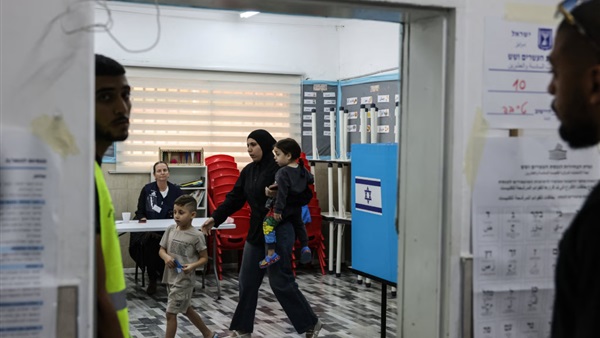
Arab parties in Israel have emerged as potentially decisive players following an extraordinary surge in voter turnout during the country's October 27, 2026, parliamentary election. Preliminary results suggest that Arab political factions could nearly double their representation in the Knesset, creating new possibilities for coalition negotiations and challenging decades of political marginalization.
According to an October 28 report by The New York Times, the two leading Arab political groups, Raam and the Joint List alliance, could collectively secure as many as 19 seats in Israel's 120-member Parliament, compared with just 10 seats in the outgoing legislature.
The unexpected electoral performance comes as neither Prime Minister Benjamin Netanyahu's right-wing coalition nor the opposition bloc led by former military chief Gadi Eisenkot appears likely to secure the 61 seats required for a parliamentary majority.
Arab Voter Turnout Reshapes Israel's Political Landscape
The strong performance of Arab parties in Israel reflects an unusual level of political mobilization among Arab citizens, who represent approximately 20% of the country's population.
Historically, Arab voter participation has often been lower than turnout among Jewish Israelis, partly because of skepticism about the ability of Arab lawmakers to influence national policy.
However, the latest election appears to mark a significant departure from that pattern.
Preliminary projections indicate that Arab parties could surpass their previous parliamentary record of 15 seats, achieved in 2020.
If confirmed, the results would represent one of the strongest electoral performances by Arab political movements since Israel's establishment in 1948.
The surge could also give Arab lawmakers greater influence over the formation of the next government, particularly if the main Jewish-led political blocs remain unable to secure a majority.
Netanyahu Faces New Coalition Challenges
Prime Minister Benjamin Netanyahu repeatedly warned during the election campaign that Arab voters could influence the outcome against his political alliance.
On Election Day, he accused Arab citizens of attempting to steal the election, although Israeli electoral authorities reported no evidence of widespread irregularities.
His comments drew criticism from Arab political leaders, who argued that the accusations were intended to mobilize right-wing voters and discourage cooperation with Arab parties.
Yousef Jabareen, leader of the Joint List alliance, said Netanyahu understood that Arab parliamentary support could be essential to replacing his government.
Jabareen indicated that his alliance was prepared to cooperate with opposition forces seeking political change.
However, Netanyahu's opponents face substantial obstacles in converting Arab electoral gains into a workable parliamentary majority.
Could Gadi Eisenkot Form a Government With Arab Parties?
The election results have placed opposition leader Gadi Eisenkot under increasing pressure to clarify his position on cooperation with Arab political factions.
Eisenkot has previously expressed reservations about including Arab parties in a governing coalition, arguing that they did not satisfy his political conditions.
Nevertheless, preliminary projections suggest that his opposition alliance may be unable to replace Netanyahu without some form of Arab parliamentary support.
One possible arrangement would involve Arab lawmakers supporting an Eisenkot-led minority government without formally joining the coalition.
Such an agreement could allow Arab parties to help prevent no-confidence votes while remaining outside the Cabinet.
Israel has historical precedents for similar arrangements. During the 1990s, Prime Minister Yitzhak Rabin relied on Arab lawmakers to sustain his minority government.
Yet political analysts warn that the current environment presents greater challenges, particularly following the Hamas-led October 7, 2023, attacks and the subsequent shift toward more conservative positions among parts of the Israeli electorate.
Raam and the Joint List Represent Different Political Approaches
Although both groups represent important segments of Israel's Arab population, Raam and the Joint List differ significantly in ideology and political strategy.
Raam Seeks Greater Participation in Government
Raam, led by Mansour Abbas, is a socially conservative party with roots in Islamist political movements.
In recent years, Abbas has sought to increase the party's acceptance among Jewish Israeli voters by emphasizing practical cooperation and domestic issues rather than prioritizing Palestinian statehood.
In 2021, Raam became the first independent Arab party to join an Israeli governing coalition, participating in the alliance that removed Netanyahu from office.
Abbas has since acknowledged Israel's Jewish national character as an existing political reality and explored proposals for greater Arab participation in national and community service.
During the 2026 election campaign, he also placed Jewish politician Yoav Segalovitz, a former senior police officer and centrist Zionist, second on Raam's candidate list.
Joint List Maintains a More Confrontational Political Position
The Joint List brings together three smaller political factions, including a Jewish-Arab left-wing group and a Palestinian nationalist movement.
Its positions on Zionism, Palestinian rights and Israeli government policy have made cooperation with mainstream Jewish political parties more difficult.
Initial election results suggested that the Joint List would secure substantially more seats than Raam.
Political analysts believe Eisenkot might be more willing to cooperate with Raam, but would face considerable resistance from within his own alliance if he depended on the Joint List.
This distinction could prove decisive during coalition negotiations.
Arab Citizens Continue to Face Political and Social Barriers
The electoral gains also highlight longstanding questions about equality and representation for Arab citizens of Israel.
Unlike Palestinians living under Israeli military rule in the West Bank, Arab Israeli citizens possess voting rights and can hold public office, including senior judicial positions.
However, many Arab communities report persistent inequalities in housing, public services and government investment.
Arab citizens also maintain cultural, historical and family connections with Palestinians in the West Bank and Gaza, contributing to complex questions of national identity.
These tensions have intensified since the October 2023 attacks and Israel's subsequent military campaign in Gaza.
Although Raam and some Joint List members condemned the Hamas-led assault, both groups have criticized aspects of Israel's military operations.
For some Jewish Israeli voters, these disagreements have reinforced opposition to Arab participation in decisions involving national security and foreign affairs.
Political Analysts See Opportunity but Limited Cooperation
The strong election showing has raised expectations that Arab parties in Israel could play a more influential role in national politics.
However, political analyst Thair Abu Rass cautioned that efforts by Arab politicians to engage with the Jewish Zionist mainstream have not been matched by sufficient willingness to cooperate from Jewish-led parties.
He argued that this imbalance continues to restrict opportunities for meaningful political integration.
The central challenge is whether the electoral strength of Arab parties can translate into genuine political influence.
Even a historic increase in parliamentary seats may have limited practical consequences if potential coalition partners refuse to negotiate.
What the Election Means for Israel's Next Government
The 2026 Israeli election has created an unusual political situation in which Arab lawmakers could hold considerable influence over the country's next government.
If Eisenkot secures their support, he may have a path toward ending Netanyahu's leadership. If negotiations fail, Israel could face prolonged political deadlock or another election.
For Arab parties in Israel, the results represent more than an increase in parliamentary representation. They demonstrate the potential influence of a minority electorate that has frequently remained outside the country's governing arrangements.
Whether this electoral breakthrough leads to greater participation in government will depend on coalition negotiations, political compromises and the willingness of rival parties to reconsider longstanding divisions.