Iran Election Interference Allegations Raise Concerns Ahead of US Midterms
Thursday 29/October/2026 - 02:29 PM
Ahmed Seif El-din
Iran election interference allegations have emerged ahead of the November 3 US midterm elections, with Iranian officials reportedly describing plans to infiltrate electoral processes in the United States and Israel. According to an investigation published by The Telegraph on October 29, 2026, Tehran views political instability in both countries as a potential strategic advantage amid its ongoing military confrontation with Washington and Jerusalem.
Several Iranian officials told the newspaper that efforts were being explored to recruit individuals involved in election administration and establish cyber capabilities targeting electoral systems.
The claims have not been independently verified, and the report does not establish that Iranian operatives successfully accessed or altered voting systems in either country.
Iran Election Interference Plans Allegedly Target Voting Systems
According to the report, Iranian officials described efforts to identify potential collaborators within American and Israeli election processes.
One official claimed that cyber groups had been established to target election infrastructure, while another suggested that disrupting civilian and political systems was part of Iran's broader response to military pressure.
The officials portrayed such activities as an extension of the conflict involving missile strikes, drones and economic restrictions.
However, their statements do not demonstrate that an operational election-manipulation campaign has succeeded.
The distinction between alleged planning, attempted interference and verified electoral manipulation remains essential when assessing the potential threat.
Iranian officials also insisted that Tehran was not committed to supporting specific candidates. Instead, they described political division and weakened decision-making in both countries as desirable outcomes.
Tehran Sees Political Deadlock as a Strategic Opportunity
The reported Iran election interference strategy reflects a broader calculation by Iranian officials that domestic political disputes could constrain American and Israeli military operations.
Eight months into an intermittent conflict that began with American and Israeli strikes on Iranian cities, Tehran reportedly believes prolonged political uncertainty could reduce the likelihood of renewed attacks.
In Israel, an inconclusive election could delay coalition formation and leave a caretaker administration facing difficult decisions about military action.
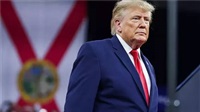
In the United States, Iranian officials hope the midterm elections will produce a Congress more willing to challenge President Donald Trump's approach to the war.
Such outcomes could provide Iran with additional time to rebuild military capabilities damaged during the fighting.
Nevertheless, political uncertainty would not necessarily prevent either country from conducting further military operations.
Israeli Election Results Complicate Netanyahu's Future
Iranian officials have closely monitored Israel's October 27 parliamentary election, which produced no clear governing majority in preliminary results.
With nearly 86% of votes counted on Wednesday, Israeli broadcasters projected the following distribution:
Political bloc Projected Knesset seats
Benjamin Netanyahu's right-wing alliance 53
Gadi Eisenkot's opposition bloc 48
Arab political parties 19
Neither of the two principal Jewish-led blocs appeared capable of independently reaching the 61 seats required for a majority in the 120-member Knesset.
The unusually strong performance of Arab parties complicated coalition negotiations.
Eisenkot could potentially seek their support, but such cooperation would involve political compromises that some of his allies and voters might oppose.
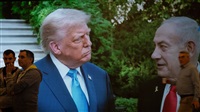
Netanyahu, meanwhile, remained the leader of the largest party and was expected to pursue opportunities to retain power.
Arab Parties Could Influence Israel's Next Government
Fada Hossein Maleki, a member of the Iranian Parliament's national security and foreign policy committee, said the strong showing by Arab political parties could influence the formation of Israel's next government.
He identified two principal objectives among the Arab factions: preventing Netanyahu from retaining power and gaining sufficient parliamentary representation to influence coalition negotiations.
Maleki argued that even a relatively small parliamentary bloc could become decisive when neither major alliance holds a majority.
However, he acknowledged that Netanyahu was unlikely to cooperate with Arab parties and that Eisenkot could face resistance from his supporters if he pursued such an agreement.
Failure to form a government could result in prolonged political deadlock or another election.
For Tehran, such uncertainty could create additional pressure on Israel's political leadership during an ongoing regional conflict.
Iranian Officials Criticize Israel's Political System
Publicly, Iranian officials have dismissed the Israeli election as offering little meaningful change.
Foreign Ministry spokesman Esmail Baghaei criticized Israel's political leadership, arguing that competing parties shared responsibility for violence across the region.
Another senior Iranian official told The Telegraph that Tehran regarded Israeli leaders as adversaries regardless of the election outcome.
The official also warned that renewed attacks against Iran could trigger retaliation extending beyond American military assets.
These statements underline the continuing risk of escalation even as Iranian officials express interest in political developments that might reduce military pressure.
US Midterm Elections Could Restrain Trump's War Policies
The November 3 US midterm elections will determine control of the House of Representatives and approximately one-third of the Senate.
Iranian officials reportedly hope that Democratic gains will limit Trump's ability to pursue further military action.
Steven Wagner, a senior lecturer in international security at Brunel University of London, said Tehran would likely monitor whether Congress might restrict spending related to the conflict and American support for Israel.
Political analyst Amir Ali Abolfath identified several factors that could favor Democrats, including the historical tendency for a president's party to lose congressional seats during midterm elections.
He also cited polling and betting-market expectations suggesting Democrats had a stronger chance of winning the House.
According to the figures presented in the report, betting markets estimated Democratic chances of securing the House at approximately 75% to 80%, while the party's prospects in the Senate were placed around 60%.
These figures represent forecasts rather than election results and remain subject to change.
Would a Democratic Congress Prevent Further War?
Despite Iranian expectations, analysts cautioned that a change in congressional control would not automatically stop American military operations.
Aboulfath noted that a Congress controlled by the opposition party could challenge presidential spending decisions and complicate the administration's legislative agenda.
However, the president retains substantial authority as commander in chief.
Consequently, Democratic victories would not necessarily prevent Trump from ordering additional strikes against Iran.
Aboulfath also suggested that electoral considerations could influence the timing of military decisions.
The White House might consider a short military operation politically advantageous if officials believed it could produce a rapid victory.
Conversely, the prospect of a prolonged confrontation with substantial regional consequences could discourage renewed military action immediately before voting.
These scenarios remain analytical assessments rather than confirmed administration plans.
Security Expert Questions Whether Iran Will Act Immediately
Although Iranian officials reportedly described preparations for election disruption, Wagner suggested that Tehran might benefit more from waiting than from launching an immediate operation.
He argued that Iran could use the period of political uncertainty to strengthen its remaining defenses and assess developments in both countries.
In Israel, Netanyahu's coalition negotiations could take time, while opposition parties face difficult decisions about cooperating with Arab representatives.
In Washington, the midterms could alter the balance of power without necessarily changing the administration's military policy.
Wagner therefore considered major immediate Iranian action less likely, reasoning that intervention could undermine political developments Tehran already regarded as favorable.
His assessment contrasts with the more aggressive intentions described by unnamed Iranian officials.
Election Security Concerns Remain Unresolved
The reported Iran election interference plans raise questions about potential foreign attempts to undermine democratic processes during periods of international conflict.
Recruiting election officials, accessing voting infrastructure or manipulating results would represent serious threats to electoral integrity if substantiated.
However, the supplied reporting provides accounts of alleged intentions and preparations, not independently verified evidence of successful election-system breaches.
There is also no demonstrated causal link between Iran's alleged activities and the preliminary Israeli election results.
Assessing the actual threat would require corroborating evidence from election authorities, cybersecurity investigators or intelligence agencies.
What Happens Next for Iran, Israel and the United States?
As the US midterm elections approach, Tehran appears to be weighing the potential benefits of political instability against the risks of further confrontation.
The Iran election interference allegations suggest that some Iranian officials view electoral disruption as another instrument of strategic competition.
At the same time, analysts emphasize that Tehran may prefer to observe political developments rather than take actions that could provoke additional retaliation.
Israel faces difficult coalition negotiations, while the United States approaches an election that could reshape congressional oversight of the Trump administration.
Neither outcome guarantees a reduction in hostilities.
For now, the central uncertainty is whether political change in Washington or Jerusalem will alter the course of the conflict—or whether military confrontation will continue regardless of the election results.