Israel Political Deadlock: Could Trump Broker a Netanyahu-Eisenkot Unity Government?
Thursday 29/October/2026 - 01:19 PM
Ahmed Seif El-din
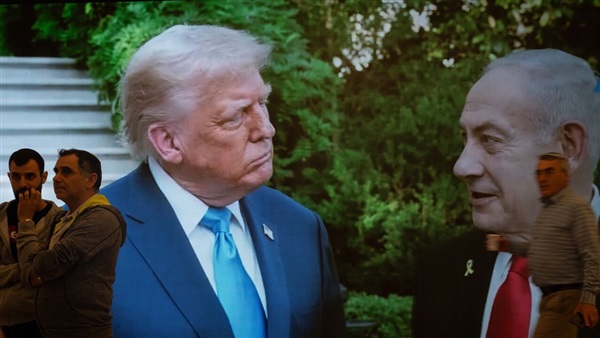
The Israel political deadlock following the October 27 election has left Prime Minister Benjamin Netanyahu and opposition leader Gadi Eisenkot without a clear path to forming a government, raising the possibility that US President Donald Trump could intervene diplomatically to encourage a national unity coalition. According to an October 28 report by Al-Monitor, Israeli political sources believe American pressure could help overcome divisions that neither rival camp appears capable of resolving independently.
With most votes counted, Netanyahu's Likud party remained the largest in Parliament, but his right-wing alliance fell short of the majority required to govern. Eisenkot's opposition bloc also lacked sufficient support, leaving Israel facing difficult coalition negotiations or potentially another election.
Netanyahu Leads Election Results but Falls Short of a Majority
Figures released Wednesday afternoon by Israel's Central Elections Committee placed Likud first with 26 seats in the 120-member Knesset.
Eisenkot's center-right Yashar party followed with 21 seats.
The broader Netanyahu alliance, comprising right-wing, far-right and ultra-Orthodox parties, was projected to secure 53 seats, eight short of the 61 required for a parliamentary majority.
The principal opposition bloc held 48 seats, excluding Arab-majority parties, which were projected to win a combined 17.
Despite retaining his party's lead, Netanyahu could not claim a decisive victory.
Nevertheless, the results preserved his position as a central figure in Israeli politics despite criticism over events during his previous term, including the October 7, 2023, Hamas-led attacks.
Addressing supporters in Jerusalem on election night, Netanyahu claimed his right-wing alliance had secured a decisive majority among Jewish voters and called for a strong national right-wing government.
The official results were expected Thursday afternoon.
President Herzog Urges Parties to Avoid Another Election
Israeli President Isaac Herzog called on political leaders to approach coalition negotiations with flexibility.
Speaking Wednesday, Herzog emphasized the importance of avoiding another election and said he would begin consultations with parliamentary parties the following week, after receiving the official results.
Under Israeli law, the president assigns the task of forming a government to the lawmaker considered most capable of securing parliamentary support.
Although that responsibility frequently goes to the leader of the largest party, it is not automatically determined by party size.
Consequently, both Netanyahu and Eisenkot could seek to demonstrate that they have sufficient backing to establish a government.
Arab Voter Turnout Changes Israel's Political Calculations
One of the election's most significant developments was the sharp increase in Arab voter participation.
Arab citizens represent approximately 21% of Israel's population, according to the country's Central Bureau of Statistics.
Strong turnout helped Arab-majority parties secure a projected 17 Knesset seats, compared with their combined 10 seats in the outgoing Parliament.
The Joint List, an alliance of three Arab parties, focuses on Arab citizens' rights and Palestinian national aspirations.
Ra'am, an Islamist party led by Mansour Abbas, has repeatedly expressed willingness to participate in governing coalitions to advance the interests of Arab communities.
Overall turnout reached approximately 77%, the highest since 1999.
Political sources cited by Al-Monitor attributed much of the increased participation to dissatisfaction with Netanyahu's government, particularly far-right National Security Minister Itamar Ben-Gvir.
The stronger Arab representation has become a decisive factor in the Israel political deadlock.
Why Eisenkot Faces Difficult Coalition Choices
In theory, Eisenkot could assemble a parliamentary majority by cooperating with Arab parties.
His 48-seat bloc, combined with the projected Arab representation, could potentially command enough parliamentary support to challenge Netanyahu.
However, the political obstacles are substantial.
Eisenkot has repeatedly pledged to form a Zionist government, limiting his ability to negotiate formal coalition agreements with Arab parties.
His potential partners, including Avigdor Lieberman of Yisrael Beitenu and former Prime Minister Naftali Bennett of the Together party, are also considered unlikely to support such an arrangement.
A senior opposition source told Al-Monitor that including Arab parties could carry serious political consequences.
A September 27 survey by Israel's public broadcaster Kan found that 55% of Jewish respondents supported disqualifying the Joint List from the election, while 54% supported excluding Ra'am.
Those findings illustrate the political resistance facing any government dependent on Arab parliamentary support.
Could Ra'am Support Another Israeli Government?
There is precedent for Arab participation in an Israeli governing coalition.
In June 2021, Bennett formed a government that included Ra'am, ending Netanyahu's previous period in office.
That coalition survived for approximately 18 months before Netanyahu returned to power.
Eisenkot could theoretically pursue a similar arrangement, with Ra'am entering the government or providing external parliamentary support.
However, such an agreement would still require broader cooperation among parties with sharply different political positions.
Netanyahu could also attempt to negotiate with Ra'am, given his previous contacts with Mansour Abbas.
Such a move would contrast with his campaign rhetoric warning against high Arab voter turnout and linking support for his opponents to support for Palestinian statehood.
For now, neither camp appears to have an uncomplicated route to a majority.
Netanyahu Could Seek Opposition Defections
Another possibility is that Netanyahu attempts to persuade individual opposition lawmakers to join his alliance.
Such defections could theoretically provide the additional seats needed to establish a government.
However, the report describes this scenario as difficult under the existing political circumstances.
Netanyahu's alternative would be to remain in office as caretaker prime minister if coalition negotiations fail and another election becomes necessary.
Political sources told Al-Monitor that another election could allow him to campaign while retaining the advantages of incumbency.
They also raised concerns that a prolonged political transition could coincide with renewed Israeli military operations against Iran or Hamas in Gaza.
These possibilities were presented as assessments by unnamed sources, not confirmed government plans.
Could Trump Break the Israel Political Deadlock?
The possibility of American intervention has emerged as a central theme in discussions about Israel's next government.
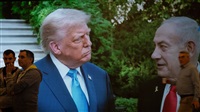
Political sources cited by Al-Monitor suggested that Trump may be uniquely positioned to encourage Netanyahu and Eisenkot to negotiate a unity arrangement.
Such a government could bring together Likud and centrist opposition parties while excluding some of Netanyahu's far-right coalition partners.
Supporters of this approach believe it could provide a more stable governing framework and improve coordination with Washington.
A senior opposition source argued that a unity government excluding the Israeli far right could also help Trump defend his Middle East policies against domestic criticism.
The source suggested that such an arrangement could demonstrate American opposition to settler violence while supporting efforts to advance Trump's Gaza peace initiative.
However, there is no indication in the supplied report that Trump had secured an agreement between the rival leaders.
Netanyahu-Eisenkot Unity Government Faces a Trust Problem
Although a broad coalition could address the parliamentary stalemate, distrust between Netanyahu and his opponents remains a major obstacle.
Israel has previously experimented with power-sharing agreements under which rival leaders alternate as prime minister.
In 2020, Netanyahu and Benny Gantz agreed to a rotation arrangement.
Netanyahu was supposed to serve as prime minister for 18 months before transferring the position to Gantz for the remainder of their three-year agreement.
However, the coalition collapsed in December 2020 after Netanyahu declined to support the 2021 budget, triggering another election.
Whether Netanyahu had intended to complete the rotation remains disputed.
For Eisenkot and his allies, that history complicates the prospect of entering a similar arrangement.
A senior political source from Netanyahu's coalition acknowledged the difficulty of the situation, telling Al-Monitor that none of the available options appeared particularly promising.
Regional Security Tensions Add Pressure to Coalition Talks
The political stalemate comes amid heightened regional security concerns involving Iran and Gaza.
An Israeli security source quoted anonymously by Al-Monitor warned that the absence of a stable government could complicate decisions about military escalation.
The source also expressed concern about developments following the upcoming US midterm elections.
Such assessments reflect the concerns of individual sources and do not establish that new Israeli military operations are imminent.
Nevertheless, the combination of domestic political uncertainty and regional tensions has increased the significance of coalition negotiations.
What Happens Next in Israel?
The Israel political deadlock leaves several possible outcomes: a Netanyahu-led coalition supported by additional lawmakers, an Eisenkot-led arrangement involving Arab parliamentary backing, a broad unity government or another election.
Herzog's consultations will be an important step in determining which leader receives the first opportunity to form an administration.
For Netanyahu, the challenge is to convert Likud's first-place finish into a parliamentary majority.
For Eisenkot, the central dilemma is whether to reconsider his coalition commitments or negotiate directly with his principal rival.
Trump could become an influential external participant if both sides prove unable to reach an agreement.
However, American involvement would not eliminate the underlying disagreements over leadership, political representation and the terms of any power-sharing arrangement.
Ultimately, the Israel political deadlock reflects a Parliament divided between competing alliances, with no clear governing majority and limited trust among the leaders who would need to cooperate.