5:00 p.m., Cairo time (5).. Egyptian obelisk in Rome
Saturday 20/December/2025 - 05:52 PM
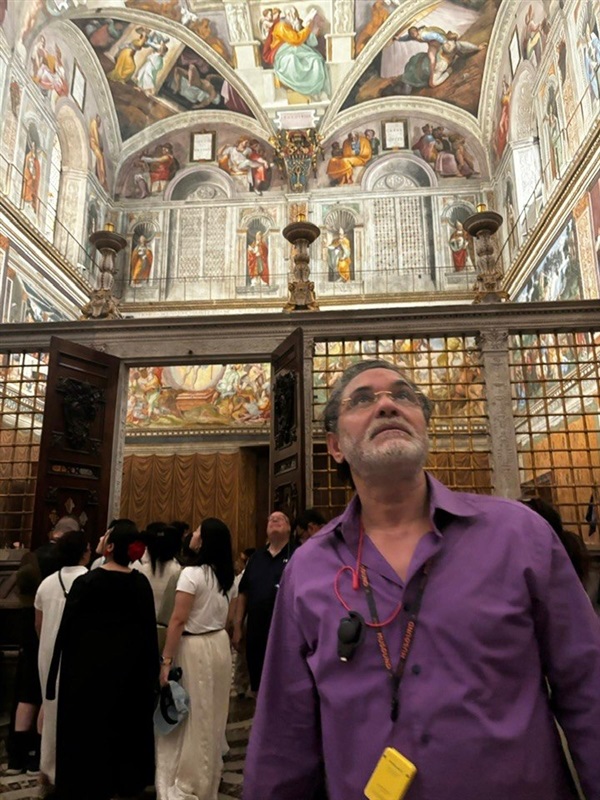
Inside San Pietro in Vincoli and St. Peter’s Basilica in the Vatican, and the Sistine Chapel (Cappella Sistina)—the largest churches of the papal seat—the dream was taking shape before my eyes. There stood the great Michelangelo, suspended on the ceiling, creating his most beautiful works: The Expulsion from Paradise (fourth from the left), the famous Creation of Adam (sixth from the left), and the sculpture of the Prophet Moses located inside San Pietro.
Among the corridors of the Vatican Museum, I delighted in viewing one of Michelangelo’s greatest works, the sculpture The Pietà, which depicts the Virgin Mary holding the body of Jesus Christ, according to Christian belief, as she weeps.
As I set out to leave through the Vatican gate, I saw—through the balcony overlooking the main square—one of the Pharaonic obelisks that adorn most of the world’s capitals, standing tall. It is the obelisk that Vatican historians say witnessed the martyrdom of Saint Peter the Apostle, crucified upside down in the year 64 or 67 AD—no one knows the exact date—with the act carried out by the Roman emperor Nero, notorious for the Great Fire of Rome and the first to persecute Christians in the Roman Empire.
That obelisk had been brought from Egypt by the emperor Caligula and erected at the heart of Nero’s Circus, which witnessed the crucifixion as well as numerous executions of Christians in that era. Yes, Rome has a special magic known only to those who savor it gently and sail through it calmly, far from the clamor and din of fools.