Hillary Clinton Urges Trump to Strengthen Ukraine Support as Russia Intensifies Winter Attacks
Friday 20/November/2026 - 02:56 PM
Ahmed Seif El-din
Former U.S. Secretary of State Hillary Clinton has called for urgent increases in Ukraine support, accusing President Donald Trump's administration of weakening Kyiv's defenses as Russia intensifies missile and drone attacks on civilian infrastructure ahead of winter.
In an opinion essay published by The New York Times on November 19, 2026, Clinton argued that Washington's declining military assistance risks leaving millions of Ukrainians without reliable electricity, heating and water during freezing temperatures.
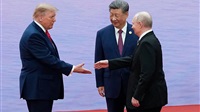
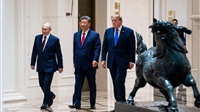
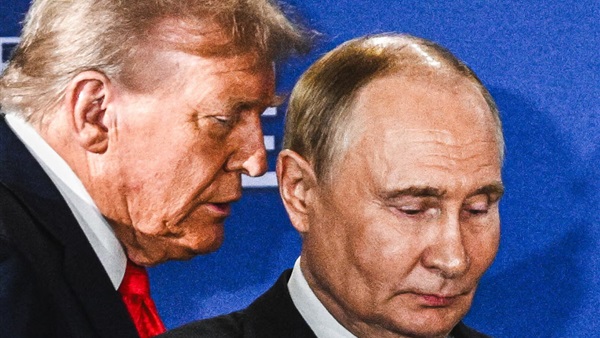
Her criticism followed Trump's meeting with Russian President Vladimir Putin and Chinese President Xi Jinping in Shenzhen, China, where Clinton said the American president should have confronted Moscow over its attacks on Ukrainian cities and warned Beijing against supporting Russia's military operations.
Clinton argued that the United States and its NATO allies must act immediately rather than wait for the new Congress to take office in January.
Hillary Clinton Criticizes Trump's Approach to Putin
Clinton said the Shenzhen summit provided an opportunity for Trump to demand an end to Russian attacks on Ukrainian civilians and essential infrastructure.
Instead, she argued, the administration had failed to demonstrate sufficient pressure on Moscow or secure meaningful concessions toward ending the war.
Her criticism also followed Trump's recent assertion that Putin could be acting more aggressively against Ukraine.
Clinton interpreted the comment as another example of the president minimizing Russia's responsibility for the conflict.
She warned that Washington's current approach could strengthen Putin's negotiating position while undermining Ukraine's ability to resist further attacks.
Although Trump and Putin discussed the war during their meetings in China, no significant agreement on Ukraine was announced.
Clinton maintains that diplomatic engagement without corresponding pressure risks encouraging Moscow to continue its military campaign.
Reduced U.S. Military Aid Raises Concerns Over Ukraine's Defenses
A central concern in Clinton's analysis is the reported reduction in American military assistance to Ukraine.
She cited reports that the Pentagon had slowed deliveries of critical Patriot air defense interceptors, which Ukraine relies on to counter Russian ballistic missiles.
According to Ukrainian President Volodymyr Zelensky, Kyiv has also experienced disruptions in access to Starshield, the military-focused satellite communications service associated with SpaceX's Starlink technology.
Starshield supports Ukrainian military communications and operations against incoming drones.
Clinton further cited interruptions in American early-warning intelligence concerning Russian missile attacks.
On November 17, Zelensky said Ukraine's access to Starshield remained limited.
These reported restrictions, Clinton argued, have become especially dangerous as Russia increases attacks against Ukrainian energy and water infrastructure.
The administration's approach, in her assessment, has weakened Ukraine's defenses while making Russia less likely to compromise in peace negotiations.
Russia Targets Ukrainian Infrastructure Ahead of Winter
Clinton warned that Moscow appears determined to exploit winter conditions by attacking the facilities Ukrainians depend on for electricity, heating and drinking water.
Russian missile and drone strikes have already disrupted essential services in several parts of Ukraine.
With temperatures expected to fall, prolonged infrastructure damage could create serious humanitarian consequences, particularly in cities where heating systems rely heavily on electricity.
Clinton argued that Russia's objective is to make civilian life increasingly difficult, potentially forcing large numbers of Ukrainians to flee their homes.
She described the strategy as an attempt to achieve through civilian suffering what Russian forces have failed to accomplish on the battlefield.
The former secretary of state warned that, without additional assistance, some Ukrainian urban areas could become extremely difficult to inhabit during the coldest months.
Her assessment emphasizes the urgency of restoring air defenses and ensuring that damaged infrastructure can be repaired and maintained.
Russian Battlefield Difficulties Shape Moscow's Strategy
Clinton linked Russia's intensified attacks on civilian infrastructure to what she described as the limited progress of Russian ground forces.
Citing the Institute for the Study of War, she said Russian troops captured approximately 46 square miles of Ukrainian territory during the first ten months of 2026, compared with 1,874 square miles in 2025.
She also reported that Russia had lost more territory than it gained during the preceding two months.
These figures, which form part of Clinton's argument, suggest that Moscow's ground offensive has encountered substantial difficulties.
Clinton additionally pointed to Ukrainian strikes against the strategically important Kerch Strait Bridge, which connects Russia with the Crimean Peninsula, illegally annexed by Moscow in 2014.
She argued that Putin's increasing reliance on long-range missile and drone attacks reflects his inability to achieve decisive territorial advances.
In her assessment, Moscow is attempting to pressure Ukrainian society into accepting political concessions by making daily civilian life increasingly unbearable.
Patriot Missile Shortages Threaten Ukraine Support
The availability of Patriot air defense missiles represents one of the most urgent problems facing Ukraine, according to Clinton.
Ukrainian forces have developed innovative methods for intercepting Russian drones and cruise missiles, but ballistic missiles remain particularly difficult to counter.
Ukraine is reportedly developing domestic technologies to address this vulnerability. However, Clinton said a viable alternative is unlikely to become available before mid-2027.
Until then, American-made Patriot systems remain essential to protecting civilians and strategic infrastructure against ballistic threats.
According to Zelensky, U.S. deliveries have recently slowed to an average of approximately 12 Patriot interceptors per month.
By comparison, Ukrainian intelligence estimates that Russia could manufacture as many as 110 ballistic missiles monthly.
This imbalance raises serious questions about Kyiv's ability to withstand sustained attacks.
Clinton also cited reports that the Pentagon had delayed authorizations needed for NATO partners to transfer additional Patriot interceptors to Ukraine.
Although European allies are attempting to compensate for the shortages, their efforts depend partly on American approval and military supply chains.
Iran War Complicates U.S. Air Defense Supplies
Clinton identified Washington's military campaign against Iran as another factor contributing to the shortage of advanced interceptors.
She argued that extensive use of Patriot missiles during the conflict had reduced American stockpiles, complicating efforts to provide additional weapons to Ukraine.
The United States must maintain sufficient defenses for its own military personnel, particularly those stationed in regions exposed to missile threats.
However, Clinton maintained that protecting American forces and assisting Ukraine should not be treated as mutually exclusive objectives.
She noted that U.S. defense manufacturers are working to increase Patriot production and that the Pentagon has pressed contractors to accelerate deliveries.
In her view, expectations of higher future production should give Washington greater flexibility to transfer available interceptors to Ukraine now.
Clinton also alleged that Russia had provided Iran with intelligence useful for targeting American military forces in the Middle East, further complicating the strategic relationship between the two conflicts.
Clinton Proposes Redirecting Patriot Missiles to Ukraine
To address Ukraine's immediate air defense requirements, Clinton recommended using a policy previously adopted by the Biden administration.
In 2024, Washington redirected certain Patriot interceptors originally intended for delivery to third-party countries, prioritizing Ukraine's urgent defensive needs without drawing directly from American military inventories.
Clinton argued that Trump could pursue a similar arrangement.
Under such an approach, the United States would coordinate with allied governments and offer assurances that transferred missiles would be replaced as production increased.
This could accelerate Ukraine support while reducing the pressure on existing American military stockpiles.
The proposal would nevertheless require cooperation from receiving countries and careful management of production schedules.
Clinton presented the arrangement as a practical alternative to allowing Ukrainian defenses to deteriorate while waiting for additional missiles to become available.
Expanding Intelligence and Satellite Assistance
Beyond interceptor deliveries, Clinton called for restoring and expanding American intelligence and satellite support.
She argued that Ukraine should receive reliable early-warning information about incoming Russian missile strikes, allowing military personnel and civilians more time to prepare.
She also advocated expanding access to Starlink-related capabilities that could help Ukrainian forces identify and target ballistic missile launch sites inside Russia.
Zelensky has reportedly requested American assistance for these operations.
Clinton argued that reducing Russia's ability to launch ballistic missiles could lessen Ukraine's dependence on defensive interceptors.
However, she said Trump had shown reluctance to approve the requested support.
Her proposal reflects a broader argument that Ukraine needs both stronger defensive systems and the ability to disrupt attacks before missiles reach Ukrainian territory.
Congress Faces Pressure to Act Before January
Clinton urged lawmakers from both parties to use the remaining weeks of the current congressional session to press the administration for immediate action.
She noted that the White House is seeking congressional approval for the annual National Defense Authorization Act and the following year's military budget.
These legislative priorities, she argued, provide Congress with leverage to demand clearer commitments on Ukraine support.
Clinton called for lawmakers to insist on continued intelligence assistance, a transparent schedule for Patriot missile deliveries, expanded satellite capabilities and additional humanitarian aid.
She also suggested that Democrats should coordinate with Republicans willing to support Ukraine, despite political disagreements over other military commitments.
According to Clinton, waiting until the new Congress convenes in January could leave Ukraine facing severe infrastructure damage during the most dangerous period of winter.
She said the incoming Democratic majorities should investigate Trump's Russia policy and consider additional assistance, but emphasized that immediate intervention remains essential.
Domestic Priorities Complicate the Debate Over Ukraine Aid
Clinton's proposals come amid continuing debate in the United States over the costs and priorities of foreign military assistance.
Supporters of additional Ukraine aid argue that helping Kyiv resist Russian aggression strengthens European security and reduces the risk of broader conflict involving NATO.
Critics and skeptical voters question whether Washington should continue committing substantial resources overseas while facing pressing domestic economic challenges.
Public reactions to Clinton's essay reflected these competing concerns.
Some readers supported stronger action against Russia and criticized Trump's engagement with Putin.
Others argued that politicians advocating additional foreign assistance must acknowledge Americans struggling with living expenses and uncertainty over domestic benefits.
These disagreements illustrate the political difficulties facing any effort to increase U.S. military commitments, even when lawmakers agree that Ukraine's humanitarian situation is serious.
Ukraine's Winter Security Becomes a Test of U.S. Leadership
Clinton's central argument is that American decisions over the coming weeks could have major consequences for Ukraine's ability to withstand Russian attacks.
She maintains that Moscow is attempting to exploit shortages of defensive weapons and essential infrastructure to weaken Ukrainian resistance.
Her proposed response combines accelerated Patriot deliveries, restored intelligence cooperation, expanded technological assistance and additional humanitarian support.
The former secretary of state also argues that continued pressure on Russia is necessary to create conditions for meaningful peace negotiations.
Whether Washington adopts these proposals will depend on decisions by the Trump administration, congressional negotiations and the availability of military resources.
For Clinton, the immediate priority is preventing a humanitarian crisis while ensuring that Ukraine has the defensive capabilities needed to resist Russian pressure throughout the winter.
Her warning is that delaying assistance could increase civilian suffering, weaken Kyiv's negotiating position and make an eventual peace settlement more difficult to achieve.