U.S. Midterm Elections Reshape Gulf Relations With Washington After Democratic Victory
Thursday 19/November/2026 - 02:31 PM
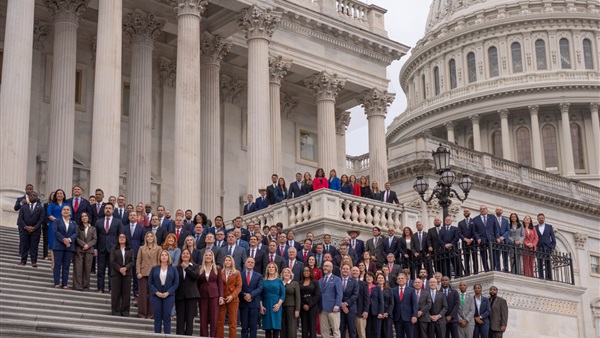
The U.S. midterm elections have dramatically altered Washington’s political landscape, with Democrats securing control of both chambers of Congress in a sweeping November 3 victory that could reshape American relations with Gulf Arab states. The outcome raises important questions about the Iran war, regional security, energy markets, artificial intelligence, arms sales, and the future of U.S. foreign policy ahead of the 2028 presidential election.
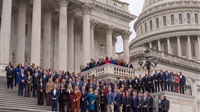
Democrats won 56 Senate seats and at least 257 House seats, with three additional House races still being counted as of November 18. The results represent one of the largest midterm political shifts in modern American history, strengthening congressional oversight of President Donald Trump’s administration while increasing pressure for changes in U.S. policy toward the Middle East.
Democratic Victory Signals a Major Political Shift
The Democratic Party’s performance exceeded traditional expectations for a midterm election, when the president’s party typically loses congressional seats.
According to the election figures presented in the analysis, Democrats flipped nine Republican-held Senate seats, including contests in Texas, Ohio, Iowa, Kansas, and Alaska. Their projected House majority of approximately 260 seats would be the largest since the 1991–1993 Congress.
The election also reflected significant changes in voter preferences. Younger voters, independents, and Hispanic communities moved toward Democratic candidates, while concerns over inflation, government spending, and the Iran war weakened Republican support.
Despite their commanding victory, Democrats will remain below the two-thirds majorities necessary to override presidential vetoes. This means that although Congress will gain significant influence over spending, investigations, and appointments when the new session begins on January 3, 2027, Trump will retain substantial executive authority.
Iran War Emerges as a Decisive Election Issue
The conflict with Iran played a central role in the election outcome.
An NBC News exit poll cited in the analysis found that 74% of surveyed voters considered the war a crucial or major factor in their congressional choices, while 64% believed military action against Iran had been the wrong decision.
Economic pressures amplified public dissatisfaction. Brent crude oil increased from approximately $72 per barrel before the war in February to $117 on October 30. American gasoline prices remained above $4 per gallon from April, while rising fertilizer costs placed additional pressure on agricultural states.
The conflict also imposed substantial costs on the federal government. The Pentagon inspector general estimated military operations had cost $33.4 billion by the end of June, excluding repairs to damaged facilities.
Vice President JD Vance acknowledged the war’s role in Republican losses, identifying demands for peace, lower living costs, an America First agenda, and a reassessment of relations with Israel as important voter concerns.
Could Congress Accelerate an End to the Iran War?
The incoming Democratic majority is expected to seek limits on military operations through congressional investigations, spending restrictions, and War Powers Resolutions.
However, these mechanisms face legal and political obstacles, particularly the president’s veto power.
Trump may have an incentive to pursue an interim agreement before January, potentially through Qatari mediation. Proposals under discussion reportedly include easing the U.S. naval blockade, releasing some frozen Iranian funds, restoring international inspections, and reopening the Strait of Hormuz.
Nevertheless, the possibility of renewed military escalation remains.
Energy markets have responded cautiously. Brent crude declined to approximately $92 per barrel by November 10, while prediction markets placed the probability of normal maritime traffic through the Strait of Hormuz before July 2027 at only 37%.
For Gulf economies, the central concern is therefore not simply whether fighting subsides, but whether international shipping, energy exports, and regional commerce can return to normal.
Gulf Artificial Intelligence Investments Face New Scrutiny
Artificial intelligence has become an increasingly important component of U.S.-Gulf economic cooperation, particularly through investment in advanced computing infrastructure and semiconductor technology.
Saudi Arabia and the United Arab Emirates have pursued major partnerships with American technology companies, supported by substantial financial resources, energy availability, and ambitious economic diversification programs.
In July, the U.S. Commerce Department authorized expanded access to advanced chips for the UAE. However, congressional concerns about potential technology transfers to China remain significant.
Democratic lawmakers, including Senator Elizabeth Warren, have questioned whether export arrangements provide sufficient safeguards.
The debate could intensify following reports surrounding Nvidia and concerns about possible diversion of advanced computing equipment through third countries. The companies involved have denied wrongdoing.
At the same time, domestic opposition to American data centers could create opportunities for Gulf countries.
According to the analysis, local restrictions and political opposition may delay approximately 30% of planned U.S. data center capacity additions for 2028.
This could strengthen the Gulf’s competitiveness as an alternative location for AI infrastructure, although security risks, insurance costs, and restrictions on semiconductor exports remain important obstacles.
Congressional Investigations Could Affect Gulf Business Relationships
Another significant consequence of the U.S. midterm elections concerns the expanding congressional scrutiny of business relationships involving the Trump family and Gulf investors.
Democratic lawmakers are preparing investigations into real estate ventures, sovereign wealth fund investments, cryptocurrency transactions, and gifts involving the president or his associates.
The transactions identified in the analysis include Trump-branded property developments in Saudi Arabia, the UAE, Qatar, and Oman, alongside Gulf investments in Jared Kushner’s Affinity Partners.
Additional scrutiny may focus on Emirati-linked investments in World Liberty Financial and Qatar’s gift of a Boeing 747 intended for presidential use.
The White House and relevant business entities have denied that particular commercial arrangements influenced government policy.
No finding of wrongdoing is established by the transactions themselves. Nevertheless, congressional committees could demand documents, conduct hearings, and examine whether private commercial interests intersected with official diplomatic decisions.
For Gulf governments, the principal risk may be reputational rather than legal, particularly if important strategic agreements become associated with political controversy in Washington.
Changing U.S. Attitudes Toward Israel and Palestine
The election also highlighted changing American public opinion regarding Israel and the Palestinian question.
A Gallup survey cited in the analysis found that 41% of Americans sympathized more with Palestinians, compared with 36% who favored Israelis. The shift was particularly pronounced among Democratic voters and younger Americans.
Growing criticism of Israeli government policies has also influenced congressional debates over military assistance, arms transfers, and settlement activity.
The American Israel Public Affairs Committee, or AIPAC, remained an influential political organization during the elections, but several candidates who rejected its financial support achieved notable victories.
These developments could have important consequences for Saudi Arabia’s position on normalization with Israel.
Riyadh has maintained that meaningful progress toward Palestinian statehood is essential to normalization. As American attitudes evolve, Washington may attach less political importance to expanding the Abraham Accords without parallel progress on Palestinian rights.
For the UAE and Bahrain, which have already normalized relations with Israel, the changing congressional environment could reduce the diplomatic advantages previously associated with those agreements.
Arms Sales and U.S.-Gulf Security Cooperation Under Review
Defense cooperation remains a cornerstone of Washington’s relationships with Gulf Cooperation Council countries, but Democratic control of Congress could introduce stronger oversight.
Proposed sales of advanced military equipment, including F-35 aircraft to Saudi Arabia, may face additional scrutiny.
A U.S.-Saudi civil nuclear agreement could also encounter opposition over uranium enrichment provisions and broader nonproliferation concerns.
Meanwhile, allegations concerning the UAE’s role in Sudan may receive renewed congressional attention. Emirati authorities deny supporting the Rapid Support Forces.
Future of American Military Bases in the Gulf
The Iran war has intensified debate over the long-term presence of American forces in the region.
The analysis cites assessments identifying extensive damage to U.S. military installations, with rebuilding costs estimated by the American Enterprise Institute at approximately $5 billion.
Congress will have considerable influence over whether those facilities are fully restored, modernized, or replaced by a smaller military footprint.
Some policymakers argue that U.S. bases provide essential protection against regional threats. Others contend that their presence has exposed host countries to retaliatory attacks.
No Gulf government has publicly demanded a complete American withdrawal.
Nevertheless, Saudi Arabia and other regional states have sought to diversify their security partnerships, reflecting concerns about dependence on a single international power.
A smaller, more resilient, and less visible U.S. military presence could emerge, although American security cooperation is likely to remain strategically important.
Economic Pressures Extend Beyond Oil Markets
The economic consequences of the political transition in Washington are particularly significant for Gulf financial markets.
Most GCC currencies are pegged to the U.S. dollar, meaning regional central banks frequently follow Federal Reserve monetary policy.
The Federal Reserve raised its benchmark interest rate to a range of 3.75%–4.00% in September, with further tightening anticipated in December.
Higher interest rates increase financing costs for Gulf governments and businesses already confronting the economic consequences of regional conflict.
The U.S. national debt, exceeding $40 trillion, and elevated Treasury yields also influence the cost of Gulf borrowing.
According to Fitch Ratings figures cited in the analysis, the GCC debt market exceeds $1.2 trillion, with approximately $240 billion issued during the first nine months of 2026.
The dollar’s strength has helped reduce some imported inflation, but it has also made Gulf tourism and non-oil exports relatively more expensive.
Meanwhile, Gulf sovereign wealth funds hold substantial investments in American stocks, bonds, and property, leaving them exposed to U.S. market volatility.
Congressional gridlock may limit major fiscal policy changes until 2029, although developments in the Iran conflict and international energy markets will remain important economic variables.
Muslim Representation in Congress Reaches a Milestone
The election produced a historic development with the victory of Abdul El-Sayed in Michigan, making him the first Muslim elected to the U.S. Senate.
The Egyptian American physician’s election attracted considerable attention throughout the Arab world, particularly following a victory speech incorporating Arabic expressions.
The incoming Congress is expected to include a record eight Muslim members, reflecting broader changes in American political representation.
However, shared religious or cultural backgrounds do not necessarily translate into unconditional political support for Gulf governments.
Several Muslim lawmakers belong to the progressive wing of the Democratic Party and have criticized American military assistance to Middle Eastern governments, human rights practices, and regional conflicts.
Their increasing visibility could improve perceptions of American political diversity while simultaneously creating more demanding debates over U.S.-Gulf relations.
The 2028 Presidential Election Becomes a Strategic Priority
Beyond immediate congressional changes, the U.S. midterm elections have altered expectations for the 2028 presidential contest.
Prediction markets cited in the analysis placed the Democratic Party’s probability of winning the presidency at approximately 66%.
Georgia Senator Jon Ossoff emerged as a leading Democratic contender, while Alexandria Ocasio-Cortez and former Transportation Secretary Pete Buttigieg remained prominent potential candidates.
On the Republican side, Vice President JD Vance continued to lead the prospective field, although his political standing weakened following the midterm defeat.
These early assessments remain uncertain. Economic recovery, developments in the Iran war, and shifts in public opinion could substantially change the political landscape before November 2028.
A future Democratic administration could adopt a more institutional approach toward Gulf partnerships, emphasizing congressional accountability, human rights, technology safeguards, and greater caution about military intervention.
Nevertheless, economic and strategic interests would likely continue to support cooperation between Washington and Gulf capitals.
What Gulf Countries Should Do Next
The changing political environment creates several priorities for Gulf policymakers.
Engagement with Washington may need to extend beyond the White House to congressional committees, Democratic leaders, and influential progressive lawmakers.
Commercial agreements involving sensitive technologies, sovereign wealth funds, and major infrastructure projects could benefit from stronger transparency and clearer institutional safeguards.
Regional governments also have an interest in supporting diplomatic efforts to end the Iran war, maintaining access to advanced technologies, and planning for potentially reduced American military deployments.
Financial planning should account for persistent borrowing costs, uncertain energy revenues, and possible dollar fluctuations.
Most importantly, Gulf states may need to strengthen relations with both major U.S. political parties rather than relying heavily on individual administrations.
Outlook: A New Phase in U.S.-Gulf Relations
The Democratic victory does not necessarily signal a fundamental rupture between the United States and Gulf Arab countries. Energy cooperation, defense partnerships, technological investment, and regional stability remain important shared interests.
However, the balance of political influence in Washington is changing.
A stronger Congress could complicate certain arms sales, commercial arrangements, and foreign policy decisions while increasing pressure for diplomatic solutions and accountability.
For Gulf governments, the challenge is to adapt to a more divided American political system without compromising long-term strategic interests.
The central lesson of the 2026 election is that U.S.-Gulf relations must increasingly be managed through durable institutions rather than personal political relationships, particularly as Washington approaches another potentially consequential presidential election in 2028.