Russia-Europe Relations Under Fire as Putin Warns of ‘Humiliating Decline’ at Trump-Xi Summit
Thursday 19/November/2026 - 03:26 PM
Ahmed Seif El-din
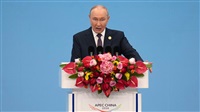
Russia-Europe relations came under renewed scrutiny on November 18, 2026, as Russian President Vladimir Putin accused European governments of driving economic decline through sanctions on Moscow. Speaking at the Asia-Pacific Economic Cooperation (APEC) summit in Shenzhen, China, Putin criticized European energy policies during a high-profile gathering attended by US President Donald Trump and Chinese President Xi Jinping.
The remarks came ahead of scheduled talks between the three leaders, amid continuing tensions over the Ukraine war, international sanctions, trade restrictions, and global economic cooperation.
According to a report by Callum Sutherland published in TIME on November 18, Putin described the eurozone as experiencing a "humiliating decline," blaming restrictions on Russian energy supplies for increasing economic pressure on European businesses and households.
Putin Blames European Sanctions for Economic Decline
During the APEC welcome banquet, Putin argued that European sanctions imposed following Russia's full-scale invasion of Ukraine in February 2022 had disrupted international supply chains and weakened economic competitiveness.
The Russian president claimed that restrictions had deprived European economies of affordable and reliable Russian energy, contributing to higher operating costs and declining living standards.
"Artificial barriers at one level of the value chain lead to costs across all other links," Putin said.
He maintained that sanctions had placed a substantial financial burden on European companies and consumers.
These assertions reflect Moscow's position on the economic consequences of sanctions and do not, by themselves, establish that the restrictions are responsible for Europe's broader economic challenges.
Putin also suggested that renewed engagement with other major powers could generate significant economic benefits.
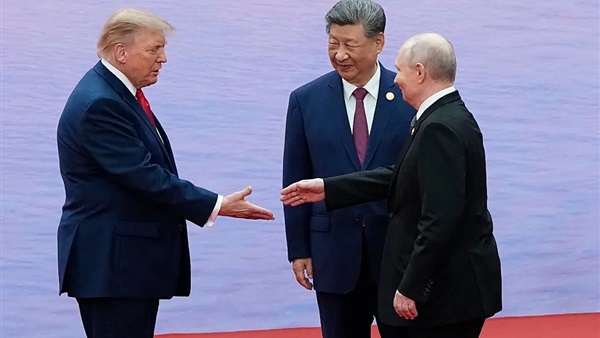
Trump, Putin and Xi Meet at APEC Summit in China
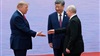
The remarks followed a notable diplomatic encounter involving the leaders of the United States, Russia and China.
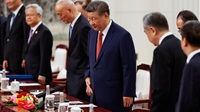
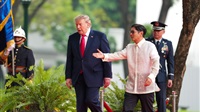
Trump arrived in Shenzhen on Wednesday afternoon, where Xi personally welcomed him on the runway in a departure from standard diplomatic protocol.
The two leaders embraced and shook hands before attending the summit banquet, where Putin joined them for informal discussions.
The gathering preceded a scheduled trilateral meeting on Thursday, November 19, at 2:30 p.m. local time, with the Kremlin indicating that the talks would last no longer than an hour.
The meeting brings together three leaders whose policies have significant implications for international security, energy markets and global trade.
Trump-Putin Talks Could Address Ukraine
Trump was also reportedly expected to meet Putin separately, according to the Associated Press.
Such an encounter would mark their first direct meeting since unsuccessful negotiations in Alaska in 2025, which were intended to address possible peace arrangements concerning Russia's invasion of Ukraine.
However, Kremlin spokesperson Dmitry Peskov cautioned that the summit schedule was unlikely to permit extensive negotiations.
His comments suggested that any bilateral discussions would be limited rather than a comprehensive diplomatic effort to resolve the conflict.
European Union Prepares New Sanctions Against Russia
Putin's criticism of Russia-Europe relations coincided with preparations in Brussels for another round of economic restrictions against Moscow.
On November 16, the European Union announced plans to introduce a new sanctions package targeting Russian oil refineries, financial institutions, e-commerce operations and companies supporting Russia's so-called shadow fleet.
EU foreign policy chief Kaja Kallas indicated that the proposed measures would focus on sectors and organizations involved in sustaining Russia's international economic activities.
The shadow fleet refers to vessels used to transport Russian energy products while attempting to circumvent Western sanctions.
The planned restrictions reflect the EU's continuing efforts to pressure Moscow over the war in Ukraine.
Notably, Putin's remarks criticized European restrictions but did not address American sanctions currently imposed on Russia.
Trump Administration Takes Different Approach to Russian Sanctions
Washington's sanctions policy has also become a subject of domestic political debate.
In September, the US Congress approved legislation introducing additional measures against Moscow, including provisions enabling Trump to impose extensive tariffs on Russia and major purchasers of Russian energy.
Some Democratic lawmakers expressed concern that broader tariffs could increase costs for American consumers.
However, Trump signed an executive order in October waiving many of the sanctions included in the legislation, reducing the additional economic pressure those measures were intended to impose.
The decision illustrated differences over how economic restrictions should be used in response to Russia's actions in Ukraine.
It also provided context for Putin's emphasis on European sanctions during the Shenzhen summit.
Xi Jinping Calls for Reduced Trade Barriers and AI Cooperation
Chinese President Xi Jinping used the APEC gathering to promote greater international economic integration.
Xi urged participating countries to remove trade and investment restrictions and strengthen cooperation across the Asia-Pacific region.
"We should boost innovation to drive growth," he said, emphasizing technological partnerships, the digital economy and artificial intelligence.
His comments came amid continuing trade tensions between Washington and several major economic partners.
Since Trump's return to office, tariffs have played a prominent role in US trade policy, including measures introduced under his "Liberation Day" initiative.
Many of those tariffs were subsequently overturned by the US Supreme Court in February 2026.
Artificial Intelligence Becomes a Focus of Global Competition
Xi's appeal for technological cooperation also came amid controversy involving US semiconductor company Nvidia.
The TIME report linked the discussions to the departure of Nvidia chief executive Jensen Huang the previous week, following reports concerning his relationship with a woman allegedly under investigation for possible links to Chinese intelligence.
The allegations remain distinct from Xi's diplomatic proposals and should not be treated as evidence of wrongdoing by China or Nvidia.
Nevertheless, advanced semiconductors and artificial intelligence remain strategically important issues in relations between Washington and Beijing.
Russia-Europe Relations Face Continued Diplomatic Uncertainty
The Shenzhen summit highlighted competing approaches to trade, sanctions and international cooperation.
While Putin criticized European energy restrictions, Xi emphasized removing economic barriers and expanding technological partnerships.
Trump's participation placed American trade and sanctions policies at the center of the discussions, particularly as Washington continues to balance economic interests with security concerns.
For Europe, the immediate challenge remains maintaining pressure on Russia over Ukraine while managing the economic consequences of prolonged geopolitical confrontation.
The future of Russia-Europe relations will depend partly on developments in the Ukraine conflict, the effectiveness of EU sanctions and the direction of American policy toward Moscow.