Putin's Diplomatic Victory: Trump-Xi Summit Restores Russia's Superpower Image
Friday 20/November/2026 - 02:52 PM
Ahmed Seif El-din
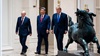
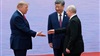
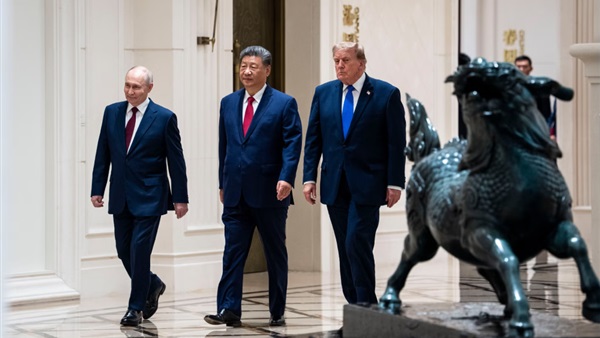
Russian President Vladimir Putin secured a significant symbolic triumph at the historic trilateral summit with U.S. President Donald Trump and Chinese President Xi Jinping in Shenzhen, China, on Thursday, November 19. The Putin diplomatic victory came not through a breakthrough in negotiations but through his public recognition as an equal participant alongside the leaders of the world's two largest economies, despite Russia's continuing war in Ukraine and years of Western efforts to isolate Moscow.
The unprecedented gathering, held during the Asia-Pacific Economic Cooperation (APEC) summit, provided Putin with an opportunity to reinforce Russia's claim to great-power status without making publicly announced concessions over Ukraine.
According to an analysis by Paul Sonne published in The New York Times on November 20, the Russian leader emerged from the summit with the international recognition he has pursued throughout much of his quarter-century in power.
The meeting also highlighted a growing divide between Western attempts to marginalize Moscow and the willingness of Washington and Beijing to engage Putin at the highest diplomatic level. Independent coverage confirmed that the three leaders held their first trilateral summit in Shenzhen. <Cite refs={["turn979345news22","turn979345news23"]}/>
Putin Diplomatic Victory Challenges Western Isolation Efforts
Putin's appearance alongside Trump and Xi represented a striking change from the diplomatic isolation imposed on Russia following its full-scale invasion of Ukraine in February 2022.
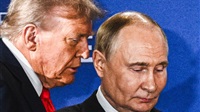
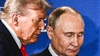
The Russian president stood beside both leaders for official photographs, received a warm public welcome from Trump, who referred to him as a friend, and participated in discussions intended to address major international security questions.
Throughout his visit, Putin met with at least seven world leaders over two days, using the occasion to argue that Western attempts to isolate Russia had failed.
Angela Stent, a Russia specialist and senior fellow at the American Enterprise Institute, assessed the summit as a substantial diplomatic success for Moscow.
The event, she argued, demonstrated the limitations of Western sanctions and diplomatic restrictions when the American and Chinese presidents were prepared to meet Putin directly.
Yet the political symbolism exceeded Russia's actual economic standing.
Although Moscow possesses immense territory, extensive natural resources and the world's largest nuclear weapons arsenal, it remains significantly behind the United States and China in economic influence, population and other measures of global power.
The summit nevertheless elevated Russia's international status by placing Putin on the same diplomatic stage as Trump and Xi.
Nuclear Power Remains Central to Russia's Global Influence
Russia's nuclear capabilities remain a central pillar of Putin's efforts to preserve Moscow's position among the world's leading powers.
The country inherited the Soviet Union's vast nuclear arsenal, which continues to provide Russia with strategic influence despite its comparatively smaller economy.
Hours before Putin arrived at the APEC summit, Russian strategic nuclear bombers landed in Vietnam for the first time since the Soviet era.
The deployment reinforced Moscow's military presence in Asia and provided a visible reminder of its long-range strategic capabilities.
In Shenzhen, attention also turned to the Russian officer carrying the cheget, the nuclear command-and-control briefcase that accompanies Putin during foreign visits.
A prominent pro-Kremlin commentator was filmed approaching the officer and asking whether the device was the Russian president's nuclear briefcase.
These moments contributed to Moscow's broader message that its military capabilities remain central to international security calculations.
The display also demonstrated how Russia continues to rely on strategic weapons to support its claim to superpower status, even as the economic gap between Moscow and its larger rivals persists.
Putin Returns to APEC After Nine Years
The Shenzhen gathering marked Putin's first in-person attendance at an annual APEC summit in nine years.
His absence reflected a combination of diplomatic circumstances and growing restrictions associated with the war in Ukraine.
The annual in-person gathering was canceled between 2019 and 2021. The United States did not invite Putin when it hosted the summit in 2023 because of Russia's invasion of Ukraine.
An International Criminal Court arrest warrant concerning the unlawful transfer of Ukrainian children to Russia further complicated his potential attendance at meetings in Peru and South Korea in 2024 and 2025.
The Shenzhen summit therefore represented more than another diplomatic engagement.
It allowed Putin to return to a major international forum where his participation had previously been constrained by geopolitical tensions and legal concerns.
Trump's willingness to meet the Russian leader without securing prior commitments over Ukraine also strengthened the symbolic importance of the encounter.
Both leaders criticized the International Criminal Court during the summit, with Trump describing the institution as an organization that had exceeded its legitimate authority.
The remarks underscored their shared opposition to certain international institutions, although the United States and Russia continue to have substantially different strategic interests.
Ukraine War Casts a Shadow Over the Historic Summit
Despite the diplomatic recognition Putin received, Russia's war in Ukraine remained the central unresolved issue surrounding the gathering.
The summit's formal statement did not mention Ukraine, even though Trump and Putin discussed the conflict during separate talks before the trilateral meeting.
Just hours before the leaders gathered, Ukrainian forces struck the bridge connecting Russia to occupied Crimea for the third time in a week.
The bridge across the Kerch Strait links Russia to the Crimean Peninsula, which Moscow illegally annexed in 2014.
The attacks underscored Ukraine's continued military resistance and challenged the image of Russian strength promoted during the summit.
Following the meeting, Putin announced that he would not agree to a maritime or energy infrastructure truce with Kyiv in response to the strikes.
He also threatened retaliation against Ukraine.
His position reinforced concerns that Moscow remains unwilling to soften its military demands despite renewed American diplomatic efforts.
At peace talks held in Abu Dhabi the previous week, led by Trump's envoys Jared Kushner and Steve Witkoff, Russian negotiators reportedly repeated longstanding demands rather than offering substantial compromises.
The absence of meaningful progress demonstrated the difference between diplomatic engagement and a negotiated settlement.
Trump and Putin Find Common Ground on Global Politics
The Shenzhen discussions also revealed areas of rhetorical agreement between Trump and Putin concerning international institutions, sovereignty and the global political order.
During a news conference after the summit, Putin suggested that he and Trump shared similar perspectives on certain political and cultural principles.
The Russian president questioned whether the Western liberal international order represented genuine democracy or an attempt by influential political groups to maintain global dominance.
His remarks reflected a longstanding argument that Western governments have used political and economic institutions to impose their preferences on other countries.
Trump's criticism of the International Criminal Court provided Putin with an opportunity to emphasize these shared grievances.
Stent suggested that both leaders appeared comfortable with a conception of international politics in which a relatively small number of powerful states exercise decisive influence.
This approach contrasts with the positions of many European governments, which emphasize international law, collective security and the participation of smaller states in decisions affecting their sovereignty.
The diplomatic atmosphere also differed from the approach of earlier American administrations, which were generally more reluctant to publicly legitimize authoritarian leaders actively opposing U.S. interests.
Ukraine and Europe Demand a Voice in Peace Negotiations
The summit renewed concerns about whether major powers could attempt to negotiate security arrangements without sufficient participation from the countries directly affected.
Ukrainian President Volodymyr Zelenskyy warned ahead of the meeting against allowing powerful nations to determine the future of smaller countries.
Speaking to NBC News, Zelenskyy argued that the world's largest powers should not assume they can make decisions on behalf of other nations.
Ukraine and European governments have repeatedly insisted that they must participate in negotiations concerning their security.
Until the Shenzhen summit, the principal peace discussions had involved Russia, Ukraine and the United States.
Putin said afterward that, at Washington's request, he had invited European officials to Moscow through diplomatic channels to determine their position and consider whether they should join future negotiations.
However, no concrete expansion of the peace process was announced.
The uncertainty reinforced fears that diplomatic engagement among major powers could undermine the influence of European countries and Ukraine over decisions directly affecting their interests.
Putin Revives Comparisons With the Yalta Conference
The summit also revived comparisons with the 1945 Yalta Conference, when U.S. President Franklin D. Roosevelt, British Prime Minister Winston Churchill and Soviet leader Joseph Stalin negotiated arrangements for postwar Europe.
When asked whether Shenzhen represented a new Yalta, Putin questioned why the earlier conference should be regarded negatively.
He emphasized its role in consolidating the Allied victory over Nazi Germany and laying the foundations for the United Nations.
However, his interpretation omitted the consequences for Eastern European countries that subsequently came under Soviet domination during the Cold War.
The comparison was politically significant because it reflected Putin's preference for an international system in which major powers negotiate directly over fundamental security issues.
For critics, the parallel raised concerns that countries such as Ukraine could find their interests subordinated to agreements among more powerful governments.
The summit generated considerable symbolism, but it did not establish a new international settlement or demonstrate that Washington, Beijing and Moscow had agreed on a common geopolitical framework.
Restoring Russian Great-Power Status Has Defined Putin's Leadership
Putin's diplomatic success in Shenzhen must also be understood against his longstanding determination to reverse Russia's decline following the Soviet Union's collapse.
Throughout his political career, he has portrayed the loss of Soviet power as a national humiliation and repeatedly challenged what he describes as a U.S.-dominated unipolar international order.
He has characterized the Soviet collapse as one of the greatest political catastrophes of the twentieth century.
His approach to national security has consistently emphasized military strength, centralized political authority and resistance to Western influence.
Following the 2004 terrorist attack on a school in Beslan, Putin argued that national weakness had left Russia vulnerable to external threats.
That experience became part of his broader justification for strengthening the Russian state and consolidating political power.
Over time, his frustration with Moscow's diminished international influence contributed to increasingly confrontational policies toward Western governments.
The invasion of Ukraine represents the most consequential and destructive expression of that strategy.
At Shenzhen, Putin again blamed Western political leaders for the deterioration of relations, arguing that they had disregarded Russia's interests and pushed tensions toward military confrontation.
His remarks sought to shift responsibility for the war away from Moscow, despite Russia having launched the full-scale invasion in 2022.
A Symbolic Triumph Without a Peace Breakthrough
The Shenzhen summit delivered the Putin diplomatic victory that Moscow had long sought: visible recognition alongside the American and Chinese presidents, despite Western sanctions and international condemnation over Ukraine.
It also demonstrated that diplomatic isolation has limits when influential governments are willing to prioritize engagement with Russia.
Nevertheless, the outcome should not be confused with a substantive geopolitical breakthrough.
Russia remains economically weaker than the United States and China, its war in Ukraine continues, and no significant peace agreement emerged from the trilateral discussions.
The meeting strengthened Putin's international image without resolving the political and military challenges facing Moscow.
For Trump and Xi, the gathering offered an opportunity to promote dialogue among major powers. For Putin, however, the principal benefit was the public demonstration that Russia could still command a place at the highest level of international diplomacy.
The summit's central paradox was that Putin gained recognition as a great-power leader without securing a resolution to the war that had contributed to Russia's isolation.
That distinction will remain crucial in assessing whether the Shenzhen meeting marked a meaningful change in international relations or primarily a symbolic achievement for the Kremlin.