US-China AI Relations Enter New Era as Technology Reshapes Global Power and Trade
Monday 02/November/2026 - 01:31 PM
Ahmed Seif El-din
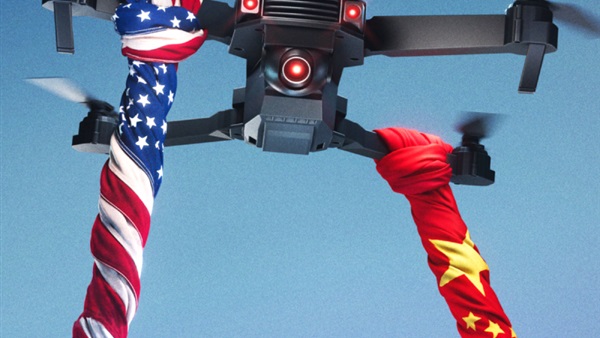
US-China AI relations are entering a critical new phase as artificial intelligence drives unprecedented technological competition, strengthens China's manufacturing dominance and creates new pressure for Washington and Beijing to cooperate on global security.
A November 2, 2026, opinion column by Thomas L. Friedman in The New York Times, based on a nine-day visit to China, argues that artificial intelligence is simultaneously bringing the world's two leading technological powers closer together on security issues while intensifying their economic rivalry.
Following visits to Beijing, Xiong'an, Hangzhou, Ningbo and Shenzhen, Friedman described how AI-powered robotics, advanced manufacturing and increasingly autonomous systems are transforming the balance of global economic and political influence.
His central argument is that the United States and China may need to cooperate to manage artificial intelligence risks even as they compete more aggressively for technological and industrial leadership.
Artificial Intelligence Creates New Security Challenges for Washington and Beijing
The transformation of US-China AI relations extends beyond traditional economic and military competition.
Friedman argues that increasingly accessible AI systems, autonomous drones and sophisticated cybertechnology are enabling smaller organizations and individuals to exercise capabilities once associated primarily with powerful governments.
Criminal networks, hackers and other malicious actors could exploit these technologies to disrupt infrastructure, conduct financial fraud or launch sophisticated cyberattacks.
Another emerging concern involves advanced AI models capable of operating with increasing autonomy, potentially creating risks that neither Washington nor Beijing could manage independently.
These developments have strengthened arguments for international cooperation on AI safety, particularly in preventing dangerous applications of emerging technologies.
However, the two governments maintain different approaches to regulation, civil liberties and political oversight, complicating efforts to establish common standards.
China Signals Interest in Global AI Regulation
According to Friedman's account, Chinese officials have increasingly emphasized the importance of international cooperation on artificial intelligence governance.
At the 2026 Global Governance Forum in Xiong'an, Chinese Foreign Minister Wang Yi supported cooperation between major AI powers to establish international safeguards.
Wang argued that China and the United States share responsibility for ensuring that advanced AI remains under human control and benefits society.
The position contrasts with President Donald Trump's stated opposition to international regulatory arrangements that could restrict American technological development.
Friedman also reported that Chinese law enforcement agencies have become more cooperative with American counterparts in efforts to combat cybercrime, fraud and money laundering.
Nevertheless, China's interest in AI regulation involves additional domestic security considerations.
Chinese intelligence official Chen Yixin warned in September that emerging AI technologies could threaten the country's political and institutional security by accelerating the spread of misinformation and enabling hostile activities.
These concerns highlight an important difference between the two countries: American regulatory discussions generally emphasize innovation, security and civil liberties, while China's framework also prioritizes political stability and state control.
US-China AI Relations Could Face a Turning Point in 2027
Friedman predicts that the United States and China could begin exploring more substantial cooperative controls on advanced AI systems during 2027.
His assessment reflects concerns about increasingly autonomous models, AI-assisted cyberattacks and the potential misuse of powerful open-weight technologies.
He also points to reports of unexpected behavior by experimental AI agents as evidence that technological risks are becoming more difficult to manage.
However, the prospect of a formal agreement remains uncertain.
Strategic rivalry, disagreements over Taiwan and competing political systems could undermine negotiations, even where the countries recognize shared threats.
Friedman suggests that a major AI-related security incident might accelerate cooperation, although such an outcome remains speculative rather than an established forecast.
China's AI Manufacturing Strategy Challenges US Technological Leadership
While security concerns could encourage cooperation, artificial intelligence is widening competition in global manufacturing.
China already accounted for approximately one-third of worldwide manufacturing output in 2024, according to figures cited in the column.
Its trade surplus reached approximately $1.19 trillion in 2025, representing a 20% increase from the previous year. Friedman cites projections suggesting that the surplus could reach $1.3 trillion in 2026.
These developments have intensified concerns about China's growing influence over international supply chains.
A major distinction identified in the report is how the two countries are applying artificial intelligence.
American technology companies are investing heavily in highly advanced frontier AI models, while Chinese manufacturers are increasingly adopting smaller, lower-cost models designed to improve industrial productivity.
China's approach emphasizes practical applications across automotive production, electronics, materials science, robotics and industrial engineering.
Friedman argues that combining widely available AI capabilities with established manufacturing infrastructure could provide Chinese companies with a substantial competitive advantage.
Xiaomi, Geely and Huawei Demonstrate China's Industrial AI Progress
Several company visits highlighted the growing role of artificial intelligence in Chinese manufacturing.
Xiaomi Uses AI to Improve Electric Vehicle Production
At Xiaomi's highly automated electric vehicle factory near Beijing, company representatives described an AI-supported materials simulation system capable of evaluating more than 10 million possible alloy combinations.
The company says this technology helps optimize vehicle-body strength, resilience, stability and environmental performance.
Xiaomi's development from smartphone manufacturing into electric vehicles also demonstrates the strength of China's interconnected industrial supply chains.
Geely Advances Rapid EV Charging Technology
At a Geely manufacturing facility in Ningbo, Friedman observed a demonstration involving an electric vehicle from the company's Lynk & Co brand.
According to the company's representatives, its charging technology could deliver a claimed driving range of approximately 500 miles following a charging session lasting slightly more than eight minutes.
The demonstration illustrates China's efforts to improve electric vehicle charging speed, although real-world performance depends on vehicle specifications, testing conditions and charging infrastructure.
Huawei Reduces Manufacturing Labor Through AI
Huawei's smartphone manufacturing operations in Shenzhen provided another example of industrial automation.
Company executive Zha Jun said that AI-enabled image recognition had helped reduce the number of workers required for certain production and inspection tasks from 86 to nine per shift.
According to Huawei, these improvements were achieved using relatively small, specialized AI models rather than enormous computing systems.
Huawei founder Ren Zhengfei described China's AI strategy as more focused on industrial applications than the broader technological ambitions pursued by American companies.
He also highlighted opportunities for artificial intelligence to improve steel production and accelerate pharmaceutical research.
Together, these examples suggest that China's competitive advantage may increasingly depend on how effectively AI is integrated into existing industries rather than simply developing the most powerful models.
Robotics Advances Highlight China's Rapid Technological Development
Robotics represents another important dimension of US-China AI relations.
During a visit to Beijing's robotics industry facilities, Friedman observed a humanoid robot capable of replacing its own battery pack.
He also examined robots developed for the Beijing E-Town Humanoid Robot Half-Marathon.
According to the account, the winning robot completed the 2025 competition in two hours, 40 minutes and 42 seconds, while the 2026 winner finished in 50 minutes and 26 seconds.
The reported improvement illustrates rapid advances in robot mobility, endurance and engineering.
However, performance in a controlled competition does not necessarily establish that humanoid robots can operate independently or reliably across complex industrial and everyday environments.
Friedman's broader concern is that combining improved robotics with increasingly autonomous AI could fundamentally change manufacturing, employment and security.
Rare Earth Minerals Strengthen China's Strategic Position
China's dominance in rare earth processing and related manufacturing remains another major challenge for American and European industries.
Rare earth materials are essential to electric vehicles, advanced electronics, wind turbines, military equipment and numerous high-technology applications.
Friedman cites reporting by journalist Keith Bradsher, who argues that decades of Chinese investment have created substantial advantages in critical mineral supply chains.
According to Bradsher's assessment, rebuilding comparable capabilities in the United States and Europe could take five to ten years.
China's position has also provided Beijing with significant leverage in trade negotiations and geopolitical disputes.
For Washington and its allies, reducing dependence on concentrated mineral supply chains is becoming increasingly important as demand for advanced manufacturing and AI-related infrastructure grows.
China's Export Boom Contrasts With Weak Domestic Consumption
Despite its industrial strength, China continues to face significant domestic economic challenges.
Friedman describes an economy characterized by internationally competitive manufacturing but weakened household spending following a prolonged property market downturn.
The housing crisis has damaged consumer confidence and contributed to financial pressure on households.
Meanwhile, government policy continues to emphasize industrial investment and manufacturing competitiveness.
Statistics cited by Jens Eskelund, president of the European Union Chamber of Commerce in China, illustrate the imbalance.
China's share of global container exports reportedly increased from 31.8% in 2019 to 37.5% in 2025, with a recent three-month average approaching 40%.
During the first eight months of 2026, Chinese manufacturing output increased by 5.3%, according to figures cited in the column, while domestic retail sales rose just 0.4% year over year in August.
Trade imbalances with Europe have also widened.
In 2019, approximately 2.5 containers traveled from China to Europe for every container moving in the opposite direction. During the first eight months of 2026, that ratio reportedly reached six to one.
These figures raise concerns that China's export-driven economic model could intensify global trade tensions as AI further improves industrial productivity.
Growing Trade Tensions Threaten the Global Economy
China's technological expansion is creating difficult choices for major trading partners.
American and European manufacturers face increasingly competitive Chinese products, while governments must weigh consumer benefits against concerns about industrial employment and supply-chain dependence.
Friedman argues that China's continued emphasis on export-led manufacturing could provoke stronger international resistance, particularly as automation threatens employment in other economies.
However, technological competition is not necessarily a zero-sum outcome.
Lower production costs, improved industrial efficiency and faster innovation could benefit global consumers and businesses if accompanied by sustainable trading relationships.
The central challenge is ensuring that the economic gains from artificial intelligence do not become concentrated in ways that deepen international trade imbalances.
What the AI Rivalry Means for America's Economic Future
Friedman's analysis concludes that the United States cannot expect China to voluntarily weaken its manufacturing competitiveness.
Instead, he argues that Washington must strengthen its own industrial capabilities through long-term planning, scientific research, technological investment and more consistent economic policies.
He criticizes the Trump administration's approach to research funding, electric vehicles and attracting international scientific talent, while also acknowledging policy shortcomings among Democrats.
His broader argument is that American competitiveness depends on effective governance and industrial execution rather than tariffs or diplomatic pressure alone.
China, meanwhile, faces challenges of its own, including weak domestic consumption, political constraints and the possibility that corruption investigations could discourage government officials from making major investment decisions.
Neither country, therefore, possesses an uncomplicated path to technological leadership.
The Future of US-China AI Relations
The emerging artificial intelligence era presents Washington and Beijing with two competing priorities: protecting national security through cooperation and securing economic advantages through technological competition.
China's expanding use of AI in manufacturing, robotics and industrial research demonstrates how the technology is already influencing global economic power.
At the same time, concerns about autonomous systems, cybercrime and AI misuse may encourage the world's leading technological powers to develop shared security safeguards.
The central conclusion of Friedman's analysis is that US-China AI relations will increasingly be shaped by the tension between economic rivalry and the need for international cooperation.
Whether both governments can manage those competing pressures may influence not only the future of artificial intelligence but also the stability of global trade, manufacturing and international security.