U.S. Approves $2.1 Billion Patriot Missile Sale to Ukraine, but Zelenskyy Warns of Years-Long Delays
Saturday 31/October/2026 - 02:46 PM
Ahmed Seif El-din
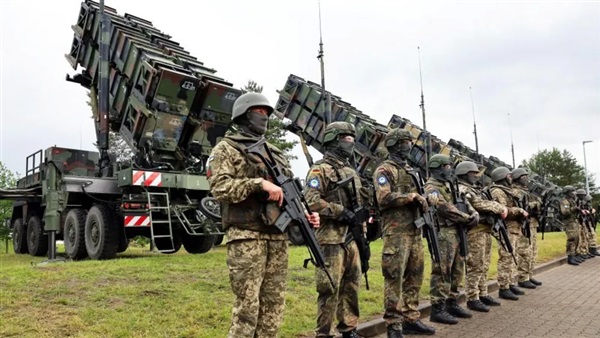
The Patriot missile sale to Ukraine has received U.S. government approval, authorizing the purchase of 500 advanced PAC-3 interceptors worth approximately $2.1 billion. Ukrainian President Volodymyr Zelenskyy welcomed the decision on Friday, October 30, 2026, but warned that deliveries could take years as Russian missile and drone attacks continue to threaten Ukraine's cities and energy infrastructure.
U.S. Approves 500 Patriot Interceptors for Ukraine
The Trump administration announced the proposed arms sale through the U.S. State Department, describing it as a measure to strengthen Ukraine's air and missile defense capabilities.
The package includes 500 Patriot PAC-3 interceptor missiles, designed to counter advanced aerial threats, particularly ballistic missiles.
The State Department said the agreement supports American foreign policy and national security objectives by strengthening a European partner.
The sale will be financed through contributions from Canada, Germany, and Norway under the U.S. JUMPSTART program, alongside national funds supported by the European Union's Ukraine Support Loan.
No U.S. government funds will finance the purchase, according to the State Department.
American defense manufacturer Lockheed Martin will serve as the principal contractor.
Zelenskyy Welcomes Deal but Demands Immediate Deliveries
Despite welcoming the Patriot missile sale to Ukraine, Zelenskyy expressed concern that the approved interceptors may not arrive until several years from now.
The Ukrainian president said his country urgently needs additional missiles to defend against Russia's increasingly frequent aerial attacks.
In a social media statement early Saturday, he described the U.S. approval as a strong decision but warned that the proposed delivery timeline does not address Ukraine's immediate security needs.
Zelenskyy argued that American and European allies could provide interceptors from existing stockpiles and replace them later with newly manufactured missiles.
He maintained that this approach would allow Ukraine to strengthen its defenses without waiting for future production.
Russian Attacks Intensify Ahead of Winter
Ukraine's demand for Patriot interceptors comes as Russian forces intensify attacks on civilian areas and critical energy facilities.
Zelenskyy reported more than 30 Russian strikes on important sections of Ukraine's electricity network over the preceding two weeks.
He warned that Moscow was targeting energy infrastructure as winter approached, increasing the risk of power disruptions and humanitarian difficulties.
Recent attacks have also caused significant casualties.
According to Ukrainian officials, a Russian drone strike on Thursday killed at least 14 people at a crowded railway platform in Dnipro.
Separate daytime attacks on two other cities reportedly killed five people, while a later missile strike in Kyiv killed one person.
The continued bombardment has reinforced Kyiv's argument that advanced air defense systems are essential for protecting civilians and maintaining critical services.
Global Patriot Missile Shortage Complicates Deliveries
Although the Patriot missile sale to Ukraine has been approved, production constraints could delay implementation.
The approved order reportedly involves newly manufactured interceptors rather than missiles already held in American inventories.
According to U.S. Department of Defense figures cited by the BBC, approximately 600 Patriot missiles are produced annually.
Demand has increased because of military operations involving the United States and its allies, including the war with Iran.
Two people familiar with the U.S. decision told The Guardian that deliveries of the newly manufactured missiles might not begin until the early 2030s.
The State Department has not announced an official delivery schedule.
Ukraine's Defense Ministry is reportedly encouraging the Pentagon to accelerate the process by releasing missiles from existing U.S. stockpiles and replacing them through future production contracts.
Patriot Systems Remain Essential to Ukraine's Defense
Patriot air defense systems are among Ukraine's most important weapons for intercepting fast-moving Russian ballistic missiles.
The systems use radar to identify incoming threats, command equipment to track targets, and interceptor missiles to destroy them before impact.
Ukraine has repeatedly emphasized that shortages of Patriot interceptors limit its ability to defend populated areas and strategic infrastructure.
The newly approved Patriot missile sale to Ukraine is intended to strengthen the country's integrated air defense network against current and future threats.
However, the effectiveness of the agreement will depend heavily on when the interceptors become available.
Missile Agreement Comes Amid U.S.-Ukraine Tensions
The announcement follows renewed disagreements between Washington and Kyiv over the direction of the war and American military assistance.
President Donald Trump has recently criticized Zelenskyy's approach to negotiations with Russia and suggested that Ukraine needs new leadership to secure a peace agreement.
Tensions also increased after Washington eased certain sanctions on Russia as part of an arrangement involving Russian diesel supplies.
Relations reportedly improved following discussions between Zelenskyy and American representatives in Oslo on October 20.
The Ukrainian president had previously accused the Pentagon of delaying the release of interceptor missiles already purchased by allied governments.
Separate concerns emerged over restrictions and outages affecting Starlink satellite internet services and the military-focused Starshield system.
Ukraine subsequently reported that both services had resumed full functionality.
European Allies Reaffirm Support for Kyiv
The financing arrangement reflects continued European and Canadian involvement in Ukraine's defense.
Canada, Germany, and Norway are contributing to the missile purchase, while European Union-backed financing will provide additional support.
Diplomatic tensions surrounding Russia's invasion were also evident at the G20 foreign ministers' meeting in Atlanta, hosted by U.S. Secretary of State Marco Rubio.
European diplomats protested Russian Foreign Minister Sergei Lavrov's attendance by declining to participate in an official group photograph.
British Foreign Secretary Ed Miliband directly criticized Russia over its military actions and civilian casualties in Ukraine.
The diplomatic confrontation underscored continuing divisions over Moscow's full-scale invasion, which began in February 2022 after Russia's earlier seizure of Crimea and parts of eastern Ukraine.
Ukraine Faces Uncertainty Over Missile Delivery Timeline
The $2.1 billion Patriot missile sale to Ukraine represents a significant commitment to the country's long-term air defense capabilities.
Yet the distinction between approving a weapons purchase and delivering operational missiles remains critical.
With Russian attacks continuing and winter approaching, Ukrainian officials are seeking immediate access to existing interceptor inventories rather than relying exclusively on future manufacturing.
The central challenge is whether Washington and its allies can accelerate deliveries while maintaining their own air defense stockpiles.
For Kyiv, the agreement offers an important potential reinforcement of its defenses, but its immediate military value remains uncertain until a delivery timetable is established.