U.S. Sanctions on Rwanda Escalate Over M23 Rebel Support Despite Trump Peace Deal
Friday 30/October/2026 - 02:23 PM
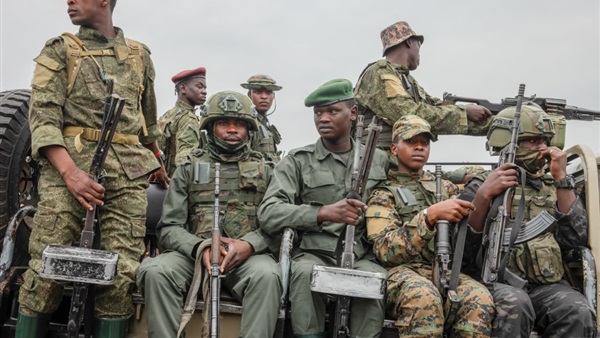
U.S. sanctions on Rwanda have intensified after Washington accused the Rwandan government of continuing to support the M23 rebel group in the eastern Democratic Republic of Congo, despite a peace agreement brokered by President Donald Trump. The latest measures, announced Wednesday, October 28, 2026, target Rwanda's Ministry of Defense and a financial institution allegedly involved in supporting military operations.
The decision highlights the continuing conflict in eastern Congo, where thousands have been killed and hundreds of thousands displaced, and raises questions about the effectiveness of the Washington Accords, which Trump previously described as having ended the war.
U.S. Treasury Accuses Rwanda of Violating Peace Agreement
The U.S. Treasury Department announced the new sanctions nearly a year after Trump celebrated a diplomatic agreement between Rwanda and the Democratic Republic of Congo.
Senior diplomats from both countries signed the Washington Accords in June 2025. In December, Trump publicly declared that the agreement had ended the conflict between the two neighboring countries and their respective allies.
However, American officials now accuse Rwanda of continuing military and financial support for M23, undermining the commitments established under the agreement.
Treasury Secretary Scott Bessent said the measures were intended to hold Rwanda accountable for its obligations.
He called on the Rwandan government to end its support for M23 and withdraw its military forces from eastern Congo.
The latest U.S. sanctions on Rwanda reflect Washington's assessment that the peace agreement has not produced the expected changes on the ground.
Rwanda Rejects Accusations of Unequal Enforcement
The Rwandan government criticized the sanctions, arguing that the United States had failed to hold the Democratic Republic of Congo accountable for its alleged support of armed groups hostile to Rwanda.
Rwandan officials have repeatedly accused Congolese authorities of supporting a militia linked to perpetrators of the 1994 genocide against the Tutsi population.
The two governments have long accused each other of supporting rival armed organizations operating in eastern Congo.
Rwandan government spokeswoman Yolande Makolo maintained that Rwanda remains willing to implement the Washington Accords, provided Congo fulfills its own commitments and international mediators hold all parties accountable.
Her response indicates that Rwanda has not formally abandoned the peace agreement, even as relations with Washington become increasingly strained.
M23 Rebels Expand Political and Territorial Influence
The latest sanctions follow renewed concerns about M23's growing influence in eastern Congo.
The rebel movement has established control over substantial territory in the mineral-rich region, which has experienced decades of armed conflict, political instability, and humanitarian crises.
Following a major military offensive in 2025, M23 captured Goma, one of eastern Congo's most important cities.
American officials say the group has continued advancing with Rwandan support despite the peace agreement.
New Political Organization Raises U.S. Concerns
This month, M23 and affiliated groups established a new political organization called the Front for the Refoundation of the Nation.
The organization is led by Joseph Kabila, a former president of the Democratic Republic of Congo.
According to U.S. officials, the new political structure replaces the Congo River Alliance, an earlier political wing of the rebel movement that had advocated overthrowing the Congolese government.
Washington views the development as another indication that M23 is consolidating its political and military position rather than moving toward the disarmament and reconciliation anticipated under the peace process.
Rwandan Financial Institution Added to Sanctions List
The latest U.S. sanctions on Rwanda also target the Zigama Credit and Savings Society, a Rwandan savings cooperative.
The Treasury Department accused the institution of facilitating payments for weapons, ammunition, and military equipment used by the Rwanda Defense Force in operations supporting M23.
These allegations form part of a broader American effort to disrupt financial and logistical networks believed to sustain the rebel movement.
The United States previously sanctioned the Rwanda Defense Force in March 2026, accusing it of violating the peace agreement.
In June, Washington imposed additional sanctions on a gold refining company allegedly associated with Rwandan government officials and M23 rebels.
American authorities accused that company of helping finance the armed group.
Together, the measures indicate an expanding sanctions strategy targeting military institutions, financial intermediaries, and commercial networks suspected of supporting the conflict.
The accusations remain those of the U.S. government and should not be treated as independently established judicial findings.
Eastern Congo Conflict Continues Despite Diplomatic Efforts
The fighting in eastern Democratic Republic of Congo involves multiple armed forces and international actors.
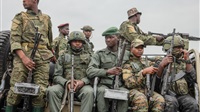
M23 and the Rwanda Defense Force are aligned on one side of the conflict.
Opposing them are the Congolese military and its allies, including soldiers from South Africa and Burundi, as well as mercenaries employed by American military contractor Erik Prince and others, according to the original reporting.
The violence has killed thousands of people and forced hundreds of thousands to flee their homes.
Eastern Congo's substantial mineral resources have added economic and strategic significance to a region already affected by longstanding political and ethnic tensions.
Although international diplomatic efforts have sought to reduce the fighting, the continuing military activity demonstrates the difficulties of implementing agreements involving governments and armed groups with competing security objectives.
Historical Roots of the Rwanda-Congo Conflict
The conflict has deep historical connections to the 1994 genocide in Rwanda.
Rwandan officials argue that armed Hutu groups associated with individuals responsible for the genocide against Tutsi people continue to operate in eastern Congo.
Rwanda has repeatedly cited these groups as a security threat.
Meanwhile, Congolese authorities accuse Rwanda of supporting M23 and interfering in Congo's territorial sovereignty.
M23 is predominantly composed of members of the Tutsi ethnic group, as is much of Rwanda's current leadership.
The rebel movement was established in 2012 and takes its name from March 23, 2009, the date of an earlier peace agreement that it accused the Congolese government of failing to implement.
M23 launched another insurgency in 2021, intensifying tensions between Kinshasa and Kigali.
The competing historical grievances and security claims have complicated repeated efforts to negotiate a lasting settlement.
U.S.-Rwanda Relations Face Growing Diplomatic Strain
The latest U.S. sanctions on Rwanda mark a significant deterioration in relations between two countries that have maintained close ties for decades.
Following the 1994 genocide, successive American administrations supported Rwanda's reconstruction and praised its participation in international peacekeeping missions.
That relationship has become increasingly strained as Washington challenges Rwanda's alleged involvement in eastern Congo.
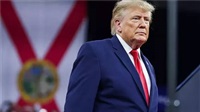
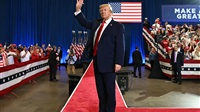
The sanctions also create a diplomatic challenge for Trump's administration, which presented the Washington Accords as a major foreign policy achievement.
Trump signed the agreement alongside Rwandan President Paul Kagame and Congolese President Félix Tshisekedi during a ceremony in December 2025.
The continued fighting has exposed a gap between the agreement's diplomatic commitments and the situation in eastern Congo.
What Happens Next for the Washington Accords?
The immediate impact of the sanctions will depend on whether they influence Rwanda's military and financial relationships with M23.
Washington has made clear that it expects Rwanda to withdraw its forces from eastern Congo and end its alleged support for the rebel movement.
Rwanda, however, insists that implementation of the peace agreement must include corresponding action by the Congolese government against armed groups that Kigali considers a threat.
The disagreement underscores the central obstacle facing the peace process: both governments accuse the other of supporting armed organizations while maintaining that their own security concerns remain unresolved.
For civilians in eastern Congo, the consequences extend far beyond diplomatic relations.
Continued fighting, displacement, and insecurity remain urgent humanitarian concerns despite repeated international efforts to end the violence.
The new U.S. sanctions on Rwanda demonstrate that the Washington Accords have not yet delivered a lasting peace. Whether additional financial pressure and diplomatic engagement can change the situation remains uncertain.