Trump’s Second-Term Sanctions: A Guide to Major US Economic Restrictions
From Russia and Iran to Cuba and the International Criminal Court, the Trump administration has expanded economic sanctions as a foreign policy instrument while selectively easing restrictions in pursuit of strategic objectives.
Trump’s second-term sanctions have become a central instrument of US foreign policy, with Washington expanding economic and financial restrictions against foreign governments, criminal organizations, financial networks and international institutions to advance its national security and diplomatic objectives.
Since returning to office in January 2025, President Donald Trump has intensified sanctions against several longstanding US adversaries, including Russia, Iran and Cuba. However, his administration has also suspended or removed restrictions in certain circumstances, reflecting changing economic priorities and geopolitical considerations.
In September 2026, Trump signed legislation granting the White House extensive authority to penalize Russia and countries purchasing Russian energy. Just weeks later, he issued an executive order waiving the newly authorized sanctions and tariffs.
Stephen Sestanovich, a senior fellow for Russian and Eurasian studies at the Council on Foreign Relations (CFR), described the reversal as reflecting an “incoherent” approach to sanctions policy.
How Trump’s Second-Term Sanctions Shape US Foreign Policy
Successive US administrations have employed economic sanctions to influence foreign governments, deter hostile activities, restrict access to financial resources and pressure political actors into changing their policies.
These measures include asset freezes, travel restrictions, arms embargoes, financial penalties and limitations on international trade.
Many of Trump’s second-term sanctions have been introduced under the International Emergency Economic Powers Act (IEEPA), which grants the president authority to impose economic restrictions through executive orders in response to declared national emergencies.
The administration’s approach combines intensified economic pressure against designated adversaries with selective sanctions relief intended to secure political, economic or diplomatic concessions.
Russia: Energy Sanctions and Policy Reversals
The Trump administration has concentrated much of its economic pressure on Russia’s energy industry, a major source of government revenue that has been subject to extensive sanctions evasion.
Building on restrictions introduced during the Biden administration, Washington imposed sanctions on Russia’s two largest oil companies, Rosneft and Lukoil, in October 2025.
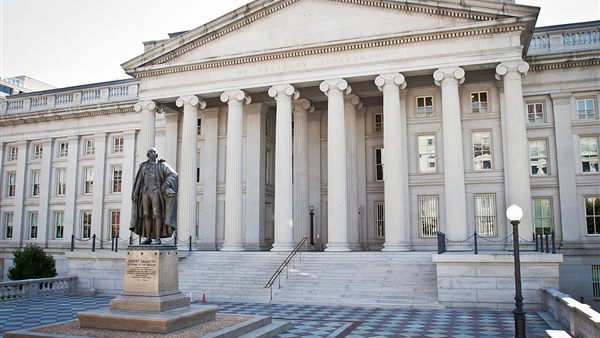
Both companies were added to the US Treasury Department’s Specially Designated Nationals and Blocked Persons List (SDN List), which identifies individuals and organizations subject to American economic and trade sanctions.
The administration attributed the decision to Moscow’s refusal to end the war in Ukraine and its perceived lack of commitment to peace negotiations.
In September 2026, Congress approved a broader sanctions package named after the late Republican Senator Lindsey Graham of South Carolina.
The legislation authorized tariffs of up to 100 percent on the five largest importers of Russian oil and gas, including China and India. It also introduced sanctions targeting Russian military and political officials, financial institutions and the shadow fleet used to circumvent existing oil restrictions.
Additionally, the legislation authorized the president to increase tariffs on Russian imports into the United States to as much as 500 percent.
However, Trump invoked Section 115 of the legislation in October 2026 to waive sanctions and tariffs on national interest grounds.
The decision followed an agreement to import Russian diesel to ease rising American fuel prices ahead of the midterm elections.
Trump subsequently claimed that suspending the sanctions helped secure the release of Stephen Hubbard, an American detained by Russian authorities during the Ukraine war.
Iran: Expanding the Maximum-Pressure Campaign
Iran has faced US sanctions since 1979. In February 2025, Trump restored the maximum-pressure campaign introduced during his first presidential term.
The strategy seeks to eliminate Iranian oil exports, weaken the country's economy and prevent Tehran from acquiring nuclear weapons and intercontinental ballistic missiles.
Following the outbreak of the Iran war in February 2026, Washington intensified restrictions on Iran’s oil-export networks, targeting shipping companies, tankers, financial institutions and associated individuals.
In August 2026, the Treasury Department announced Operation Economic Outcast, a coordinated government-wide economic campaign intended to eliminate Iran’s remaining oil revenues and pressure Tehran into negotiating an end to the war.
The initiative expanded sanctions to five additional Iranian economic sectors: aviation, digital assets, gold, shipping and technology.
These measures have reinforced the administration’s reliance on financial isolation and energy restrictions as instruments of pressure against Tehran.
Cuba: Intensifying Economic and Financial Isolation
Cuba has become another major target of Trump’s second-term sanctions, with Washington expanding restrictions against the island’s government, financial networks and international economic partners.
The administration has imposed additional sanctions on individuals and entities supporting Cuba’s security apparatus, tightened travel restrictions and restricted Cuban entrepreneurs’ access to American banks.
In January 2026, Trump issued an executive order threatening tariffs against countries supplying oil to Cuba, whether directly or indirectly.
Washington has also prohibited US citizens from conducting direct or indirect financial transactions with companies included on the State Department’s list of restricted Cuban entities.
These measures reinforce the US economic embargo that has remained in place for more than six decades.
The restrictions come as Cuba continues to experience prolonged economic, energy and humanitarian crises.
Will Freeman, a CFR fellow specializing in Latin American studies, argued that the administration appears to be pursuing its longstanding objective of regime change in Cuba, but with substantially greater economic pressure.
Trump has also expressed concern about Havana’s relationships with China, Iran and Russia, as well as Hamas and Hezbollah.
China: Sanctions Evasion and Hong Kong Restrictions
US sanctions involving China have primarily targeted companies and individuals accused of helping foreign governments circumvent American and international economic restrictions.
Since January 2025, Washington has focused particularly on Chinese oil refineries and shipping companies involved in purchasing and transporting Iranian petroleum.
In May 2026, Beijing issued its first blocking order, prohibiting Chinese individuals and organizations from complying with US sanctions against five Chinese petrochemical companies and refineries over alleged Iranian oil transactions.
The United States has also historically used sanctions to respond to Beijing’s restrictions on Hong Kong’s political autonomy.
However, in July 2026, Trump allowed the national emergency established under his first-term executive order on Hong Kong normalization to expire.
The original order followed Beijing’s introduction of a sweeping national security law and growing concerns about the erosion of Hong Kong’s autonomy.
The Treasury Department subsequently removed nine officials from sanctions imposed under that order.
Nevertheless, 39 other officials, including Hong Kong Chief Executive John Lee, remain subject to separate, targeted restrictions rather than comprehensive asset freezes.
Venezuela: From Maximum Pressure to Selective Sanctions Relief
The United States has maintained sanctions against Venezuela in various forms since 2005.
At the beginning of his second term, Trump intensified economic pressure on the government of Nicolás Maduro by revoking operating licenses previously granted to American energy companies.
Washington also designated major Venezuelan criminal organizations as terrorist groups, imposed sanctions on Maduro’s relatives and targeted shipping companies and vessels transporting Venezuelan oil.
The administration ordered a blockade of sanctioned oil tankers entering and leaving Venezuela and authorized secondary tariffs of 25 percent against countries importing Venezuelan petroleum. Those tariffs were never implemented.
Following Maduro’s capture by US forces in January 2026, Vice President Delcy Rodríguez assumed the interim presidency.
Rodríguez has largely accepted Washington’s conditions, including opening Venezuela’s energy industry to American companies.
Beginning in January, the Treasury Department issued general licenses allowing major energy companies, including Chevron, BP and Shell, to resume oil and gas operations in Venezuela.
In March, Washington authorized Venezuela’s state-owned energy company, PDVSA, to sell petroleum directly to American firms and international markets.
The following month, the administration lifted sanctions against Rodríguez herself.
Although the interim president has introduced limited political reforms, she has yet to announce a date for new elections.
Significant financial restrictions also remain. Transactions outside the authorized licenses require Treasury Department approval, while Venezuelan oil revenues continue to be held by the United States.
Syria: Sanctions Relief Supports Post-Assad Reconstruction
Unlike its approach toward several other countries, the Trump administration has dismantled most economic and trade sanctions against Syria following the overthrow of Bashar al-Assad’s government in December 2024.
In May 2025, Trump announced plans to lift comprehensive sanctions on Syria ahead of a meeting with Syrian President Ahmed al-Sharaa.
The following month, he signed an executive order formally terminating the sanctions program established in 2004.
The decision removed more than 500 individuals and organizations, including Syria’s central bank, from the Treasury Department’s SDN List.
Sanctions relief continued in December 2025, when Congress repealed the Caesar Act through the National Defense Authorization Act (NDAA) for fiscal year 2026.
The Caesar Act, introduced in 2019, had imposed economic penalties on foreign governments, companies and individuals conducting business with the Assad administration.
In August 2026, the State Department also removed Syria from its list of state sponsors of terrorism.
However, targeted restrictions remain against Assad, his associates, illicit drug traffickers and certain other designated actors.
The legislation allows the president to consider reintroducing sanctions if Syria’s transitional government fails to meet congressional requirements concerning counterterrorism, drug trafficking and peaceful relations with neighboring countries.
Nonstate Actors: Targeting Criminal Organizations and Financial Networks
Trump’s second-term sanctions have extended beyond foreign governments to transnational criminal organizations, drug trafficking networks and financial intermediaries.
According to the Center for a New American Security, the administration added more than 1,300 individuals to the Treasury Department’s SDN List in 2025.
Many were associated with international drug trafficking and organized crime.
In February 2025, the State Department designated eight criminal organizations, including Mexico’s Sinaloa Cartel, as foreign terrorist organizations and specially designated global terrorists.
These classifications impose significant legal and financial consequences, including asset freezes, immigration restrictions and criminal penalties for knowingly providing material support to designated organizations.
Washington has also intensified efforts to disrupt financial networks that facilitate sanctions evasion.
In October 2026, the Treasury Department designated A7, a payments network accused of facilitating international financial transfers for Russian companies and Iran’s Islamic Revolutionary Guard Corps, as a significant transnational criminal organization.
The Financial Crimes Enforcement Network also proposed restrictions preventing American financial institutions from processing transactions involving A7’s sub-agents.
International Criminal Court Faces Expanded US Sanctions
In February 2025, Trump signed an executive order authorizing financial sanctions against individuals associated with the International Criminal Court (ICC).
The administration accused the court of pursuing unjustified legal actions against the United States and Israel.
Trump had previously sanctioned ICC officials during his first presidential term, although those measures were subsequently lifted by President Joe Biden.
The second-term administration imposed additional restrictions on ICC judges involved in efforts to investigate or prosecute American and Israeli nationals without the consent of their respective governments.
In October 2026, Washington escalated its campaign by imposing sanctions on the court itself, prohibiting American companies and organizations from conducting transactions with the institution.
Secretary of State Marco Rubio said the objective was to pressure the ICC into withdrawing threats of prosecution against US nationals.
However, experts cited in the original analysis argued that the restrictions also seek to undermine the court’s legitimacy and international authority.
Economic Sanctions and the Limits of American Pressure
Trump’s second-term sanctions demonstrate the administration’s extensive reliance on economic coercion to pursue foreign policy objectives.
While Washington has intensified pressure on Iran, Cuba and designated criminal networks, it has also selectively eased restrictions on Russia, Venezuela and Syria in response to changing diplomatic and economic circumstances.
These contrasting approaches highlight the flexibility of sanctions as a foreign policy instrument but also raise questions about consistency, long-term effectiveness and humanitarian consequences.
Ultimately, the effectiveness of the administration’s sanctions strategy depends not simply on the severity of economic restrictions but on whether those measures produce the political and security outcomes Washington seeks.