Trump’s Tariffs Face Growing Global Opposition as China and Brazil Threaten Retaliation
China, Brazil, the European Union and several Asian economies have criticized Washington’s proposed trade measures, warning of potential retaliation and mounting uncertainty over existing trade agreements.
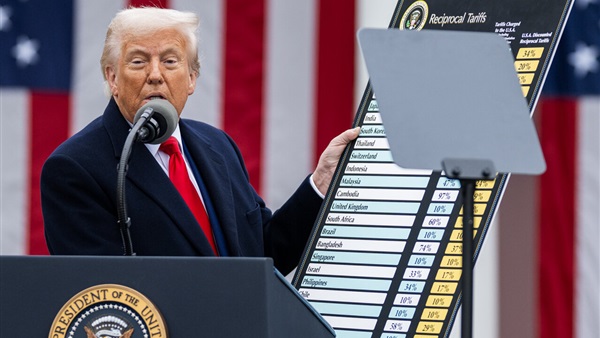
Trump’s tariffs have triggered renewed global trade tensions after China and Brazil strongly condemned the U.S. administration’s latest proposals, warning that they could adopt retaliatory measures to protect their economic interests. The proposed levies target 14 trading partners and are expected to take effect in early 2027, raising concerns over international trade relations and economic stability.
China’s Ministry of Commerce urged Washington on Thursday, November 26, to resolve trade disputes through dialogue rather than unilateral economic measures.
Ministry spokesperson He Yadong emphasized that Beijing reserves the right to take necessary measures to safeguard its legitimate rights and economic interests.
Trump’s Tariffs Target 14 Major Trading Partners
The Trump administration announced the proposed tariffs on Wednesday under Section 301 of the Trade Act of 1974, following an investigation led by U.S. Trade Representative Jamieson Greer.
Washington said the investigation had identified unfair trade practices and excess manufacturing capacity among several trading partners.
Mexico and Norway were excluded from the latest proposals because investigations into their respective trade practices remain ongoing.
Greer defended the measures as an effort to establish fairer competitive conditions for American workers and promote a more sustainable global economy.
The use of Section 301 provides the administration with a legal mechanism to reinstate many tariffs that the U.S. Supreme Court declared unlawful and struck down in February.
Under the latest proposals, China faces a 20% tariff, which Washington could increase to 40% if Beijing fails to comply with the terms of its existing trade truce with the United States.
The proposed measures remain subject to a public notice and comment period, with a hearing scheduled for early 2027 before their implementation.
Asian Economies Challenge Washington’s Trade Measures
Vietnam, another major U.S. trading partner, faces proposed tariffs of up to 35%.
Vietnam’s Ministry of Industry and Trade announced that it was preparing counterarguments challenging the preliminary findings and allegations associated with the U.S. investigation.
Agathe Demarais, a senior policy fellow at the European Council on Foreign Relations, said the proposed tariffs could increase pressure on Southeast Asian economies that maintain extensive commercial relationships with both Washington and Beijing.
Many economies in the region serve as intermediaries for Chinese goods entering the American market. According to Demarais, the proposed measures are intended to make it more difficult for countries such as Vietnam to maintain this intermediary role.
Singapore and Japan also expressed opposition to proposed tariff rates of 20%.
Singapore’s Ministry of Energy, Trade, and Industry expressed disappointment with Washington’s assessment, arguing that the investigation failed to account for the structure of the Singaporean economy.
Japanese Chief Cabinet Secretary Minoru Kihara described the proposed tariffs as regrettable, rejecting allegations that Japan maintains nonmarket practices or structural excess production capacity.
European Union Questions Compliance With Existing Trade Agreement
Trump’s tariffs have also drawn criticism from European officials concerned about Washington’s commitment to previously negotiated trade agreements.
Bernd Lange, chairman of the European Parliament’s trade committee, described the proposed 20% tariff on European Union imports as unreasonable.
He called on Washington to respect the Turnberry agreement concluded in 2025, which established a 15% ceiling on U.S. tariffs affecting the European Union.
Lange rejected American allegations concerning European industrial overcapacity and warned that the EU possesses legal mechanisms to respond if Washington breaches its commitments.
Deborah Elms, head of trade policy at the Singapore-based Hinrich Foundation, said the possibility of unilateral tariff increases was already generating resentment among U.S. trading partners.
She warned that allowing Washington to determine whether countries were meeting its expectations, and subsequently increase tariffs, undermines confidence and makes long-term economic planning increasingly difficult.
The proposed measures also raise questions about the durability of existing trade agreements with the United States, particularly for economies that have already negotiated tariff arrangements with Washington.
Brazil Condemns Targeted Tariffs on Sugar and Aircraft
Alongside the broader measures affecting 14 trading partners, the Trump administration announced a separate proposal targeting Brazilian sugar and aircraft exports.
The Office of the U.S. Trade Representative proposed an additional specific tariff on Brazilian sugar imports and an additional 10% tariff on finished aircraft exported from Brazil.
Washington said the measures were intended to encourage Brazil to return to negotiations amid stalled bilateral trade discussions.
The Brazilian government expressed outrage over the proposal, emphasizing that it had participated in Section 301 negotiations with the United States in good faith for more than a year.
“The USTR's unilateral decision constitutes an unacceptable action within the ongoing bilateral negotiation process. Brazil will not yield to this type of threat,” the government said in a statement.
Brazil reaffirmed its willingness to continue negotiations but did not rule out retaliatory measures should Washington impose tariffs that Brasília considers unlawful and unjustified.
The dispute represents another challenge to bilateral trade relations between two of the Western Hemisphere’s largest economies.
Congressional Opposition to Trump’s Tariffs Intensifies
The Trump administration could also encounter significant domestic political resistance when Democrats assume control of both chambers of Congress in January 2027 following their victories in the midterm elections.
Democratic Senator Ron Wyden of Oregon, who is expected to chair the Senate Finance Committee, pledged to challenge the administration’s tariff policies.
Wyden accused Trump of attempting to reconstruct tariffs previously ruled unlawful, warning that the measures could impose additional financial burdens on American families, workers and small businesses.
Although acknowledging that global industrial overcapacity represents a serious economic challenge, Wyden rejected unilateral tariff increases as an appropriate solution.
He also pledged to use his position to restore Congress’ constitutional authority over trade policy.
However, congressional efforts to restrict presidential tariff powers could face significant obstacles, particularly the difficulty of securing a veto-proof majority.
Public opposition to the administration’s trade policies also remains substantial. An NBC News exit poll conducted following the midterm elections found that 66% of voters believed Trump’s tariff policies had harmed the American economy.
As governments prepare their formal responses to the proposed measures, uncertainty surrounding Trump’s tariffs continues to complicate international trade negotiations, existing economic agreements and relations between Washington and its major commercial partners.