Trump’s New Tariffs Target Dozens of Countries Amid Legal and Political Challenges
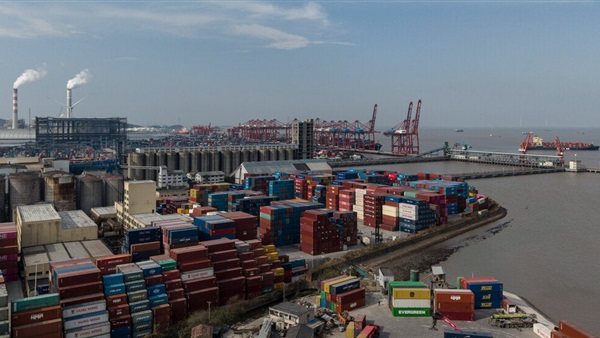
Trump’s new tariffs are set to target imports from dozens of countries, including China, Japan, and members of the European Union, as the US administration intensifies its campaign against alleged unfair trade practices despite mounting legal challenges, inflationary pressures, and growing congressional opposition.
The proposals, unveiled on Wednesday, represent the latest escalation in President Donald Trump’s global trade war. The administration accused several major trading partners of excessive industrial production, undermining American manufacturers and contributing to the widening US trade deficit.
The announcement comes at a politically sensitive moment for the White House, with Democrats preparing to assume control of both chambers of Congress following the November midterm elections.
Trump Proposes Higher Tariffs on Major Trading Partners
Under the proposed measures, certain Chinese imports would face tariffs of 20 percent, potentially increasing to 40 percent if Beijing fails to comply with the terms of its existing trade agreement with Washington.
Trump’s new tariffs would also affect the European Union’s 27 member states and several major Asian trading partners, including Cambodia, India, Japan, South Korea, Taiwan, and Vietnam.
Some proposed duties could reach 20 percent, while a separate initiative seeks to increase tariffs on Brazilian sugar and aircraft exports.
US Trade Representative Jamieson Greer said during an interview with CNBC that the administration must complete several regulatory procedures, including a public consultation process, before implementing the measures.
Greer described the proposed tariffs as targeted and confirmed that negotiations remained underway with affected trading partners.
He also explained that, in many cases, the new duties would not be imposed cumulatively with existing tariffs, including national security-related levies on steel and automobiles. The administration would also seek to maintain consistency with previously negotiated trade agreements.
European Union and China Push Back Against US Tariff Plans
The announcement prompted criticism from several of Washington’s closest economic partners, including countries that had already negotiated agreements intended to prevent higher tariffs.
European Union officials disputed the administration’s allegations that European manufacturing practices were contributing to global industrial overcapacity.
European Commission spokesperson Olof Gill said the bloc would examine Washington’s findings while expecting any resulting measures to respect the existing transatlantic trade agreement.
Under the latest proposal, European imports would face tariffs of 15 percent, consistent with the previously negotiated agreement. However, Washington warned that rates could increase to 25 percent if compliance was deemed unsatisfactory.
China also strongly rejected the administration’s justification for the proposed measures, just days after Chinese President Xi Jinping hosted Trump for another round of trade negotiations.
Chinese Foreign Ministry spokesperson Guo Jiakun dismissed the allegations of industrial overcapacity, accusing Washington of using the issue as a pretext for political manipulation.
The reactions highlight renewed tensions between the United States and its major trading partners despite recent diplomatic efforts to stabilise commercial relations.
White House Invokes Section 301 to Overcome Legal Obstacles
The administration intends to implement Trump’s new tariffs under Section 301 of the Trade Act of 1974, which authorises the US government to investigate foreign trade practices and impose retaliatory duties when evidence establishes harm or discrimination against American industries.
Presidents from both major political parties have previously exercised this authority, including Trump.
The latest approach follows a Supreme Court ruling earlier this year that invalidated the administration’s initial country-specific tariffs.
In March, the White House launched two separate investigations aimed at establishing alternative legal grounds for its trade restrictions.
The first examined allegations that dozens of countries had failed to adequately address forced labour. Tariffs resulting from that investigation took effect in July but quickly faced legal challenges. A judicial panel has yet to issue its verdict, although recent proceedings suggested that the administration could face another setback.
The second investigation focused on alleged industrial excess capacity, examining whether foreign governments had unfairly expanded their manufacturing sectors at the expense of American businesses.
The inquiry examined several economic practices, including government subsidies, currency management, support for state-owned enterprises, and labour and environmental regulations.
Washington argues that these practices create unfair competitive advantages for foreign manufacturers while contributing to the US trade imbalance.
Rising Inflation and Trade Deficit Complicate Trump’s Economic Agenda
The proposed tariffs were announced amid growing concerns about consumer affordability and the broader economic consequences of the administration’s trade policies.
A key government inflation indicator released on Wednesday showed that prices increased by 3.8 percent in October compared with the same period last year, accelerating from September.
US stock markets also opened sharply lower on Wednesday as investors assessed the latest economic developments.
Trump has consistently defended tariffs as essential tools for strengthening domestic manufacturing, generating federal revenue, and securing more favourable international trade agreements.
However, his shifting trade policies have contributed to rising costs for consumers and businesses, adding to the public dissatisfaction that helped Republicans lose their congressional majorities in the midterm elections.
Meanwhile, the administration continues to face difficulties reducing the US trade deficit.
Government figures released this month showed that the deficit reached $105 billion in September, slightly below August’s level but still the second-largest monthly total since Trump returned to office.
One significant contributor to the imbalance is the rapid expansion of artificial intelligence infrastructure, as American technology companies continue importing expensive semiconductors and other advanced computing components.
The trend illustrates a challenge facing the administration: expanding domestic technological capabilities while reducing dependence on foreign imports.
American Businesses and Labour Unions Divided Over Tariffs
Trump’s new tariffs have generated sharply contrasting reactions across the American business community.
Small business owners warned that additional import duties could increase operating expenses and force companies to raise prices at a time when American households are already struggling with affordability concerns.
Anne-Marie De Witt, chief executive of Fireside Games, a board game publisher based in Austin, Texas, criticised the announcement, arguing that the election results had demonstrated widespread public concern over the financial burden of tariffs.
Her comments were issued alongside We Pay the Tariffs, a coalition of small businesses opposing the administration’s trade policies.
However, the United Steelworkers union welcomed the proposed measures, describing efforts to address global industrial overcapacity as long overdue.
The union argued that years of international negotiations had failed to resolve excessive production across several industries, including steel, aluminium, chemicals, tyres, and shipbuilding.
Roxanne Brown, president of United Steelworkers International, said the measures represented an opportunity to restore fairer market conditions for American manufacturing workers.
Timothy Brightbill, a trade lawyer at Wiley Rein, also acknowledged that industrial overcapacity presents substantial challenges for US companies, both domestically and in international export markets.
Although measuring excess production across individual industries remains difficult, Brightbill maintained that unfair competition resulting from structural overcapacity is a genuine and growing concern.
Mexico and Norway Remain Under Review
Mexico and Norway were notably absent from the latest tariff proposals, despite having been included in the administration’s earlier investigations.
A senior administration official confirmed that reviews concerning both trading partners were continuing.
The final scope and rates of the proposed duties remain subject to regulatory procedures, public feedback, ongoing negotiations, and potential legal challenges.
With an incoming Democratic-led Congress preparing to scrutinise the administration’s economic policies, Trump faces increasing pressure to demonstrate that his protectionist trade strategy can strengthen American manufacturing without intensifying inflation or undermining consumer purchasing power.
The latest tariff proposals underscore the unresolved tension between protecting domestic industries, maintaining international economic partnerships, and controlling the rising cost of living.