Ukraine’s Shadow War in Africa Raises Concerns Over Expanding Russia-Ukraine Conflict
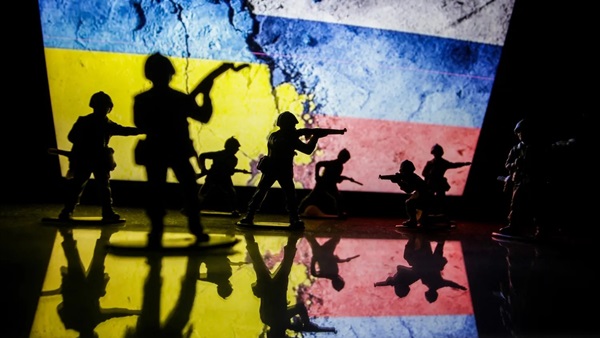
Ukraine’s shadow war in Africa is drawing growing international concern following Kyiv’s claim of responsibility for an attack on two Russian naval vessels off the coast of Libya, highlighting the expanding geographical reach of the Russia-Ukraine conflict and raising fears that Africa is increasingly becoming a proxy battlefield between Moscow and Kyiv.
Ukraine claimed responsibility on Monday for the attack, which occurred on Sunday and targeted two Russian vessels, including the Merkury, one of Russia’s newest naval corvettes. The vessels had been docked at the Benghazi naval base in eastern Libya.
Ukrainian President Volodymyr Zelensky described the operation as “exemplary,” presenting it as a response to Russia’s war against Ukraine.
However, security experts warn that military operations in countries not directly involved in the conflict could establish a dangerous precedent, further destabilising regions already struggling with political divisions, armed insurgencies, and foreign military intervention.
United Nations Warns Against Turning Libya Into a Foreign Battleground
The United Nations Support Mission in Libya (UNSMIL) called for an immediate, independent, and transparent investigation into the drone strikes, warning against the expansion of foreign conflicts into Libyan territory.
“Libya cannot afford, and must not become, a battleground for foreign conflicts,” the mission stated on X.
Kyiv confirmed that seven Ukrainian-made naval drones had been deployed from a vessel operating in the region, although Ukrainian authorities did not disclose how the drones had been transported there.
Unverified reports from Libyan sources alleged that the internationally recognised government in Tripoli may have assisted Ukraine in conducting the operation. The Tripoli administration strongly denied the allegations.
Both of Libya’s rival administrations condemned the attacks: the Tripoli-based government led by Prime Minister Abdul Hamid Dbeibah and the Russia-backed eastern administration controlled by General Khalifa Haftar.
The condemnation reflects shared concerns over Libya’s exposure to external military confrontations despite the country’s longstanding political divisions.
Libya’s Growing Strategic Importance to Russia
Ukraine’s shadow war in Africa comes amid Moscow’s efforts to consolidate its military presence across the continent following the collapse of Bashar al-Assad’s government in Syria in 2024.
Russia has increasingly pursued alternative military facilities in Africa, including airbases in eastern Libya, as part of its efforts to maintain logistical connections with the Sahel region.
Syria previously served as a strategic logistical hub for transferring Russian military personnel and weapons to landlocked Sahel countries, where Russia’s Africa Corps assists local authorities in combating jihadist insurgencies.
According to Ulf Laessing, head of the Syria and Iraq programme at the Konrad-Adenauer-Stiftung and author of Understanding Libya Since Gaddafi, Libya has increasingly assumed that logistical role as Syria develops closer relations with the United States and Europe.
Laessing explained that Ukraine’s operations reflect an effort to weaken Russian interests beyond the conventional battlefield, particularly where Moscow maintains logistical connections with its African military partners.
Zain Hussain, a researcher at the Stockholm International Peace Research Institute (SIPRI), similarly argued that the attack demonstrates Ukraine’s ability to challenge Russia’s broader geopolitical interests while continuing to confront Russian forces at home.
Alleged Ukrainian Military Activities Across the Sahel
Concerns surrounding Ukraine’s shadow war in Africa extend beyond Libya, with reports suggesting that Ukrainian military involvement may also reach several countries across the Sahel and northeastern Africa.
According to a CNN report published in September, Ukrainian drone specialists have been deployed to Libya, Mali, and Sudan.
A source cited by CNN also alleged that military personnel from Chad, Niger, and Burkina Faso had travelled to Mali to receive drone training from Ukrainian soldiers. However, several security experts interviewed by Foreign Policy questioned the strength of the available evidence, describing such claims as largely speculative.
Multiple media reports have also accused Ukraine of providing assistance and training to Tuareg separatists in northern Mali as part of efforts to undermine Russian military influence.
Analysts have suspected Ukrainian drone assistance in a 2024 Tuareg ambush that killed dozens of Russian Wagner Group mercenaries and Malian soldiers.
Following the incident, Ukrainian military intelligence spokesperson Andriy Yusov stated that the rebels had received information necessary to conduct the attacks.
His remarks prompted Mali to sever diplomatic relations with Ukraine, accusing Kyiv of supporting an attack that Malian authorities characterised as terrorism.
Suspicions of Ukrainian involvement also emerged following the temporary capture of Mali’s strategic town of Kidal earlier this year by Tuareg separatists and al-Qaeda-linked jihadists.
Ukraine’s Foreign Ministry has officially rejected those allegations.
Africa Faces Growing Risks From an Internationalised Conflict
Despite the latest naval strikes, experts believe that Ukraine’s military operations are unlikely to significantly weaken relations between Russia and eastern Libya.
Laessing noted that Moscow continues to require a reliable regional partner to maintain its logistical connections with the Sahel, making Libya strategically important to Russian military operations across Africa.
Nevertheless, the expansion of Ukraine’s shadow war in Africa introduces additional security challenges for countries already confronting armed insurgencies, political instability, and increasingly sophisticated drone warfare.
Virginie Baudais, director of SIPRI’s Sahel and West Africa programme, warned that the internationalisation of regional conflicts could intensify existing violence, with civilian populations bearing the greatest consequences.
The latest developments underscore the risks associated with extending the Russia-Ukraine conflict beyond its traditional geographical boundaries.
While Kyiv seeks to weaken Moscow’s international military influence, and Russia continues to consolidate its strategic presence across Africa, the growing involvement of external powers threatens to complicate existing regional conflicts.
For African countries already facing considerable security and humanitarian challenges, the central concern remains preventing their territories from becoming arenas for geopolitical confrontations in which local populations have little influence but potentially bear the greatest cost.