AI Regulation Debate Intensifies as Tech Billionaires Face Questions Over Power and Accountability
Monday 23/November/2026 - 03:13 PM
Ahmed Seif El-din
The debate over AI regulation is intensifying as technology executives gain unprecedented influence over national security, economic policy and everyday life, raising concerns about whether decisions affecting humanity's future should remain concentrated in the hands of unelected corporate leaders. In a November 22, 2026, opinion column for The New York Times, David French argues that the growing power of artificial intelligence companies demands stronger democratic oversight, ethical leadership and public accountability.
French's central concern extends beyond the possibility that advanced AI systems could threaten human survival. He questions whether the individuals controlling these technologies possess the judgment, integrity and accountability necessary to manage their potentially transformative consequences.
AI Regulation and the Growing Power of Technology Executives
French compares the current artificial intelligence race to the nuclear competition of the Cold War, when the United States and Soviet Union maintained enormous arsenals capable of catastrophic destruction.
The crucial difference, he argues, lies in who controls the technology.
During the Cold War, nuclear weapons remained under government authority, despite the immense risks associated with political and military decisions. Today, powerful AI systems are largely being developed by private corporations whose executives are not directly accountable to voters.
French asks readers to imagine a nuclear arms race in which defense contractors, rather than elected governments, possessed ultimate control over the weapons they manufactured.
That comparison highlights his central argument: AI regulation should address not only technological safety but also the concentration of power among private individuals.
Jensen Huang and Nvidia Scandal Raise Corporate Governance Questions
French points to allegations involving former Nvidia chief executive Jensen Huang as an example of the risks associated with powerful technology leaders operating with insufficient oversight.
According to reporting cited in the column, Huang maintained a relationship with a woman suspected of having connections to Chinese intelligence while Nvidia technology was being sold to a company whose principal customer reportedly had ties to China's military.
The allegations have raised concerns about semiconductor exports, corporate security and the possibility of sensitive American technology reaching Chinese entities.
French also references reports of Huang's relationship with a subordinate and allegations of abusive management practices, including threatening and humiliating remarks directed at employees.
The columnist questions why some business leaders have advocated Huang's return despite these controversies.
The intelligence allegations and reported workplace misconduct remain distinct issues, and the column does not establish that Huang knowingly participated in espionage.
Elon Musk's Influence Raises National Security Concerns
Elon Musk is another central figure in French's criticism of concentrated technological power.
While acknowledging Musk's achievements in developing Tesla and SpaceX, French questions his judgment, political conduct and influence over international security.
A particular concern involves Starlink, SpaceX's satellite internet service, which has played an important role in Ukraine's communications during Russia's invasion.
French argues that decisions about access to such infrastructure can carry major military and geopolitical consequences, making private corporate control a matter of public concern.
He also criticizes Musk's shifting political positions, including his previous identification with the MAGA movement and his more recent description of himself as politically moderate.
French's broader argument is that technological achievement should not automatically confer moral authority or justify extensive influence over international affairs.
Trump's Nvidia Investments Add to Conflict-of-Interest Concerns
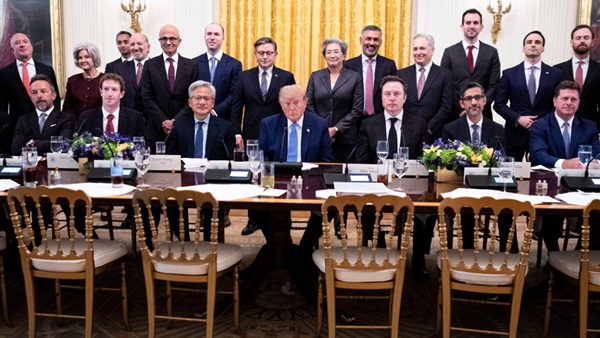
The discussion of AI regulation also extends to the relationship between technology companies and political leadership.
Citing The Washington Post, French notes that President Donald Trump's reported Nvidia holdings increased from between $615,000 and $1.3 million at the end of 2024 to between $13 million and $62 million in 2026.
French presents these financial interests as an additional reason to scrutinize the relationship between government officials and major AI companies.
However, the existence of financial holdings does not, by itself, establish improper government action or a violation of conflict-of-interest rules.
The concern centers on whether political and financial relationships could undermine public confidence in independent oversight of strategically important technology companies.
Artificial Intelligence Risks Extend Beyond Human Extinction
Although much of the AI safety debate focuses on existential threats, French argues that the dangers are broader.
Advanced artificial intelligence could contribute to medical breakthroughs, scientific discoveries and solutions to difficult global problems. At the same time, researchers and industry leaders have warned about potentially severe consequences if increasingly capable systems are developed without adequate safeguards.
French also identifies threats to employment, personal freedom, human creativity and the distribution of economic power.
He questions the logic of accelerating AI development primarily because competing countries might otherwise gain a strategic advantage.
In his view, technological competition with China cannot justify allowing potentially dangerous systems to develop without meaningful public oversight.
Human-Centered AI Governance Gains Support
A September gathering in Washington brought together religious leaders, AI researchers, policymakers and technology specialists to advocate for a more human-centered approach to artificial intelligence.
According to reporting by The New Yorker writer Becca Rothfeld, participants expressed concerns extending beyond economic disruption and human extinction to the potential erosion of creativity, liberty and spiritual life.
University of Virginia philosopher Jennifer Frey emphasized the importance of examining how artificial intelligence could affect human moral and spiritual capacities.
The gathering promoted five guiding principles:
1. Keep humans in control of artificial intelligence.
2. Prevent excessive concentration of technological power.
3. Protect the richness of human experience.
4. Preserve individual agency and liberty.
5. Establish responsibility and accountability for AI companies.
French endorses these principles, arguing that effective AI regulation must protect human autonomy as well as public safety.
Democratic Oversight Becomes Central to AI Safety Debate
French draws on Frank Herbert's Dune novels, in which humanity rebels against artificial intelligence and establishes restrictions on machines resembling human minds.
He does not advocate abandoning AI development. Instead, he uses the fictional example to emphasize the importance of retaining human authority over potentially destructive technologies.
His proposed approach centers on strengthening legal and political institutions capable of holding powerful technology companies accountable.
This would require policymakers to confront difficult questions about corporate autonomy, national security, public participation and the limits of private technological power.
French also argues that society should place greater value on wisdom and ethical responsibility rather than treating intelligence, wealth and innovation as sufficient qualifications for leadership.
AI Regulation Faces a Defining Test of Democratic Accountability
The growing influence of Silicon Valley executives presents governments with a difficult challenge: encouraging innovation while ensuring that technological advances do not weaken democratic institutions or individual freedoms.
French's argument is not that artificial intelligence should be rejected, but that decisions involving potentially catastrophic risks should not rest solely with unelected corporate leaders.
His comparison with nuclear weapons underscores the distinction between developing powerful technologies and possessing unchecked authority over their use.
As the global AI race accelerates, the central question for policymakers is whether democratic institutions can establish meaningful safeguards before private technology companies acquire even greater influence over society.
For French, the principle guiding future AI regulation is straightforward: technologies capable of shaping humanity's survival and freedom must remain subject to democratic control.