Israel Knesset Speaker Vote Could Strengthen Opposition Against Netanyahu
Tuesday 17/November/2026 - 03:52 PM
Ahmed Seif El-din
The Israel Knesset speaker vote is set to become a major political test for Prime Minister Benjamin Netanyahu as opposition parties seek to consolidate control of parliament following inconclusive elections that left the country without a clear governing majority.
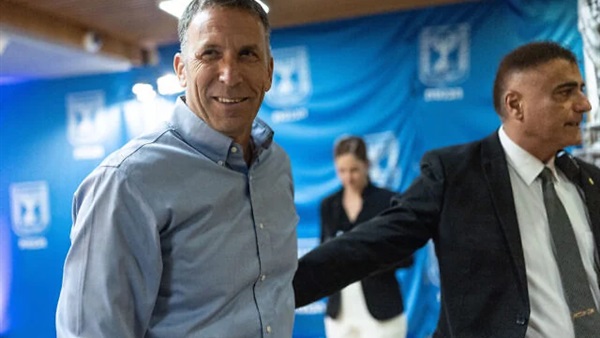
Matan Kahana, a centre-right lawmaker from Gadi Eisenkot's Yashar Party, is expected to secure the parliamentary speakership on Tuesday with support from opposition factions, including Arab-Israeli lawmakers.
The move could give Netanyahu's rivals greater influence over legislative priorities, parliamentary oversight, and proposed reforms while negotiations to establish a new government remain deadlocked.
ft.com+1
Israel Knesset Speaker Vote Follows Inconclusive Election
Israel's October 27 parliamentary election produced a fragmented Knesset, leaving neither Netanyahu's political bloc nor its principal rivals with an outright majority.
Netanyahu's coalition secured 53 seats in the 120-member parliament, while Jewish opposition parties won 48 seats.
Two Arab-Israeli political factions, both opposed to Netanyahu, obtained another 19 seats.
Together, the opposition parties and Arab-Israeli factions hold enough seats to elect a parliamentary speaker, although forming a governing coalition remains considerably more complicated.
President Isaac Herzog gave Eisenkot, a former military chief, the first opportunity to establish a government.
However, divisions among opposition parties over cooperation with Arab-Israeli factions and ultra-Orthodox parties have complicated negotiations.
everycrsreport.com
Matan Kahana Expected to Become Knesset Speaker
Kahana, a retired fighter pilot and former government minister, has emerged as the opposition's preferred candidate for the parliamentary leadership position.
The speaker exercises considerable influence over the Knesset's legislative agenda, parliamentary proceedings, and scheduling.
Securing the position would allow Netanyahu's opponents to advance legislation and strengthen oversight of the outgoing administration even before a new governing coalition is established.
Kahana could initially serve as a temporary speaker until a future government agrees on a permanent appointment.
Analysts expect him to receive sufficient parliamentary support, including votes from Arab-Israeli representatives.
The Israel Knesset speaker vote therefore represents an important opportunity for opposition parties to demonstrate their ability to cooperate despite disagreements over government formation.
timesofisrael.com
Opposition Seeks Judicial Reforms and October 7 Inquiry
Opposition parties have already moved to establish control over influential parliamentary committees.
Former defence minister Avigdor Lieberman now chairs the powerful Foreign Affairs and Defense Committee, while opposition lawmakers have also secured leadership of the Finance Committee.
The parties intend to reverse several laws introduced under Netanyahu that critics say weakened judicial independence and media oversight.
They have also pledged to establish a state commission of inquiry into the Hamas-led October 7, 2023, attack on Israel.
During his committee's opening session on Monday, Lieberman said he would summon senior security officials appointed by Netanyahu for parliamentary questioning, including hearings concerning Iran.
These initiatives could significantly increase scrutiny of the caretaker government while coalition negotiations continue.
Arab-Israeli Lawmakers Become Central to Parliamentary Control
The Israel Knesset speaker vote has also exposed disagreements over the political role of Arab-Israeli representatives.
Finance Minister Bezalel Smotrich offered to support Kahana's appointment on the condition that Arab lawmakers would not receive deputy speaker positions.
Kahana rejected the proposal, arguing that excluding representatives of a community accounting for approximately 21% of Israel's population would be unacceptable.
The disagreement reflects wider tensions over whether Jewish opposition parties should cooperate with Arab-Israeli factions to replace Netanyahu.
Although Arab lawmakers are expected to support Kahana, several opposition leaders remain unwilling to include their parties in a governing coalition.
This distinction could allow the opposition to control parliamentary procedures without resolving the more difficult question of who will form Israel's next government.
timesofisrael.com+1
Coalition Talks Remain Divided Over Ultra-Orthodox Parties
Eisenkot's efforts to form a government have encountered further difficulties because of disagreements among potential coalition partners.
Lieberman has expressed a preference for negotiations with ultra-Orthodox parties, which have historically supported Netanyahu.
One major obstacle involves exemptions from compulsory military service for ultra-Orthodox men.
Although Lieberman previously campaigned to end those exemptions, he has indicated a willingness to consider compromise legislation acceptable to religious parties.
Eisenkot's representatives have also held discussions with Netanyahu's Likud party about a possible national unity government.
However, political analysts consider such an arrangement unlikely amid continuing hostility between the two leaders.
Election-Day Allegations Increase Political Tensions
The parliamentary struggle comes amid accusations concerning the conduct of Israel's recent election.
Eisenkot and Netanyahu have exchanged sharp public criticism over renewed military strikes against Iran and allegations that individuals associated with the prime minister's office attempted to undermine the legitimacy of Arab-Israeli votes.
On Monday, Israeli police announced an internal investigation into their actions on election day.
The inquiry follows reports that misleading intelligence allegedly supplied by Netanyahu's aides contributed to the arrests of three Arab citizens on suspicion of vote buying.
All three individuals were subsequently released without charges.
Netanyahu confirmed that his acting chief of staff had forwarded information concerning suspected criminal activity to police but denied wrongdoing.
Eisenkot accused Netanyahu of threatening Israeli democracy and argued that the outgoing prime minister should not remain in office.
The allegations remain contested, and the police investigation has not established wrongdoing by Netanyahu or his aides.
Knesset Leadership Could Shape Israel's Political Future
The expected appointment of Kahana could mark a significant shift in parliamentary authority even if negotiations over a new government remain unresolved.
Controlling the speakership and important committees would give opposition parties an opportunity to pursue legislative changes, investigate government conduct, and challenge Netanyahu's political agenda.
However, parliamentary cooperation does not automatically translate into agreement on a governing coalition.
The differences separating Jewish opposition factions, Arab-Israeli parties, and ultra-Orthodox lawmakers remain substantial.
The Israel Knesset speaker vote will therefore test whether Netanyahu's opponents can translate their combined parliamentary strength into lasting political influence.
With Israel's government formation process still uncertain, the outcome could shape the balance of power in the Knesset and influence the country's next phase of political negotiations.