International Student Enrollment in US Drops 15% as Visa Uncertainty Hits Universities
Monday 16/November/2026 - 02:51 PM
Ahmed Seif El-din
International student enrollment in the US has declined for a second consecutive year, with new admissions falling 15% in fall 2026 amid tightening immigration policies, visa uncertainty and concerns about employment opportunities after graduation. The downturn is creating financial pressure for American universities and raising questions about the country's ability to retain its position as the world's leading destination for international education.
According to a survey released November 16 by the Institute of International Education (IIE), new international student enrollment dropped 15% this fall, following an 18% decline the previous year. Total international enrollment, including continuing students, fell 9%, compared with a 3% decrease last year.
Trump Immigration Policies Add to International Student Concerns
The decline in international student enrollment in the US comes as President Donald Trump's administration continues implementing stricter immigration measures and changes to student visa policies.
Uncertainty surrounding visa approvals, restrictions on employment opportunities and the administration's trade tensions with China have contributed to concerns among prospective students.
Ted Mitchell, president of the American Council on Education, described the two-year decline as potentially historic, particularly because international students had long represented a growing segment of American higher education.
Mitchell also expressed concern that some students already enrolled at US institutions were choosing not to return because of immigration-related risks.
Despite the downturn, the United States remains the world's leading destination for international students, hosting more than one million during the previous academic year.
US Universities Face Financial Losses and Academic Cuts
International students are an important source of revenue for American colleges, frequently paying full tuition fees that help support university operations and indirectly subsidize domestic students.
As enrollment declines, several institutions have introduced budget reductions, academic restructuring and workforce cuts.
The University of North Texas announced plans to eliminate or merge approximately 70 academic programs, citing declining international enrollment. Pennsylvania State University has also identified reduced international enrollment as a contributing factor in financial adjustments.
Boston University, which previously implemented layoffs, reported that falling international student numbers were adding to its financial pressures.
A separate analysis by NAFSA: Association of International Educators estimated that the fall 2026 decline could cost the US economy approximately $2.4 billion in revenue and 31,000 jobs.
Graduate Student Enrollment Records Sharpest Decline
The latest international education figures reveal significant differences across academic levels.
The IIE's Open Doors report for the 2025–26 academic year showed a 13% decline in graduate enrollment, largely driven by fewer students pursuing master's degrees.
A separate New York Times analysis of Department of Homeland Security data indicated that the trend continued into 2026.
The figures suggest that master's programs are particularly vulnerable to changing immigration conditions and uncertainty surrounding post-graduation employment.
Chinese Students Reconsider US Education and Career Opportunities
Students from China, historically one of the largest international student populations in the United States, are increasingly reassessing their educational options.
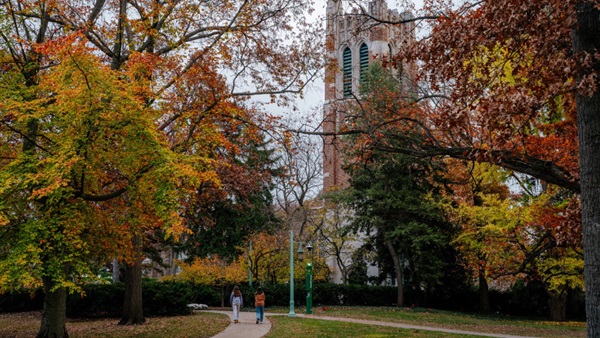
At Michigan State University, overall international enrollment declined approximately 10% this fall.
Elena Li, a sophomore from Wuxi, China, studying supply chain management, told The New York Times that several Chinese friends had decided against studying in the United States because of concerns about securing visas and finding employment after graduation.
Another Michigan State student, Scarlett Geng, from Beijing, said some international students were reluctant to leave the United States to renew expired visas because they feared being denied reentry.
Geng also expressed concern about new restrictions affecting curricular practical training, a program that allows eligible international students to gain practical work experience related to their studies.
Ohio State and Illinois Report Declining International Enrollment
The effects of falling international student enrollment in the US are evident at several major public universities.
Ohio State University reported a 13% decline in international enrollment despite overall enrollment growth. The number of students from China fell 20%.
University President Ravi V. Bellamkonda said international tuition revenue helps support lower tuition costs for in-state students. He also warned that losing talented international graduates co
uld weaken the American economy and encourage students to pursue opportunities in Europe or Australia.
At the University of Illinois Urbana-Champaign, enrollment of Chinese students declined 9%.
Wojtek Chodzko-Zajko, dean of the university's graduate college, emphasized that international students have alternative destinations and are increasingly considering those options.
US Higher Education Faces Growing Global Competition
The decline in international student enrollment in the US presents challenges extending beyond university budgets.
International students contribute to scientific research, innovation, skilled employment and the broader economy. Their reduced participation could affect graduate programs, research institutions and industries that depend on internationally trained professionals.
Although American universities continue to attract substantial numbers of foreign students, uncertainty over immigration rules and career pathways may increasingly influence where students choose to study.
The latest figures underscore a central challenge for US higher education: maintaining its global competitiveness while immigration restrictions and changing perceptions of the United States reshape international student decisions.