US Flight Disruptions Continue After Nationwide Ground Stop, Thousands of Flights Canceled
Sunday 15/November/2026 - 01:54 PM
Ahmed Seif El-din
Airlines face days of recovery following a major FAA communications failure, leaving passengers dealing with cancellations, delays and widespread travel uncertainty.
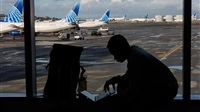
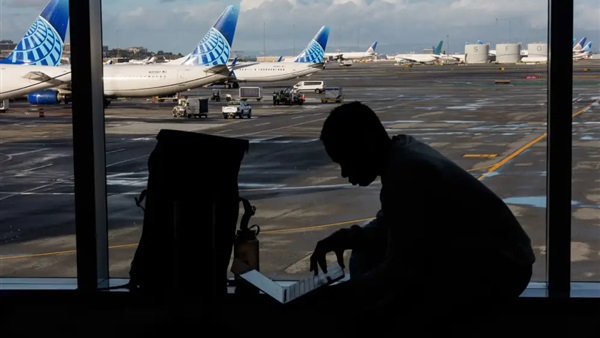
US flight disruptions continued into Saturday, November 14, 2026, after a nationwide ground stop on Friday evening stranded thousands of passengers and disrupted airline operations across the country. Although the Federal Aviation Administration (FAA) lifted the temporary suspension after several hours, airlines canceled thousands of flights as airports struggled to restore normal schedules.
FAA Administrator Bryan Bedford said the air traffic control system was expected to return to normal by Sunday night. However, flight schedules could take several additional days to stabilize as airlines reposition aircraft, reorganize crews and accommodate stranded travelers.
Federal officials are investigating the technical failure, with no evidence so far suggesting a cyberattack or malicious interference.
What Caused the Nationwide FAA Ground Stop?
The nationwide ground stop followed a routine telecommunications upgrade carried out by L3Harris, a contractor responsible for managing the FAA's communications network.
According to Transportation Secretary Sean Duffy, the contractor was replacing aging copper wiring with modern fiber-optic cables at a remote air traffic control facility. The upgrade was not expected to significantly affect aviation operations.
However, the transition reportedly overwhelmed the system with more data than it could process, triggering widespread communications failures across facilities responsible for managing US airspace.
Authorities responded by temporarily grounding flights nationwide to protect aviation safety.
Investigators have not determined whether the failure resulted from contractor error or defective equipment. L3Harris said it was cooperating with the FAA investigation and acknowledged the serious consequences for passengers and airlines.
Officials also ruled out any currently identified connection to the FAA's recent deployment of artificial intelligence-assisted technology.
FAA Funding Debate Intensifies After Flight Disruptions
The US flight disruptions have renewed concerns about the country's aging air traffic control infrastructure and the federal government's investment priorities.
Duffy called on Congress to provide $50 billion to modernize the aviation system, arguing that insufficient funding had left critical infrastructure vulnerable to technical failures.
Congress approved $12.5 billion for air traffic communications upgrades last year, but administration officials maintain that additional investment is necessary.
House Speaker Mike Johnson said he would pursue increased FAA funding through an ambitious legislative package before Democrats assume control of both chambers of Congress.
Democratic lawmakers, meanwhile, criticized the Trump administration's spending priorities, arguing that existing resources could have been directed toward aviation safety rather than immigration enforcement. They also called for congressional investigations into the incident.
Why Are US Flight Disruptions Continuing?
Although the nationwide ground stop has ended, restoring airline operations presents significant logistical challenges.
Airlines must coordinate aircraft availability, flight crews, airport gates and passenger bookings. A disruption affecting thousands of flights can leave planes and employees stranded far from their scheduled locations.
Aviation data company Cirium reported that numerous aircraft returned to their departure airports during Friday's shutdown, increasing congestion at already crowded facilities.
Flight crews also approached federally mandated working-hour limits, further complicating recovery efforts.
As a result, airlines may need to cancel additional services rather than attempt to operate severely delayed schedules.
The US flight disruptions could therefore persist for several days, even if the FAA's communications systems recover by Sunday evening.
What Should Passengers Do if Their Flights Are Canceled?
Travelers affected by the nationwide flight cancellations should monitor airline notifications and check flight status before heading to the airport.
Because the disruption originated outside individual airlines' control, passengers may receive limited additional accommodations.
However, under US aviation consumer protection rules, passengers whose flights are canceled or significantly changed are entitled to a refund if they decline the alternative transportation offered.
Several major carriers, including United Airlines, Delta Air Lines, JetBlue Airways, Alaska Airlines and Southwest Airlines, have introduced travel waivers allowing eligible passengers to change or cancel bookings without change fees or fare differences.
Travelers seeking alternative arrangements can also consider standby options for earlier departures or contact international airline customer service numbers, which may experience shorter waiting times.
When Will US Flights Return to Normal?
FAA officials expect the underlying air traffic control system to recover by Sunday night, November 15, although airline schedules may require several more days to return to normal.
The incident highlights the vulnerability of interconnected aviation networks, where a single communications failure can disrupt thousands of flights nationwide.
As investigations continue, the US flight disruptions are likely to intensify scrutiny of aviation infrastructure, government oversight and the funding needed to prevent similar nationwide shutdowns.