Student Protests in France: Hidden Foreign Hands and Accusations at Home
Friday 09/October/2026 - 03:39 PM
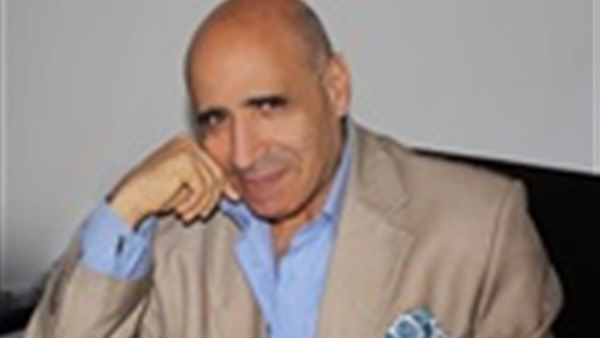
Paris — Dr. Ahmed Youssef
Yesterday, Professor Jacques-Olivier Boudon informed me that my lecture, scheduled for Saturday, October 17, at Sorbonne University, had been postponed due to the violent unrest in Paris.
In fact, the student protests currently sweeping France have revived memories of the famous May 1968 demonstrations, which remain a painful wound in the collective French consciousness. Those events began with the shock of the violence that rocked the Latin Quarter and culminated, shortly afterward, in the departure of the legendary General de Gaulle.
The material grievances driving lycée (secondary school) students to take to the streets essentially revolve around teacher shortages, inadequate school facilities and amenities, such as air conditioning and furniture, and perhaps excessively long school days, among other concerns. These are all genuine grievances, and students have come to realize that, although officials listen attentively to their demands, nothing actually materializes on the ground.
Against this backdrop, deeply rooted French revolutionary impulses have resurfaced, along with the idea of using violence to force these demands onto the agenda of a French government already overwhelmed by enormous financial crises and the burdens of an energy crisis resulting from the war in the Arabian Gulf. All this is unfolding amid a highly charged political atmosphere as preparations intensify for the forthcoming presidential election, with the first round scheduled for April 18 and the final, decisive round for May 2.
Within the context of this electoral battle, the French right, across all its factions, accuses the La France Insoumise (France Unbowed) party of adding fuel to the fire by encouraging young people, particularly those living in working-class neighborhoods, to demonstrate and even resort to violence against police officers.
A statement by Bally Bagayoko, the mayor of Saint-Denis, north of Paris, who is of African descent and a prominent figure in La France Insoumise, asserting that demonstrating and using violence are rights of students, marked a turning point at which these protests escalated into bloody acts of violence.
While fingers of accusation are being pointed at a French political party and its leader, Jean-Luc Mélenchon—who is polling exceptionally well and is one of the most prominent defenders of the Palestinian cause in France—behind-the-scenes discussions suggest the involvement of shadowy forces outside France in transforming students' demands into a sweeping revolution that could engulf the country and undermine its political and social stability.
According to several reports, these hidden forces appear to include Russia and the United States, which allegedly share a common interest in destabilizing France. The Russians seek revenge against President Emmanuel Macron for leading a strong European coalition to help Ukraine resist Russia, while the Americans want to punish Macron for recognizing the Palestinian state and adopting a firm stance toward the government of Israeli Prime Minister Benjamin Netanyahu.
There are two particularly important points to consider in this regard.
The first concerns President Macron's appearance aboard a frigate, surrounded by his senior military commanders, during a demonstration involving the launch of a highly sensitive missile carrying a nuclear warhead capable of reaching any location in the Northern Hemisphere.
There is little doubt that the president intended to convey a public message to those concerned: that no one can destabilize France—its state institutions, armed forces, or security and intelligence services.
Observers note that the president has left the student crisis entirely in the hands of the prime minister, while personally devoting his attention to those seeking to undermine France.
The second point is closely connected to the first. It concerns the recently announced discovery of documents purportedly proving the involvement of the United States Central Intelligence Agency (CIA) in supporting the Algerian Revolution, on the one hand, and the student movement of 1968, on the other.
This alleged involvement is attributed to the same motives discussed in relation to the current violence: a concealed American desire to push France back into a cycle of crises and destabilize it, thereby keeping the country preoccupied with its internal problems and preventing it from assuming any leadership role in Europe or the wider world.
Perhaps President Donald Trump's recent remarks about the ongoing violence, particularly his emphasis that "France was a great power before Islam swallowed it," are nothing more than an indication of these hidden hands and the desire of external powers to force France to step aside from global crises, leaving Europe to bleed in lives, money, and energy in a war that appears to have no end in sight.
The current wave of violence will eventually reach its peak before gradually subsiding, following the well-known French approach to managing crises of this kind, known as le pourrissement.
This means allowing the crisis to fester and die out on its own, after which the president will return with a speech addressing the students' aspirations, once the crisis has exposed the faces concealed behind the masks, both at home and abroad.