



Abdel Rahim Ali: Targeting Gulf States Would Mean the “Suicide of the Iranian State,” and Egypt’s Role Is Crucial in Containing the Escalation
Sunday 01/March/2026 - 04:07 PM
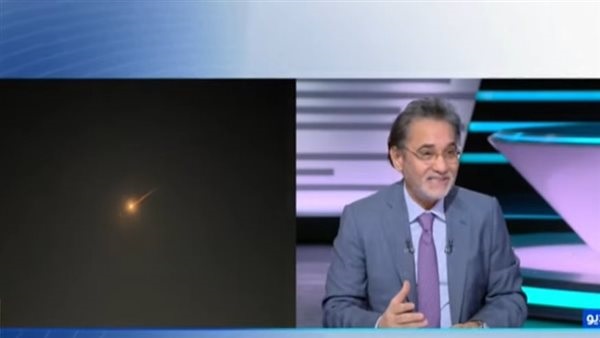
Abdel Rahim Ali, head of the Middle East Studies Center in Paris, said that the contacts conducted by President Abdel Fattah el-Sisi with a number of Arab leaders reflect a clear awareness of the seriousness of the current phase, especially in light of the emphasis that any infringement on the sovereignty of an Arab state constitutes a direct threat to the security and stability of the entire region.
He explained, during his interview with Extra News channel, that any Iranian move to target vital facilities—such as oil refineries or major companies in the Gulf states, foremost among them the United Arab Emirates, Kuwait, and Saudi Arabia—would not be interpreted as a confrontation with the United States or Israel alone, but rather as a confrontation with the entire international community. He warned that such an escalation could lead to dangerous consequences that threaten the survival of the Iranian state itself, not merely the ruling regime.
Abdel Rahim Ali pointed out that Iran’s domestic scene is experiencing an unprecedented state of tension and turmoil, amid the decline of the Iranian currency, mounting pressure on security agencies, and indications of disagreements within the ruling elite over how to manage the coming phase, particularly following the targeting of prominent state leaders.
He added that the Iranian Revolutionary Guard represents the primary pillar of the regime’s cohesion and that any divisions within it could directly affect the stability of the state, especially amid the controversy surrounding the selection of a new Supreme Leader, even though the constitution stipulates that the Assembly of Experts is responsible for choosing the Leader.
He explained that actual influence on the ground may lie in the hands of the Revolutionary Guard, as it is the most organized and influential force within Iran, which further complicates the political landscape.
He affirmed that what he described as a “security exposure” inside Iran, along with assassination operations targeting prominent security and military figures, reflects a crisis of confidence within state institutions and may affect their ability to manage the current confrontation efficiently.
Abdel Rahim Ali stressed the necessity of rational intervention to contain the crisis, affirming that continued military escalation will only produce further instability and could push the entire region toward dangerous repercussions. He added that the anger inside Iran, although understandable in light of the targeting of its leadership, must be met with careful calculations that balance retaliation with preserving the stability of the state.
He noted that there is a state of concern and anger among a number of Arab leaders due to recent developments, but diplomatic efforts—foremost among them Egyptian initiatives—could help calm the situation and prevent the expansion of the confrontation.
He also highlighted the importance of extending this role to include communication with the United States in order to contain the escalation and prevent a slide into a broader confrontation, particularly in light of the policies pursued by Israeli Prime Minister Benjamin Netanyahu.
He concluded his remarks by emphasizing that the current phase requires intensive political and diplomatic efforts to avoid scenarios that could lead to serious repercussions for the stability of the region and the regional order as a whole.
