



Abdel Rahim Ali: An Ill-Considered Iranian Response Increases Tehran’s Isolation and Threatens to Expand the War Regionally
Sunday 01/March/2026 - 04:05 PM
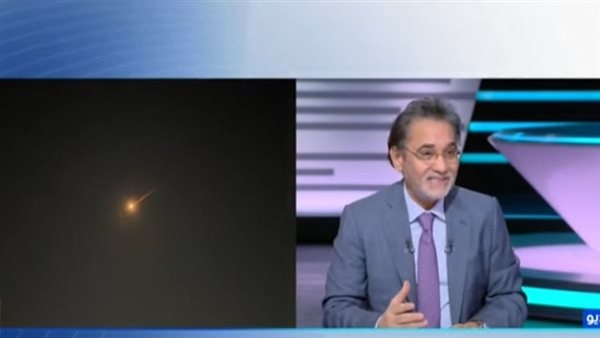
The killing of the Iranian Supreme Leader and a number of senior military commanders has raised wide-ranging questions about the nature of Iran’s potential response and whether Tehran will resort to direct confrontation or rely on its regional proxies. In this context, Dr. Abdel Rahim Ali, head of the Middle East Studies Center in Paris, offered an assessment of the implications of the coming phase and the scenarios for escalation.
Uncalculated Escalation
Abdel Rahim Ali said that Iran’s response in recent times has been characterized by a state of uncalculated escalation, considering the targeting of its regional surroundings—particularly the Gulf states—a major strategic mistake. This is despite the fact that these countries have declared their refusal to allow the use of their bases or airspace for launching any strikes against Iran and have affirmed their rejection of expanding the scope of the war.
He explained, during his interview with Extra News channel, that targeting countries such as Saudi Arabia, the United Arab Emirates, Kuwait, Bahrain, and Qatar would cause Iran to lose its regional depth and increase its isolation, instead of concentrating the confrontation on the United States and Israel as the primary parties to the conflict.
He added that Iran may resort to using some of its allies in the region, such as the Houthis, to carry out escalatory operations. However, Hezbollah’s position remains more complex, especially after the recent strikes it has suffered and the assassination operations targeting its leadership, including its Secretary-General Hassan Nasrallah, which has made it more cautious about engaging in a broad confrontation.
Abdel Rahim Ali noted that any large-scale move by Hezbollah could lead to serious repercussions inside Lebanon, potentially reaching the point of internal conflicts, in addition to expanding the confrontation regionally to include threats to navigation in the Red Sea and vital energy corridors—foremost among them the Strait of Hormuz, through which about 20% of global oil and gas supplies pass—something that could trigger a wide international crisis.
He affirmed that expanding the conflict to include strategic maritime passages would affect the interests of major powers such as China, which relies heavily on these routes for its trade, potentially prompting it to adopt more assertive positions to contain the escalation.
Abdel Rahim Ali concluded his remarks by emphasizing that widening the circle of hostility to include multiple regional and international parties would not serve the interests of Iran or its leadership. He stressed that political prudence requires keeping channels open for negotiation and de-escalation rather than engaging in a comprehensive confrontation that could have dangerous consequences for the stability of the entire region.
