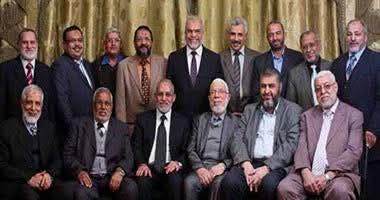
Why Are Islamists the Most Suitable for Colonial Plans?!
In the previous two articles, we discussed the Trojan Horse and the role of certain political forces associated with liberal thought, Nasserist thought, or even socialist thought, as tools that assisted Islamists—especially the international organization of the Muslim Brotherhood—in a plan to divide the region. This occurred perhaps with awareness, and very often, of course, with an enviable degree of stupidity and blind hatred toward regimes they oppose, a hatred that leads them to contradict their own ideas and principles and, in the vast majority of cases, to contribute to the ruin of their countries and the destruction of the resources of the peoples they claim to represent.
In this article, we will answer the most important question: Why did the Western powers planning to divide the region choose Islamists in general, and the Muslim Brotherhood in particular, to be their weapon?!
More than roughly a third of a century ago, at the height of the Afghan–Russian war, a leaked American intelligence report stated that the United States viewed Islamist currents as a potential alternative to governments in the Arab region. More than a decade after that report—specifically in early 2011—the United States began implementing the concept of “creative chaos,” enabling Islamists to leap to power by exploiting, of course, the intellectual, political, and cultural crises experienced by Arab society. This raises an important question: How was the West able to pass this colonial idea by exploiting political stagnation and economic conditions to whose rise it had itself fundamentally contributed?
In truth, the political reality of the Arab world, when compared to the West, constitutes a major incentive for peoples to take risks under any theory that might contribute to bringing about change in those states. And because intellectual and cultural awareness is undergoing a genuine crisis in our Arab world, it has become easy to mislead Arab peoples into believing that a democratic model resembling the West can be established in the Arab region simply by creating chaos and changing political leaderships.
This is what made the Muslim Brotherhood organization, at that time, occupy first place among the options the West put forward to implement the theory of the New Middle East. The reasons for this are many, among them that the Brotherhood’s thirst for power created an innate readiness to agree to all political concessions—and this indeed happened. For example, approximately ten years before the group reached power, and through its then Supreme Guide, Mahdi Akef, the Brotherhood declared its commitment to the peace agreement with Israel should it come to power, in a well-known statement to the Associated Press, in a clear act of courting the United States and Israel.
Why the Brotherhood?
The Muslim Brotherhood has been—and remains—the most suitable option for achieving “creative chaos” from the West’s perspective. At the organizational level, it takes the form of an international network, making it an appropriate tool for implementing that plan, in light of its previous connections with the British and others in numerous experiences, and its readiness to offer any concessions required to that end.
The Muslim Brotherhood is a group that relies on a wide margin of maneuvering, flexibility, and transformation, and in its organization it resembles the pattern of secret Masonic societies. It demonstrated cooperation and relationships with British and American intelligence agencies as early as 1928. According to Stephen Dorril, author of MI6: Inside the Covert World of Her Majesty’s Secret Intelligence Service, British intelligence succeeded in establishing close contacts with the Muslim Brotherhood far back in the past, since the 1920s and 1930s.
After World War II, the American Central Intelligence Agency (CIA) took over this role, without this in any way implying a reduction in contacts with the British—quite the opposite. The Brotherhood’s ties with the CIA and MI6 were strengthened when Gamal Abdel Nasser came to power in 1954.
The United States used Islamists and the Muslim Brotherhood to achieve its objectives in fighting the Soviet Union in Afghanistan in the 1980s, and they later fought contemporary Russia in Chechnya and Dagestan. In 2011, the Muslim Brotherhood played an active role in seizing control of the revolution in Egypt, overthrowing Muammar Gaddafi in Libya, and then deepening the Syrian crisis.
Yet all of this rested on a foundation. After 1991, the Muslim Brotherhood retreated into the background. I believe that an important variable emerged at that same moment, resolving many of the dilemmas raised by the issue of allowing “moderate Islamists” to participate in political life, and the possibility of their reaching power if any free and fair elections were held in the Arab world. This variable was imposed by the success of Islamic experiences that were moderate and acceptable to the West, foremost among them the Turkish experience, and to a lesser degree the Moroccan experience.
However, starting in 2004, the neoconservatives in the administration of George W. Bush began to revive their enthusiasm for reshaping the map of the “Greater Middle East” and to seriously consider once again enlisting the Brotherhood. Thus, the change of the American president in the White House—from Bush to Obama—maintained a single objective: building the “Greater Middle East.” This is hardly surprising if we consider that the members of Bush’s foreign policy team responsible for the policy of engagement with the Brotherhood were almost the same individuals in the Obama administration.
Accordingly, the administration of Barack Obama decided to proceed with the same plan pursued by George W. Bush.
So what happened after that? What international conditions and transformations helped bring it about? And what were the variables that led to the Muslim Brotherhood being classified as a terrorist organization in Egypt, Jordan, and Lebanon? These are the issues we will address in the coming articles.
We continue tomorrow, God willing.
Paris: five o’clock in the afternoon, Cairo time.