Ukraine’s Deep Strikes Expand Across Russia and Beyond Despite US Criticism
Ukraine’s deep strikes against Russian military and economic assets are expanding in scale and geographical reach, as Kyiv seeks to disrupt the networks supplying Moscow’s war machine with fuel, weapons and financial resources despite mounting criticism from the Trump administration.
According to an investigation by The New York Times, Ukrainian forces struck 40 Russian oil and military-industrial facilities within 50 days, alongside attacks on Russian naval vessels and significant damage to the bridge connecting Russia with occupied Crimea.
The increasingly extensive campaign reflects Kyiv’s efforts to turn Russia’s vast geographical territory and widely dispersed strategic assets into a vulnerability.
Ukraine Intensifies Long-Range Military Campaign
Despite Ukraine’s expanding capabilities, Russia continues to maintain a significant advantage in long-range warfare, military personnel and weapons supplies.
Moscow possesses ballistic missile capabilities that allow it to strike targets throughout Ukraine, while Kyiv remains heavily dependent on additional American-made interceptors to strengthen its air defences.
Russian forces have also intensified attacks against Ukrainian power plants, heating networks and railway infrastructure ahead of winter, increasing pressure on civilians and the country's economy.
Nevertheless, Ukraine has accelerated its long-range operations to unprecedented levels, seeking to increase the economic and logistical costs of Russia’s military campaign.
Kyiv has continued targeting Russian oil refineries despite US President Donald Trump’s demands that such attacks cease. The campaign has contributed to Russian refinery production falling to its lowest level in approximately two decades.
Elbridge Colby, the US under secretary of defence, criticised Ukraine’s long-range operations during discussions earlier this month, arguing that they had failed to bring the conflict closer to an end.
Kyrylo Budanov, head of Ukraine’s presidential office, acknowledged that long-range attacks alone would not secure victory. However, he argued that damage to Russian infrastructure creates additional repair costs, production losses and logistical complications, making it increasingly difficult for Moscow to sustain its military operations.
Ukraine’s Deep Strikes Extend Beyond Russian Territory
The geographical expansion of Ukraine’s deep strikes has become increasingly apparent through recent attacks against Russian military assets in the Baltic and Mediterranean regions.
A Russian military cargo vessel, the Sparta II, was damaged in the Gulf of Finland, while a separate Ukrainian operation off the Libyan coast reportedly sank the Russian corvette Merkury, one of Moscow’s newest warships.
Another Russian cargo vessel was struck during the operation. Ukrainian President Volodymyr Zelensky said the ship had been transporting weapons.
Officials representing the administration controlling eastern Libya subsequently threatened retaliation.
Zelensky defended Ukraine’s right to strike Russian military assets beyond Russia’s borders, presenting such operations as an exercise of national self-defence and a component of Ukraine’s long-term security strategy.
Meanwhile, Russia has been accused of conducting a broader campaign of covert activities across Europe, including sabotage, arson and assassination plots, alongside incursions into NATO airspace and maritime security incidents.
The widening geographical scope of both countries’ activities has raised concerns about the potential international consequences of the conflict.
European Allies Divided Over Expanding Ukrainian Operations
Although Ukraine’s European partners have generally supported attacks against military targets inside Russia, recent operations in the Baltic and Mediterranean have prompted more cautious responses.
Aliona Hlivko, head of the London-based St. James’s Foreign Policy Group, said some European officials were concerned that Moscow could interpret the attacks as an escalation.
Italian Prime Minister Giorgia Meloni warned that the conflict should not extend into the Mediterranean, reflecting concerns over regional security.
Following her remarks, Zelensky confirmed that he had spoken with Meloni and acknowledged that the operation near Libya had been conducted without prior coordination with Ukraine’s European partners.
Other European observers, however, regard Ukraine’s actions as a response to Russia’s alleged covert operations across the continent, particularly given what they consider Europe’s limited ability to respond directly.
Ukrainian analysts argue that Kyiv is addressing a strategic gap created by European reluctance to confront Moscow directly and Washington’s increasingly conciliatory approach towards Russia.
Andrii Klymenko, head of the Black Sea Institute of Strategic Studies, described Ukraine’s military resistance as an important component of Europe’s wider security.
Washington and Europe Clash Over Ukraine’s Military Strategy
The debate surrounding Ukraine’s deep strikes has exposed a significant policy divide between the United States and its European allies over the most effective approach to ending the Russia-Ukraine war.
Following Colby’s criticism during NATO discussions in Brussels, several European defence officials publicly challenged Washington’s assessment.
German Defence Minister Boris Pistorius strongly criticised Colby’s remarks, while British Defence Secretary Wes Streeting argued that Ukraine’s long-range campaign was buying valuable time and protecting lives.
Independent military analysts cited in the original report have largely supported the European position.
Jack Watling, a military expert at the Royal United Services Institute (RUSI) in London, argued that continued support for Ukraine’s long-range capabilities was essential to encouraging Moscow to participate in meaningful negotiations.
His assessment contrasted with the Trump administration’s diplomatic strategy, which has sought to encourage negotiations through incentives offered to Russia.
The disagreement reflects fundamentally different assessments of whether military pressure or diplomatic concessions are more likely to bring Moscow to the negotiating table.
Russian Energy Infrastructure Faces Mounting Pressure
As Washington has pursued renewed diplomatic efforts, Ukraine has conducted some of its largest long-range operations since the beginning of the war.
The Russian military reported intercepting 1,336 Ukrainian drones on November 16, followed by a record 1,441 reported interceptions the following day.
However, Moscow has not disclosed how many drones successfully reached their targets and rarely provides comprehensive assessments of the damage caused.
Military analysts examining publicly available footage have independently identified dozens of significant strikes in recent weeks, according to The New York Times.
Russian President Vladimir Putin acknowledged on Tuesday that conditions in the domestic petroleum market remained difficult, while criticising Ukraine for disregarding the Trump administration’s warnings against attacks on Russian refineries.
According to the International Energy Agency (IEA), Russian refinery output has declined by approximately 30 per cent compared with the previous year.
Gasoline production has fallen by around 20 per cent, while diesel production has declined by nearly 30 per cent.
In response, Moscow has restricted fuel exports to protect domestic supplies.
The Ukrainian campaign has also targeted Russia’s defence-industrial sector, seeking to disrupt weapons production and reduce Moscow’s capacity to sustain attacks against Ukrainian territory.
Ukraine Expands Domestic Defence Production and Military Technology
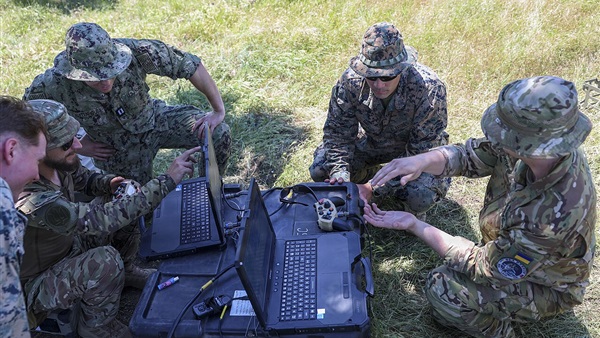
Ukraine’s growing long-range capabilities have been supported by the rapid expansion of its domestic defence industry.
Initially dependent on adapting commercially available drones, Ukrainian manufacturers have developed increasingly sophisticated unmanned systems and long-range weapons.
Kyiv is also pursuing the development of domestically produced ballistic missiles as part of efforts to strengthen its military independence.
Artificial intelligence is becoming another increasingly important component of Ukraine’s defence technology sector.
Zelensky said on Tuesday that hundreds of Ukrainian defence technology companies were already incorporating AI into their products.
The expansion of domestic manufacturing has been accompanied by international defence production agreements, including cooperation with Germany on reconnaissance drones and a partnership with Britain to manufacture more than 1,000 long-range strike drones.
These initiatives are intended to maintain Ukraine’s military capabilities regardless of potential changes in Washington’s foreign policy or future American military assistance.
Can Ukraine’s Deep Strikes Force Russia Into Negotiations?
Ukraine’s expanding campaign reflects a strategy aimed at weakening Russia’s ability to sustain a prolonged war by increasing pressure on its military production, energy revenues and logistical infrastructure.
While Russia retains substantial advantages in military resources and long-range weapons, Kyiv is seeking to offset these disparities through technological innovation, domestic manufacturing and international defence partnerships.
However, Ukrainian officials acknowledge that long-range operations cannot independently determine the outcome of the conflict.
The central question remains whether sustained military and economic pressure will persuade Moscow to engage in substantive peace negotiations or contribute to a further international escalation of the war.
For Ukraine, the continued expansion of its long-range capabilities represents both a military strategy and an effort to reduce dependence on uncertain international political commitments.