Israeli Coalition Talks: Eisenkot Faces Four Difficult Paths to Becoming Prime Minister
Tuesday 10/November/2026 - 05:21 PM
Ahmed Seif El-din
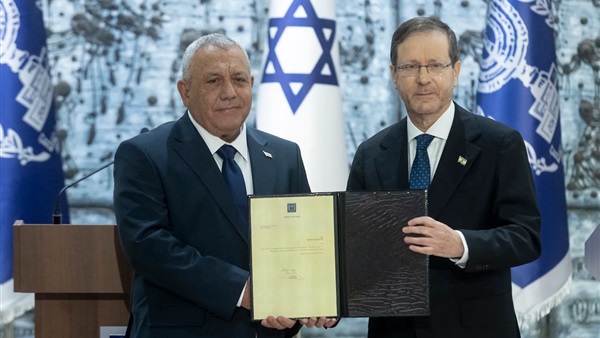
Gadi Eisenkot has been tasked with forming Israel's next government, but deep divisions over Arab political participation, military conscription and Benjamin Netanyahu's future threaten another period of political deadlock.
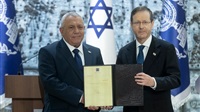
Israeli coalition talks have entered a decisive phase after President Isaac Herzog tasked Yashar party leader Gadi Eisenkot with forming a new government following Israel's inconclusive parliamentary elections. Although the opposition collectively holds enough seats to replace Benjamin Netanyahu, ideological divisions and competing political interests make the formation of a stable governing coalition far from certain.
In an analysis published by Foreign Policy, Middle East expert Steven A. Cook identifies four possible routes to power for Eisenkot. Each presents significant political obstacles, highlighting the difficulty of translating electoral opposition to Netanyahu into a functioning government.
The central challenge is straightforward: Eisenkot has the opportunity to become prime minister, but no obvious coalition capable of governing effectively.
Israel's Election Results Leave Eisenkot Short of a Majority
The election results reveal the complexity of Israel's parliamentary arithmetic.
Netanyahu's political bloc secured 53 seats in the 120-member Knesset, while Eisenkot's opposition alliance, commonly known as the change bloc, won 48.
The remaining 19 seats belong to two Arab-led political groups, the Joint List and Ra'am.
A governing coalition requires at least 61 seats, meaning neither major bloc can independently form a majority government.
Herzog's decision to give Eisenkot the first opportunity to assemble a coalition places the opposition leader at the center of negotiations, but it does not guarantee his success.
The combined opposition and Arab-led parties control 67 seats, theoretically enough to replace Netanyahu and pursue significant domestic reforms.
Those could include expanding mandatory national service to ultra-Orthodox Jewish communities and establishing a state commission of inquiry into the security failures preceding Hamas's October 7, 2023, attack.
However, as Cook emphasizes, parliamentary numbers alone do not resolve the political disagreements separating potential coalition partners.
First Option: Form a Coalition With Arab-Led Parties
The most direct route for Eisenkot would be to bring the Joint List and Ra'am into a governing coalition.
Such an agreement would produce a 67-seat majority, allowing the new administration to govern without relying on Netanyahu's allies.
Yet this option faces substantial ideological and historical barriers.
Arab citizens account for approximately 20% of Israel's population, but Arab-led parties have rarely participated in national governing coalitions.
The most notable exception occurred in 2021, when Naftali Bennett assembled an ideologically diverse coalition that included Ra'am, led by Mansour Abbas.
That government united parties from the political left and right largely through their shared determination to remove Netanyahu from office.
Ra'am's participation was groundbreaking because the party had traditionally emphasized practical concerns affecting Arab communities, including economic opportunities and public services.
Nevertheless, the coalition survived for only about a year.
Lessons From the Collapse of the Bennett Government
The Bennett administration collapsed amid disputes over legislation extending legal arrangements benefiting Israeli settlers in the occupied West Bank.
Lawmakers from Ra'am and the left-wing Meretz party opposed the measure, exposing fundamental disagreements within the governing alliance.
One of Bennett's own deputies subsequently resigned, criticizing what she portrayed as the influence of anti-Zionist coalition members.
Netanyahu exploited these divisions by highlighting the contradictions between the government's right-wing and Arab political partners.
Cook argues that a coalition led by Eisenkot could face similar pressures.
Although excluding Netanyahu might provide a powerful incentive for cooperation, disagreements over Israel's national identity, Palestinian rights and security policy would remain.
Eisenkot's Four Conditions Complicate Arab Party Participation
The challenge is intensified by four conditions Eisenkot has established for parties seeking to join his government.
He has demanded recognition of Israel as a Jewish and democratic state, adherence to the principles of Israel's Declaration of Independence, mandatory national service for all, and recognition of Hamas as a terrorist organization.
These requirements could prove particularly difficult for the Joint List.
Ra'am may have greater room for compromise, but its leader, Mansour Abbas, recently declined to describe Hamas as a terrorist organization.
Cook suggests that financial commitments and additional resources for Arab communities might encourage cooperation, particularly because Arab party leaders are motivated to prevent Netanyahu's return.
However, economic concessions would not eliminate fundamental differences between Zionist and anti-Zionist political movements.
Beyond the Debate Over Racism
The question of Arab participation also exposes deeper tensions in Israeli society.
Cook acknowledges that anti-Arab racism exists within Israeli politics, citing controversial statements by right-wing figures including Avigdor Liberman, Bezalel Smotrich and Itamar Ben-Gvir.
He also points to Netanyahu's repeated warnings about Arab voters mobilizing during elections.
However, Cook argues that explaining resistance to Arab-led coalition partners exclusively through racism overlooks competing national identities and political narratives.
Many Jewish Israelis support Israel's identity as a Jewish state and are reluctant to include parties that reject its founding principles or refuse to condemn Hamas.
Arab citizens, meanwhile, have distinct historical experiences, political priorities and understandings of Israel's establishment.
These differences do not make political cooperation impossible, but they complicate efforts to build a coalition based on shared national objectives.
Second Option: Establish a Minority Government With Arab Support
Another possibility in the Israeli coalition talks would be for Eisenkot to form a minority government without formally including Arab-led parties.
Under this arrangement, the Joint List and Ra'am could support the government from outside the coalition during crucial parliamentary votes.
Such an agreement would allow Eisenkot to obtain legislative backing while avoiding some of the political controversy associated with appointing Arab parties to cabinet positions.
However, minority governments are often unstable in Israel because their survival depends on maintaining support from parties outside the governing alliance.
Even a relatively small disagreement could threaten the government's parliamentary majority.
The proposal also faces opposition within Eisenkot's own bloc.
Liberman's Yisrael Beiteinu party has ruled out participation in a government dependent on this arrangement.
That resistance makes the minority-government option difficult to implement, even before negotiations with Arab-led parties begin.
Third Option: Bring Ultra-Orthodox Parties Into Government
Eisenkot could instead seek support from Israel's ultra-Orthodox, or Haredi, political parties.
This arrangement might be more acceptable to some mainstream Jewish voters than a coalition dependent on Arab-led parties.
Leaders of United Torah Judaism, an Ashkenazi Haredi party, have reportedly indicated willingness to consider supporting an Eisenkot-led minority government.
However, this approach would introduce another highly divisive issue: military conscription.
Most Haredi men do not serve in the Israeli military, an exemption that has generated widespread resentment, particularly during a period of prolonged military conflict.
Many Israelis also criticize the financial support provided to ultra-Orthodox communities, arguing that existing arrangements create unequal economic and civic obligations.
Cook observes that public frustration with Haredi parties has become intense across much of the political spectrum.
For Eisenkot, whose proposed governing conditions include mandatory national service for all, negotiating with these parties would create an immediate contradiction.
A coalition dependent on ultra-Orthodox support might therefore struggle to implement one of the opposition's most prominent reform commitments.
Fourth Option: A National Unity Government With Netanyahu
The fourth possibility is a broad coalition bringing Eisenkot and Netanyahu together.
Under a national unity agreement, the two leaders could share power through a rotating prime ministership.
Cook suggests that President Herzog may favor this arrangement because it could deliver a substantial parliamentary majority while avoiding some of the most divisive coalition negotiations.
A Netanyahu-Eisenkot government could exclude far-right politicians Ben-Gvir and Smotrich without depending on Haredi parties.
It would also postpone the controversial question of whether Arab-led parties should become regular participants in Israeli governments.
Politically, such an arrangement could appeal to the center-right electorate that Cook identifies as the dominant constituency among Jewish Israeli voters.
However, the option presents serious obstacles involving both trust and political credibility.
Netanyahu's Previous Rotation Agreement Raises Doubts
A central question is which leader would serve first as prime minister and how the rotation agreement would be enforced.
Israel has already experienced the collapse of a similar arrangement.
In 2020, Netanyahu entered a power-sharing agreement with Benny Gantz, but the government collapsed before Gantz could assume the premiership, triggering another election.
That precedent makes it difficult for Eisenkot to trust a new rotation arrangement.
The political consequences could also be severe.
During the election campaign, Eisenkot explicitly rejected forming a national unity government with Netanyahu, whom he and many other Israelis hold responsible for failures preceding the October 7 attack.
Reversing that position would require Eisenkot to explain why he was cooperating with a leader whom his supporters voted to replace.
The argument would be particularly difficult because anti-Netanyahu parties collectively hold 67 parliamentary seats.
Nevertheless, Cook considers a national unity coalition potentially the most stable option available, despite its considerable political costs.
Could Israel Face Another Election?
The continuing uncertainty surrounding Israeli coalition talks raises the possibility of another election if Eisenkot cannot assemble a viable government.
A renewed vote could benefit Netanyahu by giving him another opportunity to strengthen his parliamentary position.
However, it could also prolong political instability at a time when Israel faces significant domestic and security challenges.
Herzog's role will therefore be crucial.
Although Israel's presidency carries limited formal executive authority, the president can use the prestige of the office and political persuasion to encourage compromises among rival parties.
The difficulty is that almost every available coalition formula would alienate an important constituency.
A government including Arab-led parties could provoke resistance from Zionist coalition members. An arrangement involving Haredi parties could undermine military-service reform. A minority administration could struggle to survive parliamentary disputes, while a unity agreement with Netanyahu could anger voters who supported Eisenkot specifically to remove him.
Israeli Coalition Talks Reveal a Deeper Political Deadlock
The outcome of the Israeli coalition talks will depend on whether Eisenkot can persuade competing political movements to compromise on issues central to their identities and electoral promises.
The arithmetic suggests that replacing Netanyahu is possible. The political reality is considerably more complicated.
Cook's analysis highlights a central contradiction: the parties opposing Netanyahu possess a numerical majority but do not necessarily share a coherent governing agenda.
A coalition with Arab-led parties offers the clearest majority but carries significant ideological risks. A minority government lacks reliable support, cooperation with ultra-Orthodox parties threatens key reforms, and a national unity agreement could undermine Eisenkot's political credibility.
For Herzog, the challenge is to help produce a government capable of surviving beyond its initial formation.
For Eisenkot, the task is to demonstrate that opposition to Netanyahu can become a workable political alternative.
Without such an agreement, Israel could face another election, prolonging the uncertainty that has characterized its coalition politics for years.