Gaza Humanitarian Crisis Deepens as Trump’s Board of Peace Warns of Flooding Emergency
Tuesday 10/November/2026 - 04:26 PM
Ahmed Seif El-din
Severe flooding has left hundreds of thousands of displaced Palestinians facing dangerous winter conditions, prompting an unusual criticism of Israel’s aid restrictions from a US-backed peace organization.
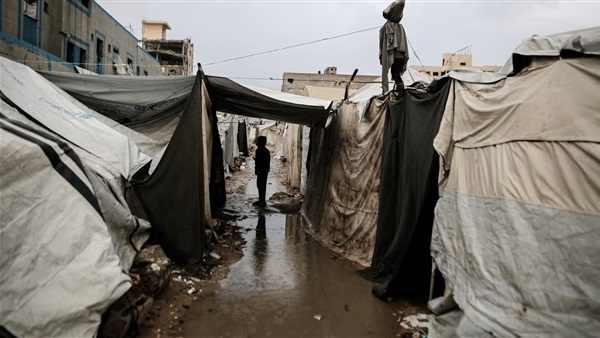
The Gaza humanitarian crisis has intensified as seasonal flooding inundates tens of thousands of tents and makeshift shelters, leaving displaced Palestinian families exposed to cold temperatures, disease, and unsafe living conditions. President Donald Trump's Board of Peace has warned of an “immediate humanitarian emergency,” criticizing Israel for allowing insufficient humanitarian assistance into the war-devastated territory.
The warning, issued on Monday, represents an unusual public rebuke of Israel by an organization chaired by Trump, whose administration has maintained strong ties with the Israeli government. It also raises fresh questions about the effectiveness of international efforts to stabilize and rebuild Gaza following last year's ceasefire agreement.
Trump's Board of Peace Criticizes Israel Over Aid Restrictions
In a statement published on X, the Board of Peace expressed deep concern about the deteriorating conditions facing displaced Palestinians as winter approaches.
The organization said several days of heavy rainfall had flooded tens of thousands of temporary shelters, exposing families already living in precarious conditions to additional dangers.
The board acknowledged that the crisis had been foreseeable, saying it had warned for months about the risks posed by inadequate shelter, drainage, sanitation, and waste management systems.
It also stated that it had repeatedly urged Israel to permit the entry of essential materials needed for temporary housing, water infrastructure, sewage removal, and flood prevention.
According to the board, Israel's response to those requests had been insufficient.
The criticism is particularly significant because the organization was established to oversee Gaza's postwar recovery under Trump's peace initiative.
Hundreds of Thousands of Palestinians Face Dangerous Conditions
The worsening Gaza humanitarian crisis has placed children and displaced families at particular risk.
International humanitarian organization Save the Children reported that approximately 350,000 Palestinians, most of them children, were living in tents affected by flooding.
The organization also warned that more than 2,000 damaged buildings were at risk of collapse because of continuing rainfall and strong winds.
Children face heightened exposure to hypothermia and waterborne diseases, particularly in overcrowded shelters lacking adequate sanitation and heating.
Save the Children described the emergency as a preventable, human-made disaster, linking the severity of the flooding to Gaza's damaged infrastructure and prolonged restrictions on essential supplies.
United Nations estimates indicate that approximately 1.4 million people, representing 65% of Gaza's population, are living in tents or makeshift accommodation.
These figures highlight the scale of displacement and the vulnerability of civilians as winter weather intensifies.
Gaza's Divided Control Complicates Humanitarian Relief
The Gaza humanitarian crisis is unfolding amid unresolved political and security arrangements following the ceasefire negotiated under Trump's peace plan.
According to the Board of Peace, Israel currently controls approximately 60% of the Gaza Strip, while Hamas controls the remaining territory, where most residents live.
The board said it had pressed both parties to fulfill their commitments under the agreement.
Israel has been urged to facilitate the delivery of humanitarian materials, while Hamas has been called upon to surrender its weapons and relinquish governing authority.
However, progress toward implementing these provisions has stalled.
The division of territorial control, combined with damaged infrastructure and restrictions on supplies, continues to complicate humanitarian operations and reconstruction efforts.
Trump's Gaza Peace Plan Faces Implementation Challenges
Trump's peace agreement initially achieved a significant breakthrough by securing the release of the remaining Israeli hostages held by Hamas following the October 7, 2023, attack.
The agreement also substantially reduced the intensity of fighting after Israel's extensive military offensive in Gaza.
Nevertheless, several major elements of the peace framework remain unimplemented.
These include the establishment of an international peacekeeping force, the formation of a new governing authority, Hamas's disarmament, the withdrawal of Israeli troops, and the reconstruction of destroyed communities.
The Board of Peace, established in January 2026, was intended to coordinate Gaza's recovery and redevelopment.
Yet the latest flooding emergency has exposed the limited progress made toward restoring basic infrastructure and providing durable shelter for displaced residents.
Gaza Reconstruction Funding Faces Scrutiny
Beyond the immediate Gaza humanitarian crisis, questions have emerged about the financial management and effectiveness of Trump's Board of Peace.
According to previous reporting by the Financial Times, a World Bank-administered fund established to support Gaza relief had received no donor contributions as of May, despite initial pledges totaling approximately $17 billion.
The reported funding shortfall raised concerns about the organization's ability to translate international commitments into practical assistance.
In June, Democratic Senator Jeanne Shaheen, the ranking member of the Senate Foreign Relations Committee, questioned the board's governance, accountability, and legal standing.
In a letter to Secretary of State Marco Rubio, Shaheen said State Department officials had been unable to answer basic questions about the organization's management, staffing, and financial arrangements.
She also sought clarification about whether funds collected by the board could potentially be used to compensate Trump during or after his presidency.
The concerns were presented as questions about transparency and oversight, rather than established findings of financial misconduct.
Winter Flooding Exposes Urgent Need for Gaza Reconstruction
The latest flooding has demonstrated that reducing military hostilities alone is insufficient to resolve the Gaza humanitarian crisis.
Without reliable shelter, functioning drainage networks, sanitation systems, and access to essential supplies, displaced Palestinians remain vulnerable to recurring environmental and public health emergencies.
Humanitarian organizations have emphasized the need for immediate assistance to protect children and families, alongside longer-term reconstruction of damaged infrastructure.
The Board of Peace's criticism of Israel may increase diplomatic pressure to expand aid access, although it remains unclear whether the statement will produce meaningful policy changes.
For the broader peace process, the challenge extends beyond emergency relief to implementing the political, security, and reconstruction commitments that remain unresolved.
As winter approaches, the immediate priority is preventing further harm to displaced civilians while establishing the conditions necessary for a sustainable recovery.