Pete Hegseth Faces Growing Impeachment Pressure Over Iran War and Pentagon Leadership
Saturday 07/November/2026 - 03:42 PM
Ahmed Seif El-din
The U.S. defense secretary faces mounting political scrutiny following Republican midterm losses, as lawmakers question military leadership decisions, the Iran conflict and congressional oversight.
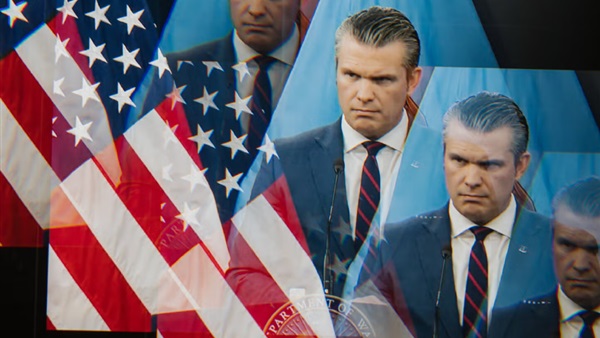
Pete Hegseth, the U.S. defense secretary, is facing growing calls for his removal following the 2026 midterm elections, with lawmakers preparing impeachment proceedings and investigations into his management of the Pentagon and the ongoing Iran war. The political pressure comes as Democrats prepare to assume control of both chambers of Congress in January, potentially intensifying scrutiny of the Trump administration's national security decisions.
In a November 6 opinion column for The New York Times, national security writer W.J. Hennigan argued that Hegseth's leadership has undermined military professionalism, weakened accountability and contributed to serious strategic failures during the conflict with Iran.
Pete Hegseth Defends His Record Amid Political Backlash
As criticism intensified, Pete Hegseth released a nearly six-minute video on social media defending his tenure and reaffirming his loyalty to President Donald Trump.
“Just like the president, we don't back down,” Hegseth declared, emphasizing his determination to continue implementing the administration's defense priorities.
His remarks followed significant Republican electoral defeats, which critics linked partly to public dissatisfaction with the Iran war, rising energy costs and broader economic pressures.
Representative Thomas Massie, a Kentucky Republican, is expected to reintroduce articles of impeachment against Hegseth when lawmakers return to Washington.
Although the effort could attract bipartisan support in the House, removal would require conviction in the Senate, making the outcome uncertain.
Democratic lawmakers are also preparing congressional hearings and investigations into Pentagon policies and wartime decisions.
Iran War Strategy Faces Intensifying Scrutiny
The eight-month conflict with Iran has become a central issue in the debate over Pete Hegseth's leadership.
Critics argue that the Pentagon failed to adequately anticipate the closure of the Strait of Hormuz, a critical international shipping route, and the resulting disruption to global energy markets.
According to the source commentary, at least 23 American service members have died and more than 850 have been wounded during the conflict.
Questions remain about the circumstances surrounding those casualties, the full financial cost of military operations and damage sustained by U.S. bases across the Middle East.
The Pentagon has also faced criticism for delays in publicly reporting military deaths and injuries.
Lawmakers have raised concerns about the continuation of military operations without explicit congressional authorization, highlighting broader disputes over presidential war powers and legislative oversight.
Hennigan characterized the conflict as strategically misguided and legally questionable, although those assessments remain matters of political and legal debate.
Pentagon Leadership Changes Raise Military Readiness Concerns
Beyond the Iran war, Pete Hegseth has faced criticism over extensive personnel changes within the Defense Department.
More than 80 senior military officers have reportedly been dismissed or blocked from promotion during his tenure, according to the original commentary.
Critics contend that some decisions reflected ideological priorities rather than professional qualifications.
Hegseth's campaign against diversity, equity and inclusion programs has also drawn scrutiny following the removal of female and minority officers with established military records.
Among the most prominent leadership changes was the dismissal of Army Chief of Staff General Randy George in April 2026.
Army Secretary Daniel P. Driscoll subsequently resigned after reported disagreements with Hegseth, leaving the service without permanent senior leadership during an active military conflict.
Representative Adam Smith, the leading Democrat on the House Armed Services Committee, accused Hegseth of creating an unusually partisan Pentagon and weakening the military's leadership structure.
Controversies Over Conduct and Pentagon Management
Pete Hegseth's tenure has been marked by disputes extending beyond military strategy.
His confirmation followed allegations involving personal conduct, drinking and professional qualifications. He secured Senate approval by a narrow 51–50 vote.
Those allegations should be distinguished from established findings of misconduct.
Hegseth also faced criticism after sensitive information about planned military strikes was shared through an unclassified commercial messaging application.
His management style has generated additional controversy, including reported loyalty-related polygraph testing and participation in Republican political campaigning.
Critics argue that these practices risk weakening the longstanding tradition of political neutrality within the U.S. armed forces.
Hegseth, meanwhile, has portrayed his reforms as necessary measures to eliminate ideological influences and strengthen military effectiveness.
Democrats Prepare Congressional Investigations
With Democrats set to take control of Congress, oversight of the Defense Department is expected to become a major legislative priority.
Representative Adam Smith has indicated that he intends to seek detailed explanations regarding military casualties, personnel dismissals, wartime expenditures and the administration's strategic objectives in Iran.
He has also emphasized the importance of pursuing a diplomatic resolution to the conflict.
Senator Jack Reed of Rhode Island, the senior Democrat on the Senate Armed Services Committee, suggested that Republican lawmakers could become more receptive to changing the administration's approach following the midterm results.
Reed linked public dissatisfaction with the war to rising oil prices and the political consequences for Trump and Hegseth.
The proposed investigations could place additional pressure on the White House to disclose information about the intelligence assessments and military planning that preceded the conflict.
Could Trump Replace Pete Hegseth?
Despite the growing controversy, President Trump has continued to support Pete Hegseth.
However, Hennigan argued that the president could reconsider that position as political pressure increases.
The commentary drew a historical comparison with 2006, when President George W. Bush announced Defense Secretary Donald Rumsfeld's resignation following Republican midterm losses amid widespread criticism of the Iraq war.
Whether Trump follows a similar course remains uncertain.
An impeachment vote could serve as an early indication of Hegseth's remaining congressional support, even if it does not ultimately result in his removal.
For critics, replacing the defense secretary would represent an initial step toward restoring accountability and public confidence in Pentagon leadership.
For the administration, the challenge is defending its military strategy while responding to mounting demands for transparency.
Pete Hegseth's political future now depends on the White House's continued backing, congressional scrutiny and the direction of the Iran war. Regardless of whether he remains in office, the debate surrounding his leadership is likely to shape broader questions about military accountability, civilian oversight and U.S. national security policy.