



Pearls and Coral: Treasures from the Quran (3)
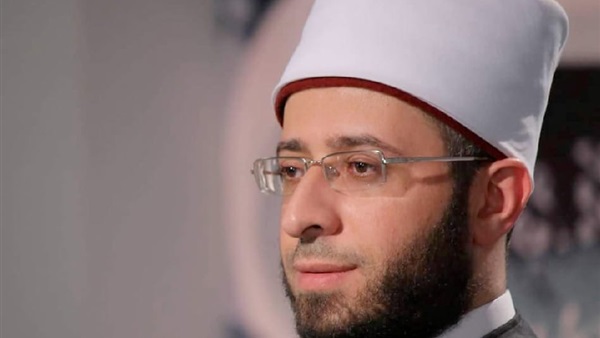
Dear ladies and gentlemen, all honorable Egyptian people, and all sons and daughters of our Islamic and Arab nation, welcome to a new journey with the Holy Quran, through the third part, In which, we will sail and hunt for pearls and treasures of high values, tolerant teachings, and what the generous God has deposited of pearls and coral in His Glorious Book.
This secttion is a sea of light, containing a number of verses frequently recited by people everywhere. At the beginning of the third section, you will find the Verse of the Throne (Ayat al-Kursi), which we recite at the end of every prayer. It carries many values, including monotheism , the glorification of the Creator, may He be glorified, and affirmation His perfect attributes.
Through it, we find protection and strength against the forces of evil and aggression. We will also encounter the story of our prophet Abraham with the man who argued with him about his Lord. Then we continue with the verses until we reach the words of god the Almighty: {The Messenger has believed in what was revealed to him from his Lord} (Al-Baqarah: 285), and his words, may he be glorified and exalted: {Allah does not burden a soul beyond that it can bear} (Al-Baqarah: 286).
This section also includes Surah Al-Baqarah, the longest Surah in the Holy Quran, and Surah Aal-Imran begins, which contains other profound values in our noble religion. We have become accustomed to gleaning insights, and extracting valuable lessons from each section, for every word in this part is a divine gift, containing hidden wisdom, a treasure among treasures, and an amessage from god Almighty to his servants from Adam until the Day of Judgment.
Therefore, the Quran came free from time and place, and we- as we know- cannot take everything from the Quran, as Sheikh Al-Shaarawi - may Allah have mercy on him - spent many years interpreting the Holy Quran; Rather, we strive to take quick excerpts from each part, from which we draw high values and hunt for precious pearls.
The first value we will consider in the third part of the Holy Quran is derived from the words of god Almighty: {There shall be no compulsion in [acceptance of] the religion. The right course has become clear from the wrong.} (Al-Baqarah: 256); this verse teaches us that the Lord of the worlds, the All-powerful,the compeller, the Creator,the originator, and Restorer, has not compelled anyone to embrace the religion. Rather, he has granted humankind freedom of choice. It is possible for you, O weak servant, to dominate someone and force them follow your religion as you wish? No one has authority over another in matters between them and God. Rather,it is for a person to come to their Lord willingly, prostrating themselves, recognizing the greatness of God - may He be Glorified and Exalted. Therefore, as you go about your life. You must keep in mind that you should not compel anyone to do anything, nor should you dominate anyone.
the second value in this section is found in the noble verse: {Kind word and forgiveness are better than charity followed by injury} (Al-Baqarah: 263). In this verse, God Almighty warns us against thinking that charity is merely the money we give to others. Rather, charity accompanied by reminders of the favor done and harm is not charity at all; it is aform of fattery that hurts others. Therefore, your speech should be beautiful and kind, and you should show gentleness and respect to society.
the third value we find in the third part of the great Book of God is in the words of God Almighty: {He gives wisdom to whom He wills. And whoever has been given wisdom has certainly been given much good} (Al-Baqarah: 269). Here we must understand that wisdom is putting a thing in their proper place, and that it is among the greatest virtues a person can possess. God Almighty exalted the status of our master Luqman the Wise and dedicated a separate chapter in the Holy Quran to him because of the wisdom, sound judgment, and discernment- all qualities that a believer should possess to be a for islam a good example of Islam builds, reforms, develops, and guides to all that is good.
The fourth value derived from this part is found in the words of god Almighty: {And be conscious of Allah, and Allah will teach you} (Al-Baqarah: 282). This verse teaches us that piety (Taqwa) is the key to knowledge. Knowledge from Allah is not only through study and contemplation, but it is through piety that enables a person to delve into knowledge and understanding. Knowledge is light, wisdom, and a prophetic inheritance . Allah grants success to those He has choosen for it, and they are with Allah through piety, vigilance, accountability, and constant remembrance.
Now we turn to the fifth and sixth values in this noble section, which are found in the Almighty's words: {Alif, Lam, Mim - Allah! There is no deity except Him, the Ever-Living, the Sustainer of)(all) existence} (Aal Imran: 1-2). These are the values of knowledge and striving, so we understand the allusions of the words and the eloquence of the structures to see the miraculous nature of God's speech, and then acknowledge our inability to fully comprehend the hidden meanings and secrets of His miraculous words. Thus, after our striving, we acknowledge that Allah knows best what he intends from his words. Following this is the value of monotheism, which is the foundation of faith and religion, and the glorification of the Creator God, who is unique in his attributes of perfection and majesty, and we call upon Him by His Beautiful Names , praising him and seeking closeness to Him.
As for the sixth value whose pearls we explore in this section, we find it when we read the Almighty's words, on the tongue of our master,our beloved, our guide, and our intercessor, the master of creation, Muhammad (PBUH): {Say, [O Muhammad], "If you should love Allah, then follow me, [so] Allah will love you"} (Al Imran: 31); this address clarifies to us that true love for Allah requires us to follow the Sunnah of the Messenger of Allah (PBUH), for it is legislation and revelation, and it is the path to reaching Allah. The Quran and the Sunnah are the two pillars upon which this religion stands and is maintained, and the religion is not sound except with both of them combined.
In conclusion, the most important lesson we can glean from this part of the Holy Quran is that a person should be wise, speak kindly and remember god not dominate others, not impose his opinion or religion on them, and strive to follow the Prophetic Sunnah, because this is the path to the love of God.
Until we meet again.
