Nvidia Scandal Reveals Why Big Tech Cannot Escape Trump’s Influence
Wednesday 25/November/2026 - 02:48 PM
Ahmed Seif El-din
Jensen Huang’s dramatic return as Nvidia chief executive highlights Silicon Valley’s dependence on the White House, raising questions about corporate independence, political intervention and the sustainability of the AI investment boom.
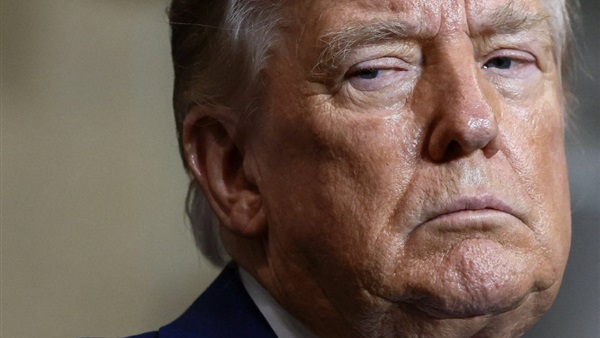
The Nvidia scandal has exposed the increasingly complex relationship between Big Tech and Donald Trump’s administration, demonstrating how Silicon Valley’s economic fortunes remain closely tied to political decisions in Washington.
Jensen Huang’s reinstatement as Nvidia’s chief executive, following his dramatic removal amid allegations involving personal misconduct and national security concerns, has restored confidence among investors. However, it has also intensified debate over corporate governance and presidential influence in the American technology industry.
Writing in The Telegraph, business editor Christopher Williams argues that Huang’s comeback illustrates the difficulty technology companies face in distancing themselves from Trump, even as the president’s political authority weakens.
Nvidia Scandal Tests Corporate Accountability
Williams recalls discussing Huang’s prospects with a senior American business journalist in New York two weeks before his reinstatement.
While Williams believed the scale of the controversy made Huang’s position untenable, his colleague suggested that Nvidia’s economic importance and political connections could ultimately protect its founder.
The episode reflects a broader perception among some observers that powerful individuals frequently escape lasting consequences for alleged misconduct, particularly when their interests intersect with those of influential political institutions.
Huang was initially removed from his position, but the subsequent Nasdaq decline and Trump’s intervention helped reverse that decision. Williams also raises the possibility that discussions between Trump and Chinese President Xi Jinping influenced developments, although their precise role remains unclear.
Nvidia’s shares rebounded sharply following Huang’s return, highlighting the confidence investors continue to place in his leadership.
Silicon Valley’s Technology Leaders Show Cautious Support
The Nvidia scandal dominated discussions at a recent conference organised by news start-up Semafor at the Rosewood hotel in Palo Alto, California.
The gathering examined the growing intersection between technology and politics, a defining characteristic of the artificial intelligence boom.
It also coincided with preparations for Anthropic’s initial public offering (IPO), described by Williams as Silicon Valley’s biggest-ever financial windfall.
Despite the technology industry’s longstanding admiration for entrepreneurial founders, several prominent business leaders stopped short of explicitly demanding Huang’s reinstatement.
OpenAI chief executive Sam Altman, who experienced his own removal and reinstatement three years earlier amid apparent ethical concerns, praised Huang without directly endorsing his return.
Amazon founder Jeff Bezos similarly advised Nvidia against recruiting an external chief executive but did not explicitly call for Huang’s reinstatement.
David Sacks, Trump’s former AI adviser, offered stronger support, suggesting that officials advocating tougher policies towards China may have contributed to Huang’s removal. Nevertheless, he indicated that his final judgment would depend on due process.
Billionaire investor Bill Ackman also moderated his earlier demands for Huang’s return, acknowledging uncertainty surrounding the legal implications of his dealings with Megaspeed, the Singapore-based semiconductor importer implicated in allegations concerning Chinese intelligence activity.
Democratic Gains Threaten Big Tech’s Relationship With Washington
Silicon Valley’s cautious response also reflects changing political circumstances following Trump’s setbacks in the US midterm elections.
The Nvidia controversy is expected to face investigation by a Democratic-controlled Congress, potentially increasing scrutiny of semiconductor exports, corporate accountability and the technology industry’s relationship with the White House.
Williams argues that technology executives must also consider the possibility of a Democratic president taking office in 2028.
Growing political opposition to artificial intelligence expansion, data centre development and billionaire influence could reshape Washington’s approach towards the industry.
After benefiting from close cooperation with the Trump administration, Silicon Valley may increasingly find itself confronting a less accommodating political establishment.
Trump’s Intervention Raises Questions About Corporate Independence
Trump’s involvement in Huang’s reinstatement has generated competing interpretations of the president’s motivations.
One interpretation suggests that direct presidential intervention in the leadership of a private technology company represents a troubling concentration of political and economic power.
Williams draws comparisons with political systems in which governments exercise considerable influence over corporate leadership, raising concerns about the independence of American businesses.
An alternative interpretation is that Trump prioritised financial market stability and the continuation of the AI investment boom over his own political popularity and the Republican Party’s electoral prospects.
Under either interpretation, the Nvidia scandal demonstrates the extent to which the fortunes of major technology companies have become intertwined with presidential decision-making.
AI Investment Boom Faces Growing Financial Risks
Although Nvidia’s share price recovered following Huang’s reinstatement, significant financial vulnerabilities remain within the artificial intelligence sector.
Concerns persist over interconnected debt arrangements supporting AI investment, alongside substantial financial liabilities facing technology providers.
While artificial intelligence offers extraordinary economic potential, Williams questions whether the current pace of investment can remain sustainable for another two years amid rising interest rates.
Nvidia’s earnings, published during Huang’s temporary absence, were strong. Nevertheless, the results reportedly contained warning signs, including a missing regulatory disclosure.
The recovery in Nvidia’s market valuation therefore does not necessarily resolve the structural financial risks associated with the wider AI investment boom.
Why Big Tech Cannot Easily Distance Itself From Trump
Huang’s return represents more than a corporate leadership reversal. It highlights the growing dependence of Silicon Valley on political decisions, regulatory frameworks and government support.
Whether Trump’s intervention reflects an expansion of presidential influence over private enterprise or an attempt to protect financial markets, the implications for corporate independence remain significant.
With congressional scrutiny intensifying and uncertainty surrounding the sustainability of AI investment, technology companies face an increasingly complicated political and economic environment.
The central paradox is that Silicon Valley may wish to distance itself from Trump as his political influence declines, yet its financial interests and strategic priorities remain closely connected to his administration.