Iran War Raises Gulf Security Fears as US Strategy Faces Growing Scrutiny
Wednesday 18/November/2026 - 02:00 PM
Ahmed Seif El-din
The Iran war is raising unprecedented concerns among Gulf Arab states over regional security, American military strategy and Tehran's growing influence. Nearly nine months after the United States and Israel launched their offensive, analysts and diplomats warn that the conflict could leave Iran with greater leverage over its neighbors, even as Washington maintains economic pressure and a naval blockade. The uncertainty is accelerating regional fragmentation and intensifying questions about the future of American security guarantees.
Gulf States Fear a Stronger Iran After the War
Discussions at the Sir Bani Yas regional conference in Abu Dhabi revealed widespread anxiety among Arab, Iranian, Israeli, American and European analysts and diplomats.
New York Times columnist Thomas L. Friedman described the prevailing atmosphere as one of "shock and dread," reflecting fears that the conflict could strengthen Tehran's strategic position rather than weaken it.
According to Friedman's account, Gulf governments did not encourage Washington to initiate the war but expected the United States to have a workable strategy for ending it.
Instead, regional officials increasingly question whether Washington and Israel can achieve their objectives without exposing Gulf countries to prolonged Iranian retaliation.
The central concern is that Tehran could emerge from the confrontation claiming it successfully resisted the United States and Israel, strengthening its deterrent position across the Middle East.
Iranian Drone and Missile Attacks Threaten Gulf Energy Infrastructure
Despite Washington's naval blockade, the Iran war continues to disrupt maritime security and energy transportation.
A senior Emirati oil official showed Friedman information indicating that Iranian drones and cruise missiles have repeatedly targeted Emirati-owned tankers operating in Gulf waters near the United Arab Emirates.
According to the official, the attacks have frequently disabled vessels by striking their engine rooms, forcing rescue operations and towing damaged tankers into port.
Iranian attacks have also reportedly targeted American military facilities in Bahrain, including radar installations at Al-Riffa Air Base.
These incidents highlight the limitations of Washington's strategy of relying on economic restrictions while avoiding another major offensive.
Tehran appears to be increasing pressure on President Donald Trump to choose between accepting a negotiated settlement involving sanctions relief or resuming military operations with potentially severe consequences for global oil prices.
Iran's Political Leadership Complicates Peace Negotiations
The Iran war has also transformed Tehran's internal political landscape.
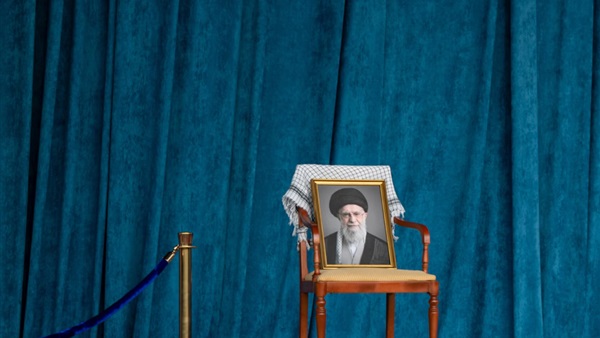
The February 2026 killing of Supreme Leader Ali Khamenei during American and Israeli military operations removed a leader who had exercised political and religious authority for nearly 37 years.
Khamenei had maintained influence across Iran's Revolutionary Guards, conventional military, civilian institutions and religious establishment.
His replacement by his son, alongside a more collective leadership arrangement, has reportedly produced internal rivalries that complicate negotiations with Washington.
Iranian academics attending the Abu Dhabi conference described domestic conditions as economically difficult but manageable, suggesting that prolonged sanctions have increased the country's capacity to withstand external pressure.
An Iraqi diplomat also emphasized Iranian nationalism, arguing that some citizens who oppose their government may nevertheless support it during foreign attacks.
These dynamics challenge expectations that military pressure would rapidly destabilize Iran's political system.
Trump Faces Questions Over US Military Strategy
The conflict has intensified scrutiny of Trump's foreign policy decisions, particularly his administration's preparation for Iranian retaliation.
Friedman argued that Washington underestimated Tehran's willingness to exploit the Strait of Hormuz, a critical energy corridor carrying approximately one-quarter of global oil supplies and one-fifth of global gas supplies before the conflict.
Following American strikes on Iranian nuclear facilities in June 2025, Tehran initially avoided closing the waterway.
However, after the United States and Israel launched Operation Epic Fury on February 28, 2026, Iran moved to restrict maritime passage.
Friedman's central argument is that the conflict revealed an overlooked strategic risk: Iran's ability to disrupt global energy markets and threaten American partners without directly defeating US military forces.
He drew a parallel with Trump's trade confrontation with China, during which Beijing used restrictions on rare earth exports to demonstrate its leverage over advanced manufacturing supply chains.
In both cases, Friedman argued, Washington failed to anticipate how its adversaries would respond.
Democrats Face Pressure to Investigate the Conflict
With Democrats set to control Congress in January, the future of American policy toward Iran has become another source of uncertainty.
Friedman cautioned against cutting military funding, arguing that such a move could weaken US negotiating leverage and allow Trump to blame Congress for an unfavorable outcome.
Instead, he advocated congressional investigations into the planning, execution and consequences of the military campaign.
He also called for scrutiny of reported damage to American military infrastructure and accountability for officials responsible for strategic decisions.
The debate reflects a wider question confronting Washington: how to maintain pressure on Iran while avoiding another costly escalation.
Middle East Alliances Shift as Gulf Cooperation Weakens
The Iran war is accelerating changes in regional alliances, with traditional security arrangements facing growing strain.
Friedman argued that the Gulf Cooperation Council, comprising Saudi Arabia, the UAE, Bahrain, Qatar, Kuwait and Oman, has become increasingly divided.
He identified two emerging security alignments: one connecting Israel, the UAE, Greece, Cyprus and India, and another involving Saudi Arabia, Turkey and Pakistan, described as the "Mecca Defense Alliance."
Meanwhile, Qatar and Oman are pursuing separate diplomatic contacts with Tehran.
On October 26, senior Saudi, Pakistani and Turkish officials visited Iran for discussions aimed at reducing regional tensions.
However, the diplomatic engagement did not prevent subsequent attacks by Iran-aligned Houthi forces against Saudi targets, including reported drone strikes on Riyadh's King Khalid International Airport and the East-West oil pipeline.
Elsewhere, political divisions in Lebanon, Iraq, Israel and the Palestinian territories continue to complicate efforts to establish a more stable regional order.
Artificial Intelligence Reshapes Modern Warfare
Another major concern emerging from the conflict is the growing military role of artificial intelligence and inexpensive autonomous weapons.
Iran-aligned Houthi forces have demonstrated how relatively small armed groups can challenge larger states using drones, precision missiles and advanced targeting capabilities.
United Nations experts estimated the Houthis' core active fighting force at approximately 350,000 in 2024.
Friedman cited research describing alleged Houthi use of Anthropic's Claude artificial intelligence system to support weapons-development projects, including guided rockets and advanced missiles.
Ukraine's former defense minister Mykhailo Fedorov also described the rapid expansion of Ukraine's drone industry, from seven private manufacturers in 2022 to approximately 700 in 2026.
He predicted that autonomous drones, robotic systems and AI-assisted targeting would increasingly shape future battlefields.
These developments raise questions about whether conventional military superiority will remain sufficient to protect critical infrastructure and civilian populations.
Lebanon and Palestinian Reform Offer Limited Hope
Despite growing instability, Friedman identified signs of potential political change in Lebanon and the Palestinian territories.
Lebanese political analyst Saleh El Machnouk said recent polling suggested that approximately half of Lebanese respondents, including a majority of Sunni Muslims, supported a peace agreement with Israel.
According to Machnouk, this represented roughly twice the level of support recorded a year earlier.
He argued that Lebanon's future prosperity depends on reducing the influence of external powers and armed groups over its political decisions.
Friedman also pointed to younger Palestinians calling for elections, reforms within the Palestinian Authority and a negotiated Palestinian state alongside Israel.
These developments suggest that political constituencies seeking regional cooperation may remain influential despite the ongoing conflict.
Iran War Outlook: Regional Stability Depends on How the Conflict Ends
The Iran war has exposed significant weaknesses in existing Middle Eastern security arrangements, while demonstrating the growing influence of economic leverage, maritime disruption and emerging military technologies.
For Gulf countries, the immediate challenge is protecting energy infrastructure while navigating an increasingly uncertain relationship with Washington.
For the United States, the question is whether economic pressure can produce an agreement without triggering further military escalation.
Friedman's broader assessment is that the war began without sufficient international support, a credible alternative strategy or a full understanding of Iran's political structure.
Its eventual outcome could reshape regional alliances, global energy security and the balance of power across the Middle East for years to come.