APEC Summit in China: Xi Faces Spy Scandal, Trade Tensions and Trump Uncertainty
Wednesday 18/November/2026 - 01:53 PM
Ahmed Seif El-din
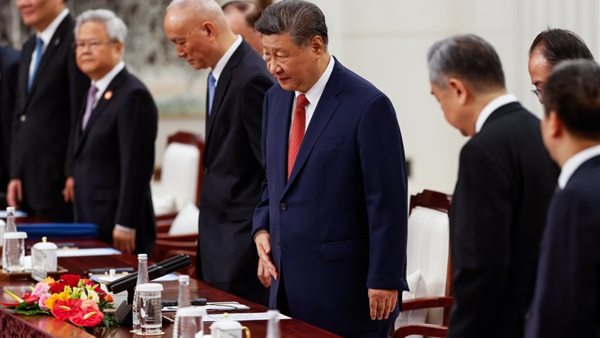
Chinese President Xi Jinping is using the APEC summit in China to showcase the country's technological achievements and growing global influence, but allegations of espionage, mounting trade tensions and uncertainty surrounding US President Donald Trump threaten to complicate Beijing's diplomatic ambitions. The gathering in Shenzhen brings together regional economic leaders as China seeks to project stability and leadership amid increasingly difficult relations with Washington.
Shenzhen Highlights China's Economic and Technology Transformation
Hosting the Asia-Pacific Economic Cooperation (APEC) summit in Shenzhen carries significant historical and political symbolism.
In 1992, former Chinese leader Deng Xiaoping visited the city to promote market-oriented reforms, helping accelerate China's transformation into a global manufacturing powerhouse.
Today, Shenzhen is a major technology and industrial center, home to companies including Huawei, BYD and drone manufacturer DJI. Apple supplier Foxconn operates a large manufacturing complex in the city, while Walmart manages its Chinese operations from Shenzhen.
For Xi, the APEC summit in China provides an opportunity to demonstrate that the country's economic development and technological capabilities can benefit international partners.
However, China's export dominance, national security disputes and growing state intervention in business have raised concerns among trading partners.
China's Technology Ambitions Face US Restrictions
Shenzhen represents Beijing's determination to strengthen its technological independence despite American sanctions.
Chinese telecommunications companies Huawei and ZTE have faced US restrictions over national security concerns, while Washington has limited China's access to advanced semiconductors since 2022.
Beijing has responded by highlighting Huawei's domestically developed processors and artificial intelligence advances by companies such as DeepSeek.
Minxin Pei, a China specialist at Claremont McKenna College, said Xi wants to demonstrate China's ability to succeed despite American efforts to restrict its technological development.
China is also promoting international cooperation in artificial intelligence, competing with Washington's efforts to establish technology supply chains that reduce dependence on Chinese companies.
Nvidia Espionage Allegations Complicate US-China Relations
The APEC summit in China has been overshadowed by allegations of Chinese espionage involving American semiconductor giant Nvidia.
According to a New York Times investigation published less than three weeks before the summit, a Chinese businesswoman with close ties to Nvidia chief executive Jensen Huang was found to have passed intelligence to Beijing.
China has denied the allegations. Following the report, Huang stepped down, and Nvidia's board announced an investigation.
The controversy threatened to undermine the fragile US-China trade truce and disrupt planned discussions between Xi and Trump.
However, Trump has downplayed the allegations and indicated that he does not intend to raise the issue during his meeting with the Chinese leader.
Despite that position, Washington has tightened technology restrictions. On Monday, the Trump administration introduced rules preventing Chinese companies from accessing advanced Nvidia chips through overseas data centers.
The measures also require export licenses for certain chip shipments to companies in Malaysia, Singapore, Thailand, Indonesia and Brazil.
China's Record Trade Surplus Raises Protectionism Concerns
China's powerful export sector remains another major issue confronting Xi during the summit.
Beijing reported that exports exceeded imports by more than $1 trillion during the first ten months of 2026, placing the country on course to surpass its previous annual trade surplus record.
Chinese manufacturers continue to expand overseas sales of electric vehicles, solar panels and other industrial products.
However, the expansion has prompted resistance from trading partners, including the United States and European Union, which have expressed concerns about competition from Chinese exports.
Beijing is presenting the summit as an opportunity to promote free trade and oppose protectionism.
Yet China's domestic policies have increasingly favored local companies over foreign technology, electronics and automotive brands.
The Communist Party has also pledged to strengthen its presence within internet businesses, reflecting Xi's emphasis on state oversight.
Former Chinese Foreign Ministry policy planner Shen Weizhong described Beijing's approach as "manageable openness," balancing economic development with national security priorities.
Rare Earth Controls Add Pressure to Global Supply Chains
China's use of export controls has further complicated international trade relations.
After introducing restrictions on rare earth exports in 2025, Beijing has moved to limit overseas transfers of additional technologies, including drones, artificial intelligence systems and expertise related to advanced medicines and solar panels.
Chinese authorities argue that these measures respond to American blacklists and technology export restrictions.
Nevertheless, trading partners remain concerned about China's ability to use its dominance in strategically important industries as economic leverage.
Yuen Yuen Ang, a political economy professor at Johns Hopkins University, said Chinese leaders increasingly recognize that globalization has entered an era dominated by geoeconomic competition.
The challenge for Beijing is to promote international economic cooperation while pursuing policies that strengthen domestic industrial security.
Xi, Trump and Putin Prepare for Unprecedented Talks
Beyond trade and technology, the APEC summit in China is expected to feature a significant geopolitical meeting involving Xi, Trump and Russian President Vladimir Putin.
The three leaders are scheduled to meet Thursday in Shenzhen, an unprecedented gathering that China's Foreign Ministry described as being of groundbreaking significance.
For Beijing, the meeting offers an opportunity to reinforce China's image as a diplomatic power capable of bringing major international rivals together.
Pei said Xi is seeking to demonstrate China's influence and ability to convene world leaders.
However, discussions could raise concerns among smaller countries, particularly Ukraine, about major powers negotiating matters affecting their interests.
Trump said Monday that he intends to discuss the war in Ukraine during the meeting.
Zhao Long, a senior research fellow at the Shanghai Institutes for International Studies, said Beijing remains cautious about taking a leading role in peace negotiations because it does not want to suggest that major powers are determining other countries' futures.
Possible Kim Jong-un Meeting Adds Diplomatic Uncertainty
Another potential complication is Trump's suggestion that he could meet North Korean leader Kim Jong-un during his visit to China.
Trump told reporters Monday that such a meeting was possible and could provide opportunities for diplomatic progress.
China's Foreign Ministry spokesperson Guo Jiakun said Tuesday that he had no information regarding Kim's possible attendance.
Meanwhile, Russian state news agencies reported that Putin might meet Kim if the North Korean leader travels to China, citing Kremlin spokesperson Dmitry Peskov.
No such meeting had been confirmed in the source report.
APEC Summit Tests China's Global Leadership Ambitions
The APEC summit in China presents Xi Jinping with an opportunity to highlight Shenzhen's economic transformation, demonstrate technological resilience and strengthen Beijing's diplomatic standing.
Yet the event also exposes tensions between China's ambitions for international economic leadership and the concerns of its trading partners.
The Nvidia espionage allegations, expanding US semiconductor restrictions, Chinese export controls and uncertainty over high-level diplomatic meetings could complicate Beijing's intended message.
Ultimately, the summit will test China's ability to present itself as a reliable economic partner and influential diplomatic actor while managing increasingly competitive relations with the United States.